Ever since the introduction of 3D games, the forward momentum for gaming has always been to make games look more real. Outside of Nintendo, most AAA studios continue to push for photorealism with games, and that’s often supported by online fans and detractors alike—some praise games for their photorealism while others bully titles that don’t achieve it.
In an era where graphics have seemingly plateaued and yet online commentators push for better graphics at every grifting turn, the obvious end point is DLSS 5. As Generative AI continues to try and force its way towards the masses (decimating the price of hardware for the average consumer as it goes), DLSS 5 is a mid-point turn aimed for all games. Sure, you can make your game with all the artistic intent you like, but Nvidia’s glamour-filter has the final say.
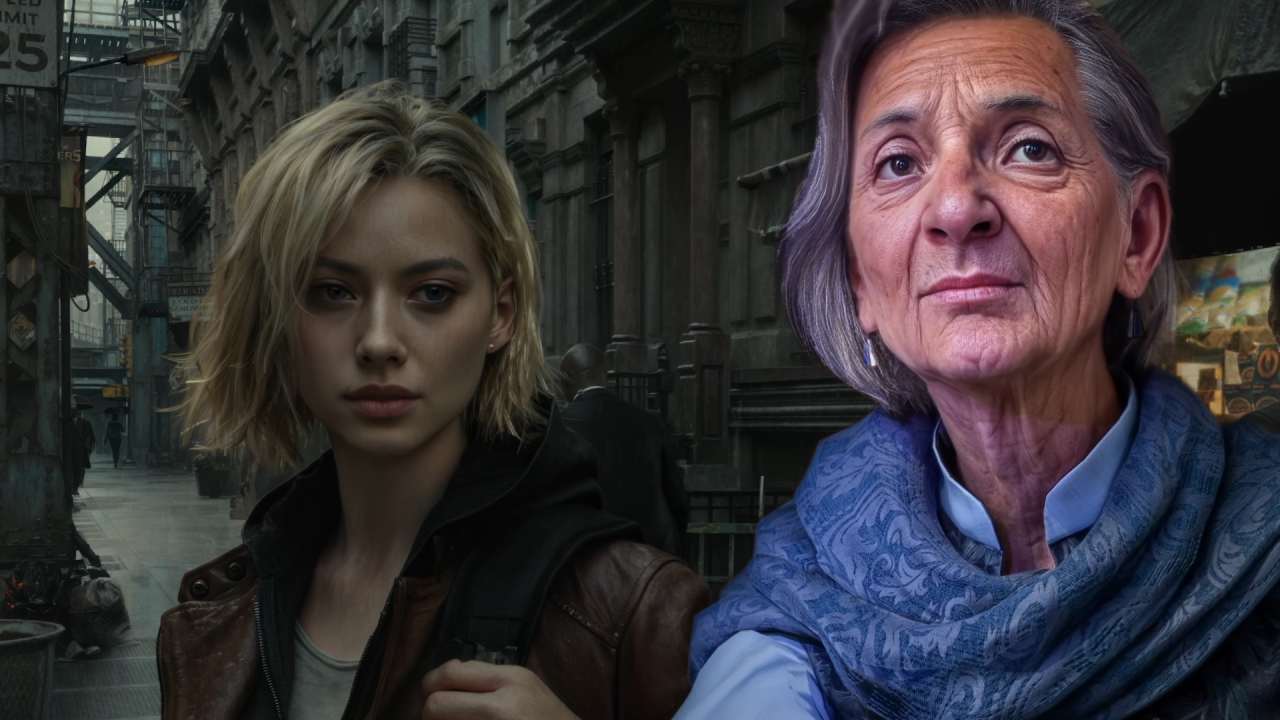
Right now, Digital Foundry is getting a lot of flak for its almost-blanket praise of DLSS 5, although the video itself does chime in with shortcomings. “The kind of apparent aesthetic changes to Grace’s face here will perhaps be most controversial,” DF’s Oliver Mackenzie says as the game turns a life-like albeit still stylised character model into a yassified FaceApp image.

The issue at the core of DLSS 5 is that it has been designed entirely around one form of lighting model—the type of lighting model you see in beauty adverts, promotional posters, or the backstage segments of a Jimmy Fallon production. It’s hyper-bright, designed entirely to showcase photorealism in a generation that has not hit photorealism.
DLSS 5 does impress in some senses. Zooming in as far as possible shows that the assets developers have made have been retained. Those are the same textures with the same freckles in the same places, but they are not photoreal assets, and despite the gulf in animation quality this generation over the past, they still do not move like actual humans.
Seeing Bethesda’s particular style of animation brought up to an almost photo-real state is horrifying. It’s more like talking to a robot than talking to crew member Sarah Morgan already was in the base game. What already looked off-putting in still shots looks downright eldritch when moving.
The move towards photorealism isn’t always terrible. I’m a huge fan of ray-traced reflections, largely because they solve an issue. As games became more graphically intensive, older forms of reflections that perfectly mirrored an in-game scene became far too render-expensive to continue doing. This led to screen-space reflections, a common tech that looks great at the right angle, but deteriorates. Ray-traced reflections, in any art style, solve this.

DLSS 5’s issue, then, is that it does not account for every art style, although developers are allegedly able to tweak its appearance to their choosing. Right now, DLSS 5 has only been shown in a form designed for the supermodel glamour, a form of lighting that video games simply are not designed for. With what we’ve seen so far, should they ever be?
Nvidia’s tech demo has proven that games look better when they look like games, and the constant push for realism only exists to further conform art into a singular aesthetic—one that can be rapidly mimicked and spat back at you by some generative AI bot in the future. Lighting system are art, and they don’t have to be wholly realistic. What would DLSS 5 do to the gorgeous over-exposed lighting of ICO or the original NieR? What would it do to the dark and grimy locations of Splinter Cell: Chaos Theory?

The reality is that, sometimes, tech can be ridiculously impressive as well as downright atrocious. Digital Foundry’s reaction to DLSS 5 is correct: Nvidia’s technology is ridiculously impressive for what it’s able to do. But should we be celebrating a blanket conformity of video game art? Yes, Starfield’s art direction is, to some degree, outdated, but every human being, plant, vehicle, spaceship was designed for that look.
Not every movie needs to look like James Cameron’s Avatar; not every book needs to be as realistic as possible; not every game needs to look like the road outside your house. DLSS 5 likely has its uses in games like Bodycam, games designed from the off to feel like they’re real-life footage treated as gameplay, but it’s not needed for every game, and it looks genuinely vile in multiple scenarios. It’s a no from me.