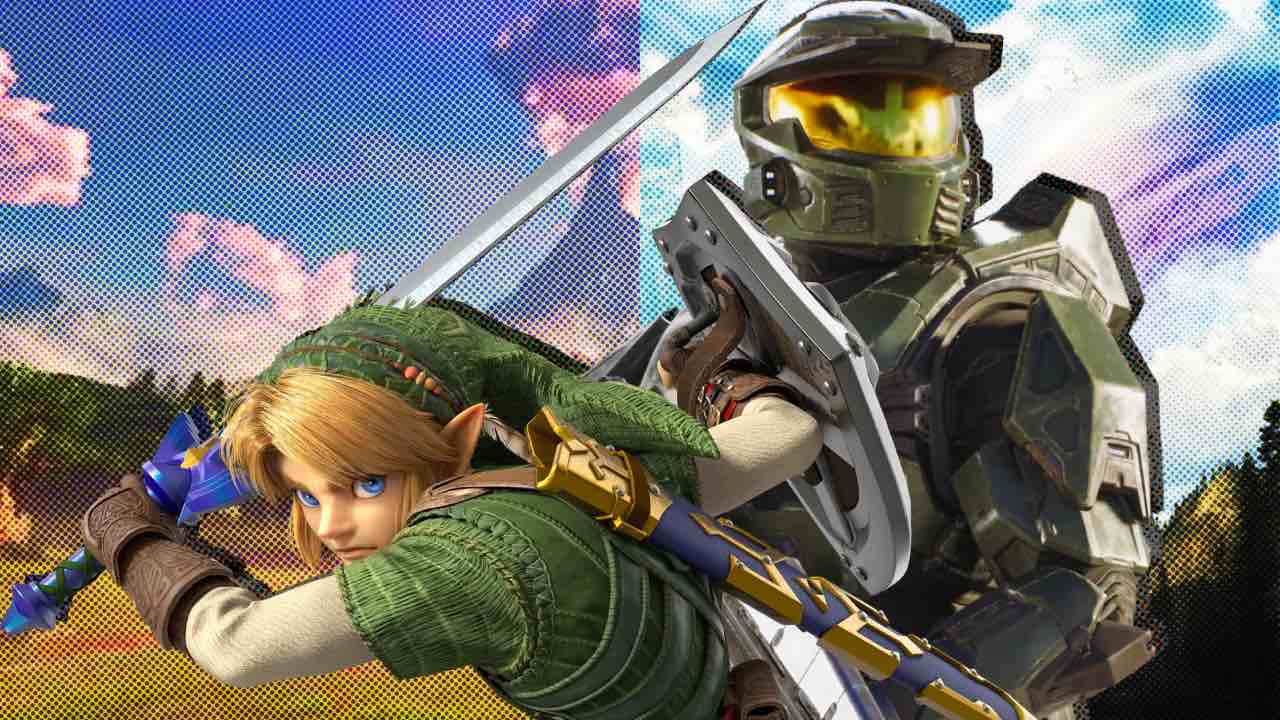
As 2026 comes to a close, we’ve now been treated to two remakes of genre-defining, platform flagship titles. Earlier this year, Xbox released Halo: Campaign Evolved, an Unreal Engine 5 remake of 2001’s Halo: Combat Evolved. Just last week, Nintendo released The Legend of Zelda: Ocarina of Time Remake.
Both of these games are the second attempts at remastering/remaking a beloved title. Halo’s first remaster came in the form of the downright insulting 2011 Halo: Combat Evolved Anniversary, whereas Zelda’s came in the form of Ocarina of Time 3DS, a faithful recreation that had some minor issues (fall-rolling being inconsistent) but who’s biggest crime was being locked away on a handheld.
In 2026, both of these games have been fully recreated for modern audiences. Both of these games change level design, both of these games expand on the original’s cutscenes, overhaul music, and both of them attempt to rejuvenate classic visuals for new tech. It’s a tall ask and, unfortunately, only Nintendo really got it right.
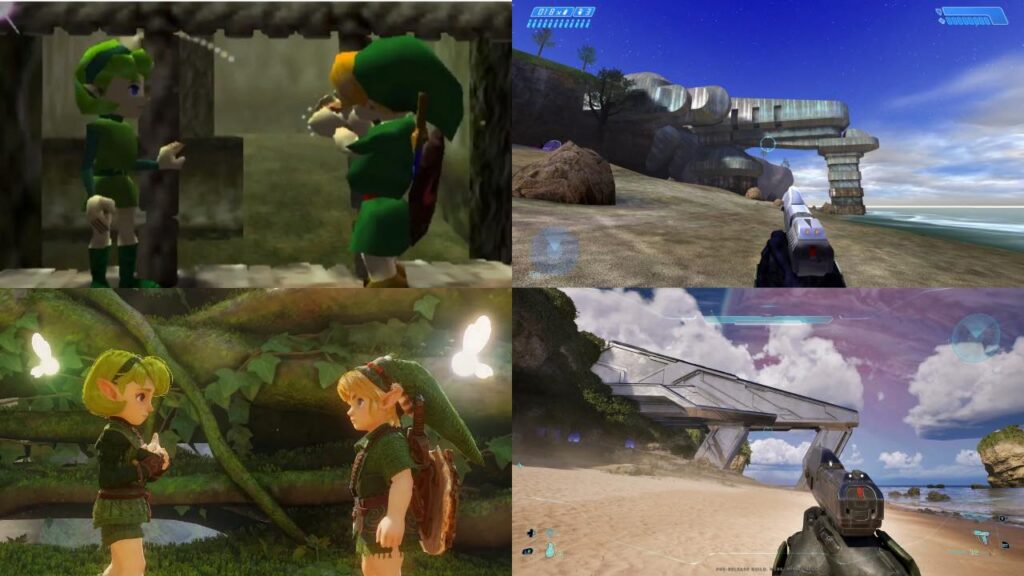
While many remakes are actually new adaptations of a classic game, both Halo and Zelda opt for the more traditional form of video game revivals: this is the game you remember playing. Controls wise, both have been improved to some degree. Zelda no longer has you fiddling in menus every two seconds, and Link’s combat is a smoother, more flashy take on OOT’s classic action. Halo added modern features you’d expect of a modern Halo: sprint (god forbid), vehicle hijacking, a couple of expected weapons.
At their core, both of these games have the right idea. Zelda’s adorably crusty 1997 N64 visuals hold up decidedly less so than that of Halo’s more competent 2001 Xbox visuals. While iconic, Zelda’s original music is tinny and limited by the soundchip of the Nintendo 64, and the gorgeous new orchestral score maintains the live-switching of the original while bringing so much more depth to the sound. That’s an area where Halo ultimately fails with missing sound cues and a basic re-rendition of classic themes. In fact, in the game’s bonus missions, there’s barely any original new arrangements, instead just re-using scores from Halo Reach, Halo 3, and others.
In The Legend of Zelda: Ocarina of Time Remake, the new cutscene direction is extremely high-quality. While the original came at the forefront of real-time cutscenes, its remake uses over 25 years of technological improvements to deliver real-time, movie-quality cinematics that add additional emotion and improve on the original’s story.
Halo: Campaign Evolved tries for a similar vibe. The intro cutscene to the game’s second mission, Halo, is a phenomenal example of this working with the crashed escape pod sequence showing you just what happened to everyone Chief saved on The Pillar of Autumn. Subsequently, in Keyes, Master Chief’s reaction to the fate of Captain Keyes is an extreme improvement over the original, but for every one of those scenes there’s one with dodgy pacing or rough motion capture. Zelda simply doesn’t stumble: every cutscene is lovingly rendered with pitch-perfect quality, and every expansion is masterfully crafted.
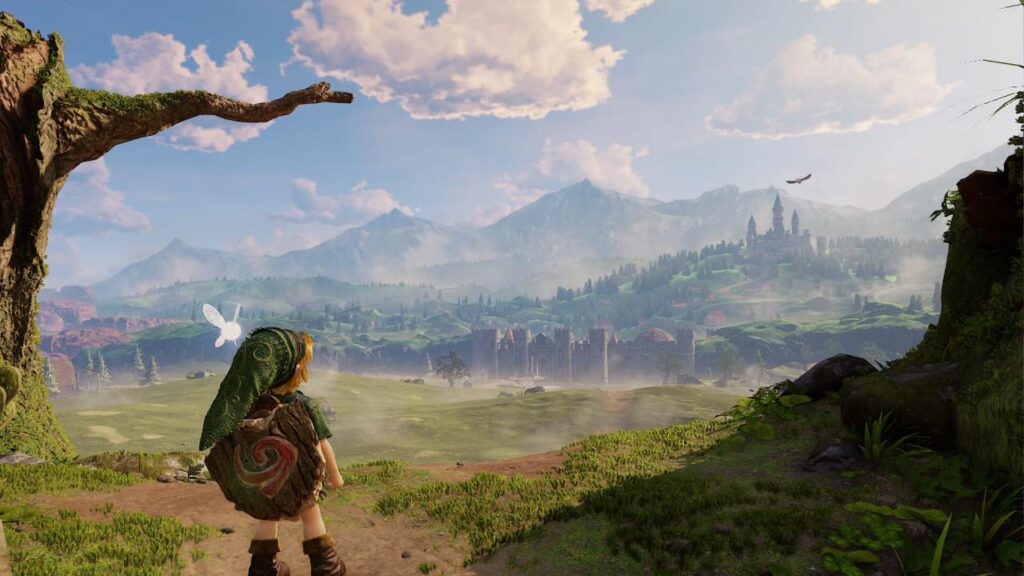
Where The Legend of Zelda: Ocarina of Time Remake massively succeeds is in replicating the feeling of what we all believe the original game to be. In the decades since, we’ve been inundated with the memories of OOT, we’ve ingested Yusuke Nanako’s concept art more than the game itself. The fantasy world of Hyrule we have in our heads is not necessarily the one on-screen in the original, but that game’s mysticism, or the mystics it was envisioned to have, is here in full force. Smoke reacts in a magical way, everything feels otherworldly, the lighting is gorgeous, but with a slight bit of haze that makes you feel like you’re in a world not your own.
When it comes to Halo: Campaign Evolved, unfortunately, that game was weirdly too realistic. While there are some phenomenal changes—The Library is leaps and bounds above its original incarnation, for example—the game doesn’t really match the otherworldly nature of its 2001 counterpart. It doesn’t feel alien enough, it doesn’t feel artificial enough. The remake’s trees are covered in mechanical detail if you look close enough, but this artificialness of the Halo ring doesn’t actually ring true. It also lacks the details we know were supposed to exist: the additional plant life and alien fauna, for example, whereas Zelda has expanded on its once-limited open zones.
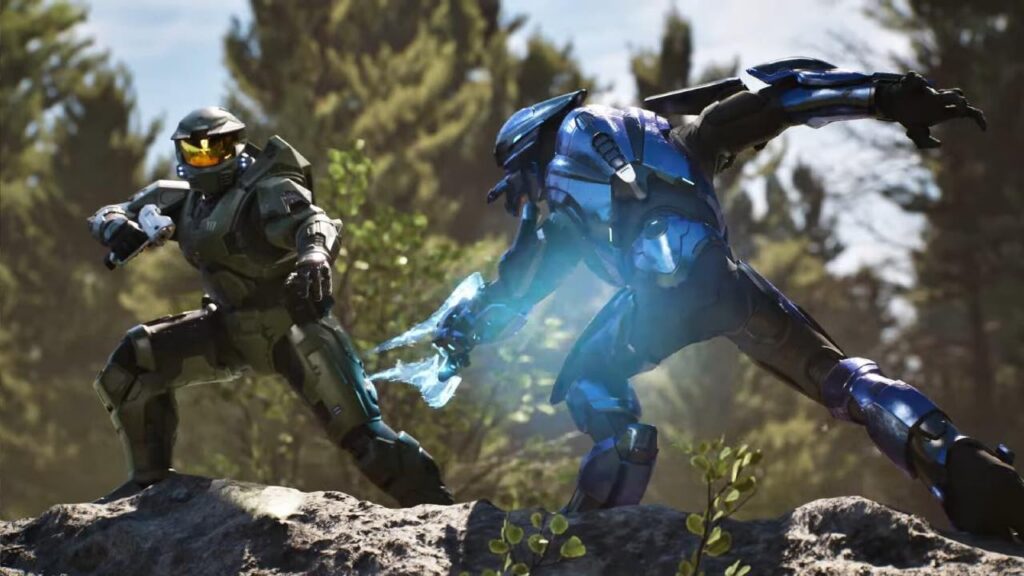
At the end of the day, The Legend of Zelda: Ocarina of Time Remake knows exactly what everyone loved about the original, and exactly what it needed. On the other hand, Halo: Campaign Evolved sometimes trades blows in terms of quality with its original, but never really manages to understand what made it great. Yes, playing with the energy sword is fantastic, but is the energy sword worth it if the world itself suffers?
Nintendo not only understands what made The Legend of Zelda: Ocarina of Time great, but it brought it back with the reverence it deserves, while also keeping the original version playable via Virtual Console. On the other hand, Halo: Campaign Evolved was an experiment, a semi-successful one, but it doesn’t really grasp the reasons why millions of players fell in love with that world. After all, its worlds people fall in love with, not just a single weapon.