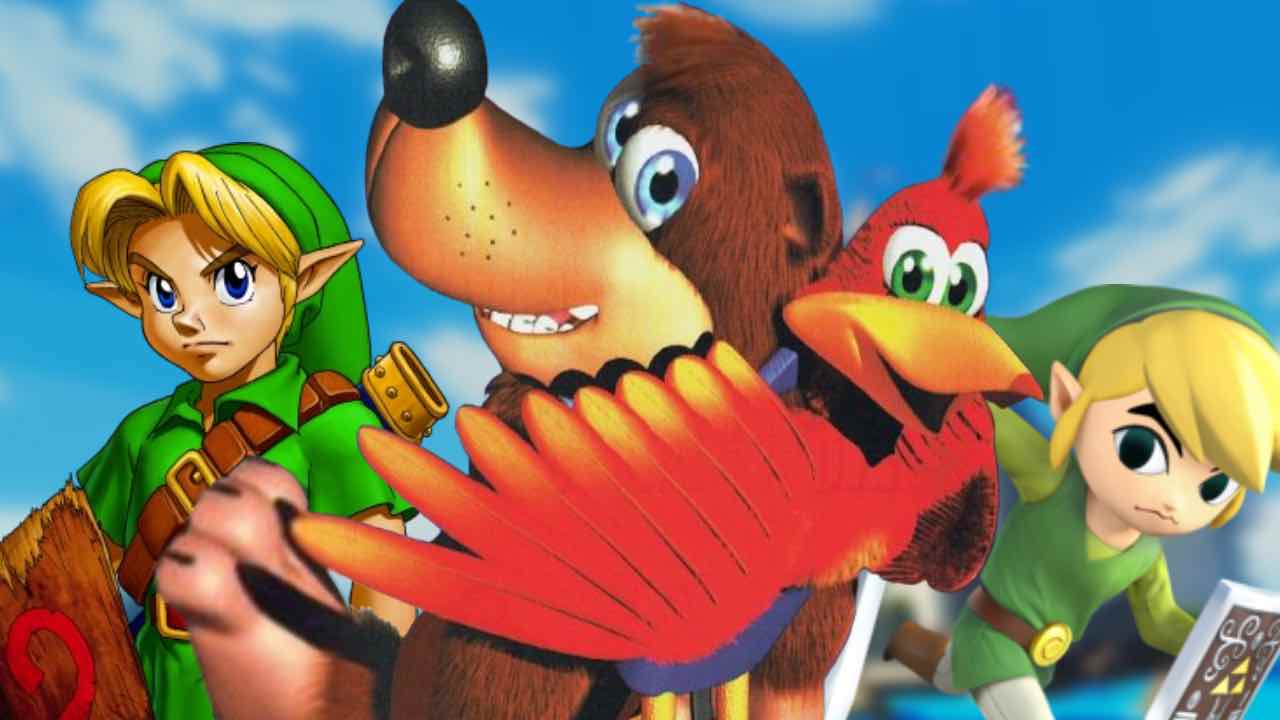
Full video game decompilations and recompilations are a very modern addition to gaming, but they’ve now exploded in popularity. While some recompilations, such as the amazing Zelda: Recompiled and Banjo: Recompiled, are built on years of fan effort, many modern “recompilations” are scuffed AI-generated ports filled with shortcuts and issues.
The term “recompilation” has been stretched even further in recent months with many so-called “recompiled for PC” releases actually consisting of games running within established emulators with tweaked settings. However, real, human-led recompilation projects are still in the works, such as the ongoing Halo: Combat Evolved project.
One project that has drawn the ire of talented recompilers is the new Banjo-Tooie Recompiled release which released earlier this weeks. The project’s GitHub page explained that “AI tools generated substantial portions of this project’s code”, and also piggybacks off the human-made RT64 project’s code.
Due to the popularity and quality of the pre-existing Banjo: Recompiled project, the project lead of the popular Banjo-Kazooie PC port, took to social media to explain that the original team is not involved in the sequel’s recompilation. Although, they are hoping to make a quality port of the game in the future.
“The Banjo-Tooie Recomp is NOT associated with us. It is entirely AI-generated. Both Zelda: Recompiled and Banjo: Recompiled have very clear No AI stances,” developer Dario said. “We have not, do not and will not use AI to ever work on these projects.”
Dario explained that properly recompiling Banjo-Tooie “requires a lot of love and care to do a proper port” and the team behind the high-quality recompilations are “not interested in engaging a race to the bottom and will take the time that is necessary to deliver a polished version.”
The developer added that the new wave of vibe-coded recompilations and quick emulator releases are simply of worse quality than projects coded by experienced developers. “All the evidence I need is that vibecoders keep copying our efforts and completely fail to reach the same level of quality,” they said.
The reality is that vibe-coding is resulting in a plague of low-quality recompilations that are significantly worse than human-made projects. For example, The Legend of Zelda: Wind Waker’s human-led recomp is not finished, but vibe-coders have quickly scrapped together a “functional” clone based off the unfinished work that, as expected, has numerous issues with performance and exhibits frequent bugs. The quality simply isn’t the same. (If you want a list of NON-AI decomps and recomps, check here.)
In a separate comment on the Decomp subreddit, Dario added that the Banjo-Tooie Recompiled release is “one of those slopcomps that completely ignores the existing patching system and instead opts for patching all of the recompiled code and memory from the wrong side”. This means that modding, which is one of the main pillars of Dario’s Zelda and Banjo-Kazooie recompilations, is “completely unmaintainable in the long run”.
“Not to mention it features nearly 100x the amount of unreadable code than something like Banjo: Recompiled does despite being an “alpha” and very far from finished,” they continued. They also explained that the vibe-coded recomp makes use of an “extreme amounts of code that mess with RT64 that will completely break the moment I do any sort of update on it”.
Vibe-coding has been a massive point of contention for many projects, not just compilation projects like Zelda and Banjo Recompiled. Alongside the recompilation scene, AI code has infested many open-source communities, especially the emulation community.
In recent months, popular PlayStation 3 emulator RPCS3 barred the use of AI-generated code from the open-source project due to a barrage of “AI slop” code that has been submitted to the project.
“Please stop submitting AI slop code pull requests to RPCS3. We will start banning those who do without disclosing,” the official RPCS3 account told followers on social media. “There are plenty of resources online to learn how to debug and code instead of generating slop that you don’t understand and that doesn’t work.”
The emulation group added that “RPCS3 reached maturity with 70% playable games several years ago, before these code LLMs were a thing” and the quality of vibe-coding has resulted in some of the worst code additions the project has ever seen. “You can’t possibly handwrite the type of sh*t AI slop we have been seeing,” they said.
Additionally, many modders in the homebrew scene have abandoned projects due to the rise of AI vibe-coders submitting garbage code to open-source projects. Iconic PS4, PSVita and PS5 jailbreaker TheFl0w announced their departure from the scene due to the rise of “slop kiddies” forcing their way into the scene without actual knowledge of coding.
AI vibe-coding is not only controversial due to its low-quality, but also due to the fact that the code that is added is often jumbled together from public sources or stolen from talented programmers. While copyright often doesn’t protect code outside of specific instances, the truth of vibe-coding is that it steals in the same way that AI-generated artwork, music, and writing does, although it often isn’t treated the same.
AI-generated recompilation projects are essentially the same as the worst-quality remasters of your favourite games. While Banjo: Recompiled is truly brilliant, Banjo-Tooie: Recompiled, by different devs I’ll stress again, is the Rare game’s equivalent of Konami’s infamously poor Silent Hill HD Remaster from the Xbox 360 era. It might be free, but at that point you might as well just boot the game up in an emulator.