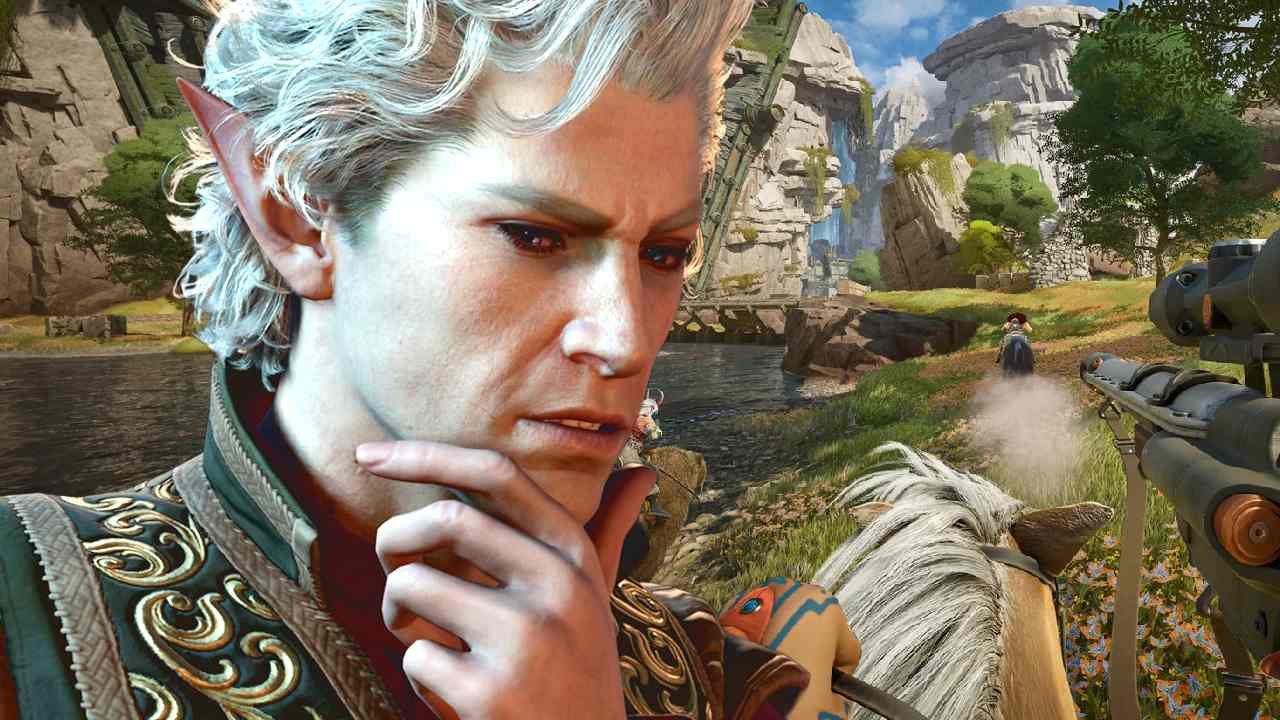
Larian Studios CEO Swen Vincke has pushed back against the gleeful wave of negativity online surrounding Wildlight Entertainment’s debut free-to-play game Highguard. Announced at The Game Awards 2025 alongside Larian’s upcoming Divinity, many are taking delight in tearing the game apart across social media.
Following the online discussion surrounding the game, Vincke took to social media to discuss the situation, all while not explicitly referring to Highguard by name. Speaking to fans, the Baldur’s Gate 3 lead explained that the discussion surrounding poorly received games online is frequently “hurtful” instead of constructive.
“I don’t like people sh**ting on things others have created,” the Larian CEO said. “Putting something out into the world makes you vulnerable, and that alone deserves respect, even if you dislike the creation. It’s easy to destroy things, it’s a lot harder to build them. The best critics understand this. Even when they’re being critical, they do their best not to be hurtful.”
Vincke has a point. Even the most rancid of games usually do something right. MindsEye, a game so negatively received that its main actor told us he thought he would never work again, has a really cool city design and some fun vehicle handling. Aliens: Colonial Marines, a game so poor it resulted in lawsuits, still had some amazing artists that recaptured the feeling of Aliens. There’s always something that a game does right.
The Larian boss explained that it’s “incredible rare” for a game to be created and released “without there being someone behind it that truly cared about what they were making, putting a part of themselves in it”. They told followers to “be nice to people that create things”.
Recently, we sat down to talk with Stephen Kick, the director of Nightdive Studios’ System Shock remake, a game that was severely attacked by online gamers who called the FBI and IRS on the studio during development. Kick explained that gamers should “leave words of encouragement, leave some words of faith, some optimism, something that the people behind the screens can read to encourage them and inspire them to finish what they started” instead of the wall of vitriol many receive for simply trying to create.
Where Swen Vincke started to lose people, however, is when they added that they sometimes “think it would be a good idea for critics to be scored, Metacritic-style, based on how others would evaluate their criticism” as negativity and “harsh words do real damage”. However, many explained that this would likely result in critics’ scores being decimated for failing to follow the popular opinion.
Veteran games journalist and Giant Bomb founder Jeff Gerstman responded to this idea on BlueSky, saying: “Try a couple decades of shitty emails ranging from simple insults all the way up to death threats from idiot fanboys who can’t handle you giving a game “only” 8/10 and see which one puts more calluses on your soul, dummy. You’d fold in six months or less.”
Really, there is a mature conversation to have here. I’ve been in this industry for over a decade now, and I’ve seen negative reviews and spiteful reviews. For Highguard, a game that I truly think is a misshapen, confused project that really needed more time in the oven, it’s clear that a lot of the criticism online (although actually not so much from the press) is the latter.
I’ve seen what happens when someone gives The Legend of Zelda: Tears of the Kingdom a 6/10; I’ve also seen what happens when someone gives Concord a 7/10. Unfortunately, frustratingly, real criticism isn’t actually valued by the majority of readers, many only care about the score, and even then they look at that score with their pre-conceived notions of what it could be, and that hate mail gets sent anyway.
Nevertheless, Vincke is right, Gerstman is right: games criticism should never be spiteful, and games criticism shouldn’t be scored—that’s just creating even more criticism which would likely be just as, if not more, spiteful.
As Vincke concluded in his own twitter thread, if you don’t like the game, don’t play it. “There’s other ways of dealing with player exploitation,” he said. “Not playing the game is probably the best one. You don’t have to verbally hurt the people behind the game to express your disdain. If enough people stop playing the games that don’t respect players, those in charge will get the message and change course soon. There’s enough other games there.”