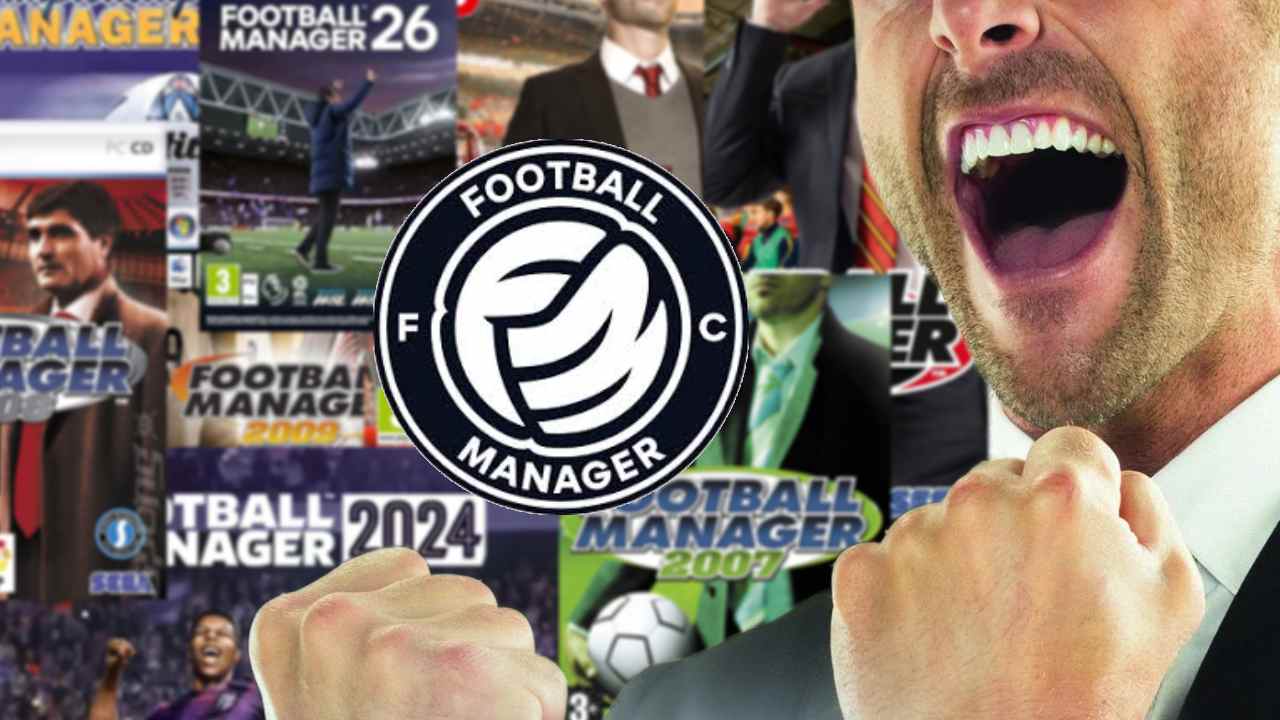
Ranking every Championship Manager and Football Manager game sounds simple until you actually try to do it. The series has been around since 1992 and across those three decades it’s gone through multiple eras, two different names, a full engine transition and more incremental upgrades than anyone could realistically count.
We’ve already ranked every other sports simulation series to see if any can knock FM off its pedestal, but what’s the best FM game? Some incarnations have completely changed how the game was played. Others quietly improved the formula without much fanfare. A few, if we’re being honest, mostly just updated the database and kept things ticking along for another year. The tricky part is deciding what actually matters when you compare them. Do you reward innovation? Do you favour the versions that were the most addictive to play? Or the ones that had the biggest long-term impact on the series as a whole? In reality it’s a mixture of all three.
Legacy and community memories matter. But so does how the game actually held up when it was released. So with that in mind, every Championship Manager and Football Manager title has been ranked from worst to best. Some of the placements might be predictable. Others probably won’t be. I will be shocked if you agree with everything I write.
33) Football Manager 26

Football Manager 26 is the most turbulent transition the series has ever tried to pull off. Sports Interactive rebuilt major parts of the game’s technology, including a new engine and a redesigned interface, but the launch split the fanbase straight down the middle. Long-standing systems were removed or heavily reworked, early builds had performance issues, and plenty of players felt the features that make Football Manager were either missing or not finished properly.
Critics tended to respect the ambition, but review scores still dropped, and user reception was far harsher. The plan was clearly to reset the series for the next decade, but that first step felt rough. FM26 might end up being remembered as an important transitional moment, yet as a standalone release it didn’t match the depth or stability fans had come to expect. For a lot of people it’s been enough to put them off for now, which means Football Manager 27 will probably need to be a real statement to win them back.
32) Championship Manager 93/94
Championship Manager 93/94 sits this low because the series was still in its early experimental stage. The interface was basic, the database was relatively small, and most of what you did was handled through simple menus and text commentary. Tactical control was limited and the simulation itself was narrow compared to what the genre would become later.
Still, the addictive core idea was already there. You managed transfers, built a squad and chased results over multiple seasons, which wasn’t exactly standard for football games in the early 90s. Reviews at the time reflected that niche appeal, with modest scores and a fairly small but committed audience. It matters historically because it helped set the blueprint, but compared with later entries it’s clearly a case of the series still working out what a football management game could be.
31) Championship Manager 96/97
CM 96/97 is another one from the series’ early evolution. It stuck with the Championship Manager 2 engine, so matches were still delivered entirely through text commentary, and the tactical setup stayed pretty simple. Most of the progress came through updated squads, a bigger player database and improved transfer logic. Back then, those were important upgrades. They helped the game feel more believable and gave long-term saves more to get stuck into. The flip side is that the interface was still very basic and the overall scope remained limited. It’s a solid stepping stone, but not a defining moment. The proper leap was still just around the corner.
30) Championship Manager 97/98
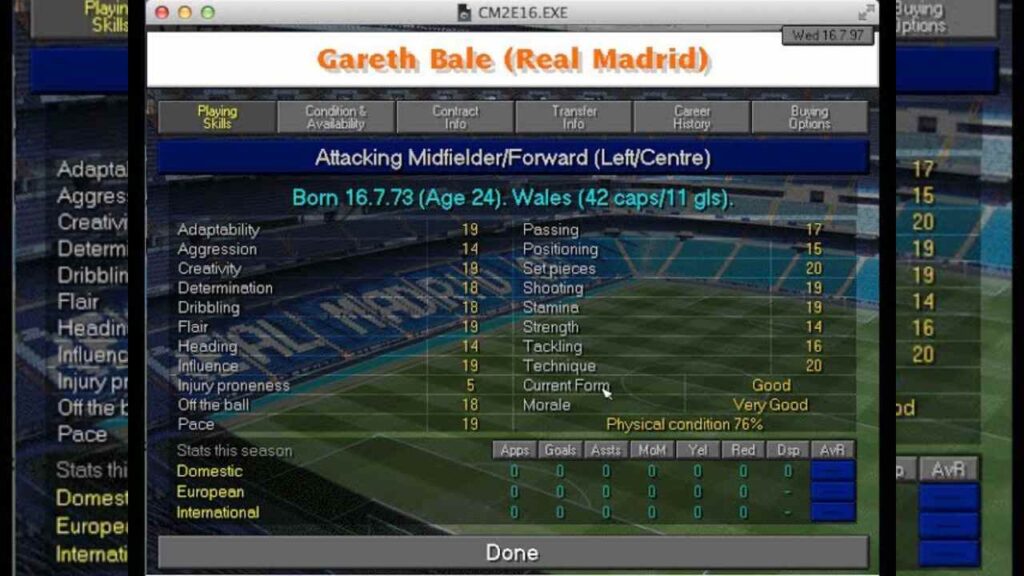
Championship Manager 97/98 lands around here because it’s very much part of that steady early growth period. The core management loop was in place, but the overall simulation was still fairly limited. Built on the Championship Manager 2 engine, it leaned more on squad updates and refinements than big new ideas. Matches remained text-based and tactical options were pretty basic compared with what would follow.
That said, the database continued to grow and the transfer/squad-building side kept improving, which helped the long-term save feel deeper. It did its job, but it isn’t remembered as a landmark entry, especially with Championship Manager 3 coming not long after.
29) Championship Manager 2
Released in 1995, Championship Manager 2 was an important early step in shaping what the series would become. It expanded the original concept with more leagues, a larger database and deeper squad management, even if the overall structure was still simple by today’s standards. The interface stayed basic, matches played out entirely through text commentary, and that limited how much tactical feedback you could take from what you were “seeing”.
Where it did move things forward was in the fundamentals: better transfers, more realistic squad building, and saves that felt more viable over the long haul. Reviews were fairly modest at the time, which makes sense given how niche management sims still were in the mid-90s. Historically it matters, but the series would go way beyond this soon enough.
28) Championship Manager: Season 00/01
CM 00/01 sits this low mainly because it feels like a maintenance release on top of the Championship Manager 3 foundation. The core experience didn’t really change: text commentary, a huge database and that addictive long-term progression people already loved. Most improvements were about updated squads, tweaks to the match simulation and better stability, not new systems. It was still well received because the base game was so strong, but in the bigger history of the series it doesn’t stand out as much as some of the editions around it. Reliable, widely played, but not a game that moved things on in a major way.
27) Football Manager 2017
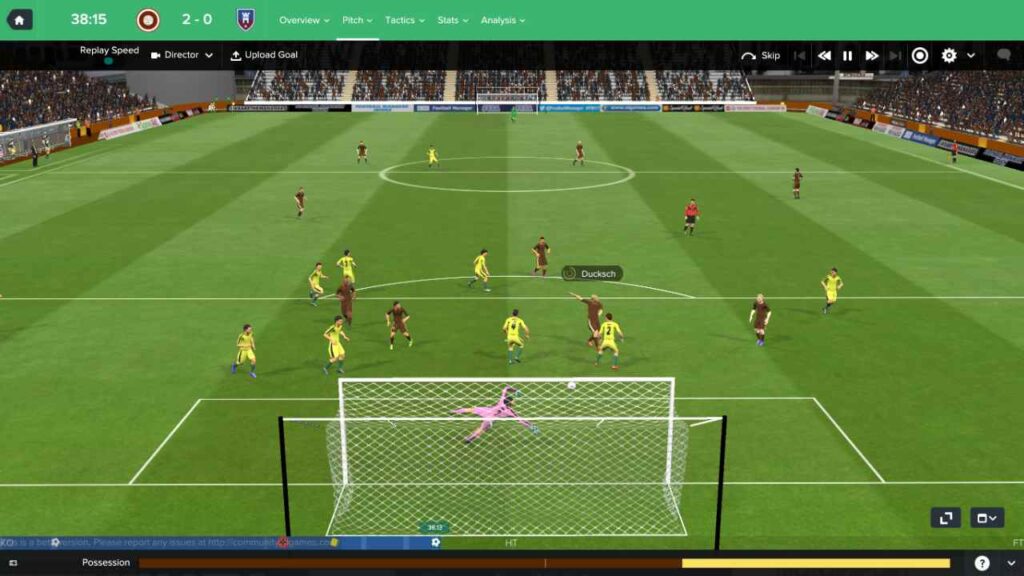
Football Manager 2017 had a couple of interesting ideas, but none of them really stuck as series-defining changes. The most noticeable addition was the social media feed, which tried to capture how football talk actually happens online. It added a bit of flavour, but for a lot of players it turned into something you glanced at and then ignored. Beyond that, FM17 felt very close to FM16, with most updates coming through smaller tweaks rather than major steps forward. It’s absolutely playable, and the core match engine and tactics are still solid, but it never really became an entry people point to as “that year everything changed”.
26) Championship Manager 03/04
Championship Manager 03/04 sits here more because of where it lands in the timeline than anything else. It was the final Championship Manager made by Sports Interactive before the split with Eidos, and it arrived with that sense of an era coming to a close. Under the hood it was still built on the CM4 engine, so you got the large database, the familiar 2D match view and plenty of tactical depth. The changes were mostly incremental: updated squads, database tweaks, small adjustments to match behaviour. It’s a solid update, but it’s remembered more as the last chapter of that Championship Manager run than as a defining entry in its own right.
25) Championship Manager 99/00
Championship Manager 99/00 is basically a stabilising update built on the success of Championship Manager 3. The core structure stayed intact, with text-based match commentary, a deep database and long-term career saves that were already wildly addictive. Most of the improvements were refinements: better match logic, a bigger database, more accurate squads and competitions. Critics liked it at the time because it was still detailed and easy to lose hours in, but it didn’t introduce a new mechanic that shifted the formula. It’s solid and it was massively played. It just sits lower historically because it builds on an existing foundation rather than redefining it.
24) Football Manager 2008
Football Manager 2008 is a good example of a polished release that didn’t try to change the series’ direction. The biggest addition was the Transfer Centre, which made it much easier to track bids, offers and negotiations in one place. It sounds like a small thing now, but it genuinely streamlined one of the busiest parts of managing a club. The match engine got incremental improvements too, especially around movement and attacking patterns, and the interface was tidied up so navigation felt smoother. Reviews were very strong, but it still felt quite close to FM07, which is why it landed lower. Very good, just not a game that rewired how people played.
23) Football Manager 2016
Football Manager 2016 is solid, with a few notable additions, but it didn’t reshape the series in the way the very best entries did. The big talking point was Prozone-style match analysis data, which gave you far more detailed stats after games and nudged the series further towards the analytics-heavy direction it would keep leaning into. It also introduced Create-A-Club, letting you build a custom team and drop it into the database as your save starting point. The match engine improved again with better animations and more fluid movement. Reviews were generally positive, but the overall feel was still quite similar to the editions around it, which stops it climbing higher.
22) Championship Manager (1992)
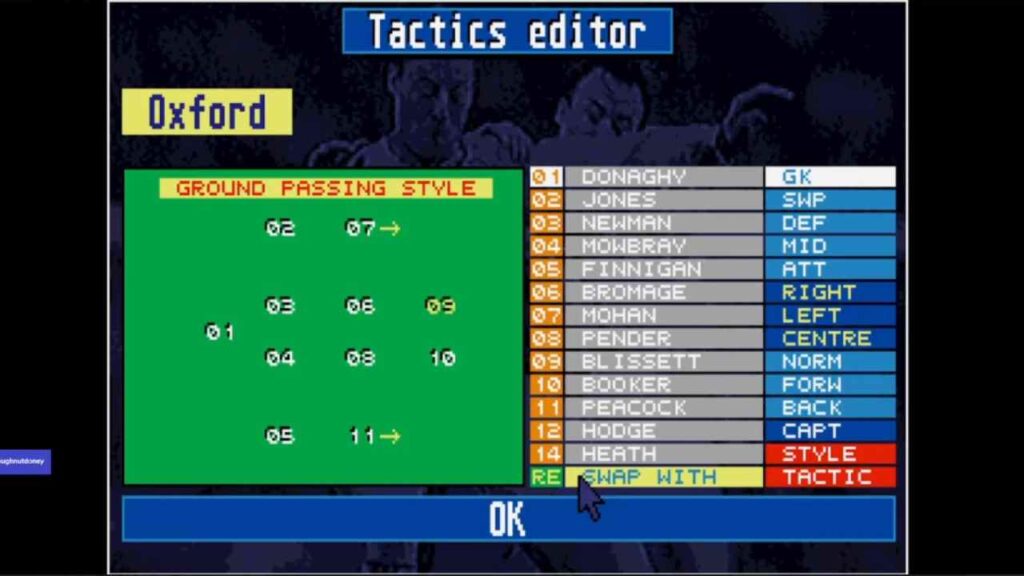
The original Championship Manager lands this low because, by modern standards, it’s incredibly basic. But its importance is huge. Released in 1992, it laid the foundations for the entire management sim genre. It was completely text-based and visually minimal, yet the core loop was instantly addictive. You took control of a club, managed transfers, picked your team and followed matches through commentary and stats. For the early 90s, that sort of long-term management depth wasn’t common, and it quickly built a loyal following. Reviews were respectable rather than spectacular, which fits the niche the game sat in at the time. It’s rough and slow compared to anything that came later, but it’s where the obsession started.
21) Football Manager 2014
Football Manager 2014 brought in some big changes, but the overall experience never quite felt fully settled. The headline was the transfer and contract overhaul. Negotiations became more detailed, with clauses, instalments and wage structures behaving more like real deals, and agents had more influence too. It was a step towards realism, but it could also feel a bit cumbersome, especially early on. The match engine improved with better ball physics and movement, and cloud saves plus cross-platform play with tablets arrived for the first time. Critic scores were strong, but user ratings were noticeably lower, which tells you plenty about how frustrating some of those changes felt in practice. It deserves credit for deepening the transfer side of the game, even if it didn’t always feel smooth.
20) Football Manager 2015
Football Manager 2015 aimed to modernise the series, and while it did push things forward, it didn’t land cleanly for everyone. The revamped interface and match presentation were meant to make the game feel more contemporary and easier to navigate. Media interactions were expanded too, with new press conference systems and player conversations designed to add more personality around squad management. The match engine got another update with improved animations and movement, though some players felt early versions produced inconsistent outcomes. Reviews were still solid, often around the low 80s, but user reception was more mixed than with a few entries either side of it. FM15 deserves credit for the presentation push, even if the overall package felt slightly uneven.
19) Football Manager 2023
Football Manager 2023 is a polished entry that is largely focused on improving existing systems. The biggest change was recruitment, with the scouting planner and recruitment focus tools making it easier to structure how your club searched for players. Squad planning was expanded as well, giving you a clearer long-term view of depth, contracts and what you’ll need down the line. On the pitch, the match engine improved in key areas, particularly wide play and defensive behaviour, which helped tactics feel a bit more believable. Another major talking point was the official UEFA club competition licences, bringing the Champions League, Europa League and Conference League into the game with full presentation. FM23 is very good at what it does, but it feels more like a smart upgrade than a “this changed everything” edition, which is why it sits here.
18) Football Manager 2018
Football Manager 2018 tried to bring more of the human side of management into the sim, but it didn’t work perfectly the first time. The main addition was the Dynamics system, introducing squad hierarchies, social groups and dressing room influence. Players had clearer relationships, and senior figures could affect morale across the squad. In theory, it made squad management feel closer to real football. In practice, it could also feel unpredictable, with morale swings that were hard to control. The match engine and tactics remained strong, and additions like the scouting changes and Medical Centre helped flesh out the background detail of a save. Reviews were solid, usually in the low 80s, but user reaction was more mixed. It’s a game with real ideas, even if those ideas took a few years to fully settle.
17) Football Manager 2007
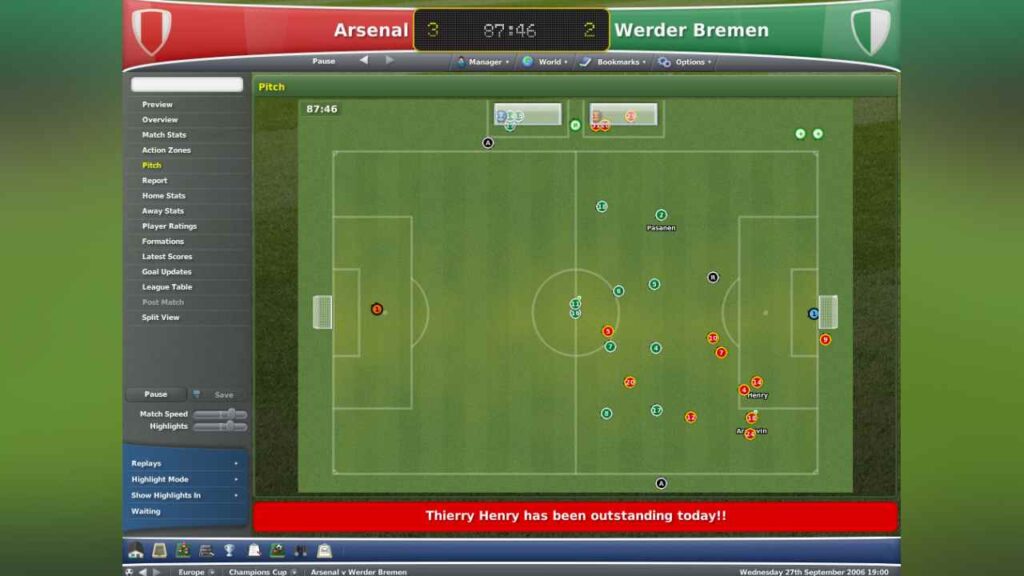
Football Manager 2007 sits here because it’s a steady evolution year rather than a dramatic turning point. One of the standout additions was feeder clubs, which opened up new ways to develop young players through loans and partnerships. The tactical interface was improved as well, making instructions clearer and easier to tweak in-game. The database kept growing in size and accuracy, which was always a major part of the series’ appeal. Reviews were strong, but it wasn’t the sort of release that changed the conversation around Football Manager. It made the formula better without rewriting it.
16) Championship Manager: Season 01/02
There’s a weird gap between how CM 01/02 reviewed at the time and how people talk about it now. On paper, it was a fairly standard seasonal update built on the Championship Manager 3 engine. Database updates, tweaks to transfers and match logic, and some interface improvements. Nothing that dramatically changed how it played. Critically, it scored lower than a lot of the surrounding releases. Over time, though, it’s built a cult reputation thanks to its speed, simplicity and ridiculously addictive long-term saves. The database became legendary, generating endless wonderkid stories and unforgettable careers. It still gets played decades later, which says plenty. It sits here because the release itself was incremental, but its legacy is massive.
15) Football Manager 2011
Football Manager 2011 is a strong, well-received entry that focused on smoothing out the overall experience. The expanded agent system made contract negotiations feel more realistic and, at times, more annoying. Which is pretty true to life. Contract talks had more personality, and squad management became slightly more delicate as a result. The match engine continued to improve too, especially in defensive organisation and player movement. What keeps it mid-table in this ranking is that it didn’t introduce a single defining mechanic that reshaped the series. Instead, it delivered a very dependable version of Football Manager. Something modern players probably wish FM26 had managed.
14) Football Manager 2020
Football Manager 2020 strengthened the structure around the squad rather than radically changing the football itself. The headline feature was Club Vision, giving you clearer board expectations and a longer-term identity to manage towards. Instead of being judged purely on results, you were measured on objectives like playing style, youth development and financial direction, which made career saves feel more like running a club inside a real organisation. The Development Centre was another key addition, offering far more visibility over youth players, loans and long-term prospects. The match engine improved too, particularly around one-on-ones and defensive positioning. It didn’t deliver a massive headline leap, but it did add real depth to the off-pitch side of management.
13) Football Manager 2013
Football Manager 2013 sits here because it was a transitional year, and you can feel it. The big push was towards accessibility, with Classic Mode introduced as a stripped-back version aimed at players who found the full simulation overwhelming. It was a bold move that widened the audience, even if plenty of long-term fans ignored it. The interface was redesigned again and split opinion, and some systems felt less clear than they had been in FM12. The match engine remained strong, though, and the tactical framework was stable. Sentiment was more mixed than usual, but still broadly positive. It mattered, especially for bringing more players in, but it isn’t quite as cohesive or satisfying as the games above it.
12) Football Manager 2019
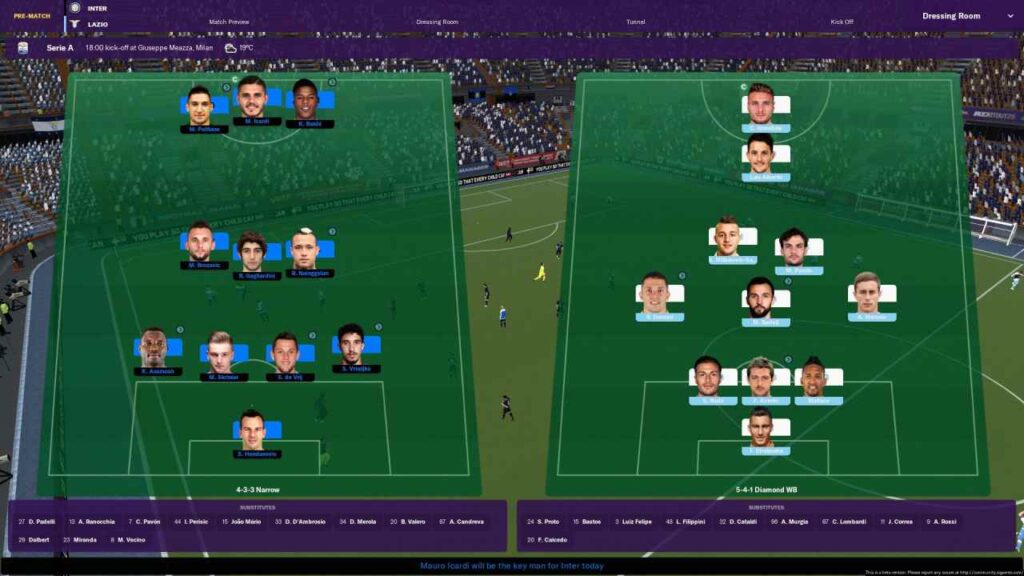
Football Manager 2019 earns 12th because it took the modern formula and made it sharper without blowing it up. The standout addition was the new training system, which completely rebuilt how schedules, workloads and development were handled. Instead of the old rigid setup, you could plan weekly blocks, focus on tactical areas and tailor sessions to individuals, which made long-term squad building feel far more deliberate. The tactical system expanded too, with new roles and clearer instructions, and the match engine kept improving in both defensive positioning and attacking movement. It was widely praised for polish and stability. It’s just outside the very top tier because it’s refinement rather than revolution. It just happens to be refinement done really well.
11) Football Manager 2006
Football Manager 2006 sits just outside the top ten because it helped set the template for what the modern series would become. The biggest shift was deeper interaction with the board: negotiating expectations, requesting improvements and pushing for changes at the club. It made the manager role feel broader than simply signing players and picking tactics. The tactical system matured as well, with clearer role behaviour and better feedback during matches, and the database continued to grow in size and realism. Critics loved it, with review scores comfortably in the high 80s. It’s not a dramatic leap, but it strengthened the right systems at the right time. By this point, Football Manager was properly cemented as the benchmark.
10) Football Manager 2012
Football Manager 2012 is basically a polish year done properly. The headline at the time was “800 new features”, which always sounded like marketing noise, but the reality is a lot of small changes genuinely added up. The 3D match engine improved again, with smoother animations and more believable movement. Scouting was reshaped around knowledge and reports, so recruitment felt more like a process rather than instant omniscience. Team talks were refined too, with clearer feedback on how players reacted to different tones. None of it is revolutionary on its own, but together it made the whole game feel cleaner and more consistent. FM12 isn’t flashy. It’s just solid across the board.
9) Championship Manager 3
Championship Manager 3 is where the series stopped feeling like a niche obsession and started feeling huge. The database expanded massively compared to what came before, with more leagues and players and a level of global depth that was pretty ridiculous for the late 90s. It was still text-heavy and spreadsheet-like, but the scale gave it proper longevity. You could run decade-long saves and still stumble into players you’d never seen before. The interface wasn’t pretty, but it worked, and at that point it didn’t need to do much more. Tactical options were deeper than most management games on the market. More importantly, it built the fan culture that still surrounds the series now.
8) Football Manager 2021
Football Manager 2021 makes the top ten because it tightened up key areas without messing with the core structure. The match engine took a noticeable step forward, especially in defensive shape and crossing logic, which had been weak spots in previous years. Full-backs and centre-backs behaved more intelligently, and goals didn’t feel quite as copy-and-paste. Off the pitch, recruitment meetings made scouting feel more like a real club workflow, and press/social elements were better integrated into saves rather than feeling bolted on. It was also a year where analytics presentation leaned harder into expected goals and performance data in a way that was easier to understand. It doesn’t go higher because it isn’t a total reinvention, but it’s a genuinely smoother, more believable version of the modern formula.
7) Championship Manager 02/03
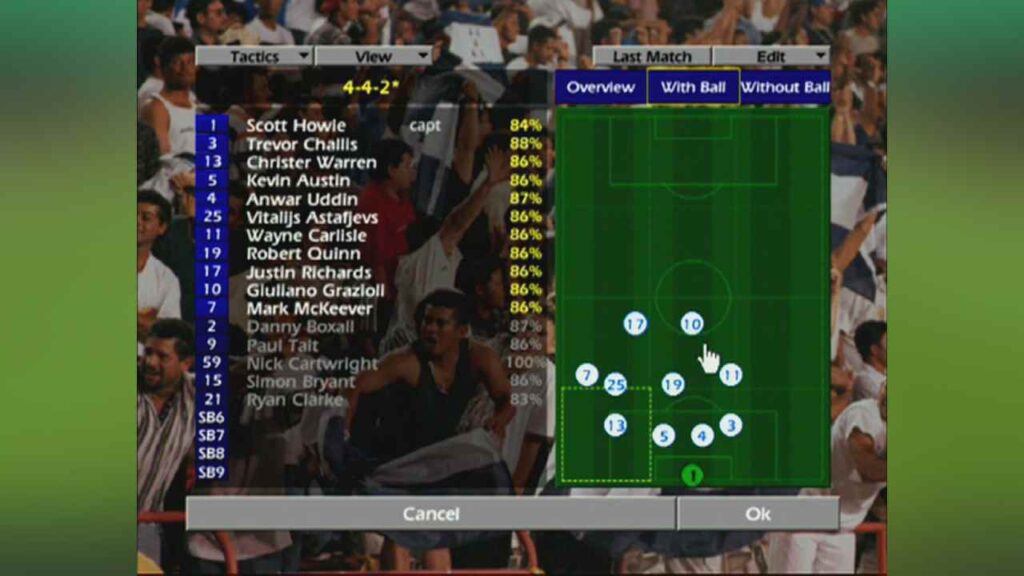
Championship Manager 02/03 sits 7th because it feels like the peak of the original Championship Manager era before everything split. It didn’t reinvent the series, but it pretty much perfected what that version of the game was trying to be. The database was enormous for the time, and it’s also the version tied to countless cult saves, wonderkid myths and decade-long careers. Tactically it was still rooted in that classic engine, but it was refined and reliable. Presentation wasn’t the point here. Depth and replayability were. For a lot of players, this is the definitive old-school experience, and its legacy is the reason it ranks so high.
6) Football Manager 2024
Football Manager 2024 ranks this high because it felt complete in a way that’s easy to take for granted. The headline feature was the ability to carry your save forward, which genuinely changed how people approached long-term careers. Real World mode also tweaked the first transfer window so deals played out in line with real life, while Your World kept the usual sandbox setup. Set pieces were overhauled properly, and the match engine was one of the most stable and realistic the series had seen. It isn’t revolutionary, but it’s refined, confident and very easy to sink time into. And yes, that makes it stand out even more when you look at what came after.
5) Football Manager 2022
Football Manager 2022 quietly changed how you actually consume information during a save. The Data Hub was the big addition, and it wasn’t just a new screen full of graphs for the sake of it. It pulled performance analysis, recruitment trends and tactical weaknesses into one coherent place, so the analytics side of the game finally felt usable rather than overwhelming. You could spot patterns in form, xG swings and opposition tendencies without digging through endless menus. The response at launch was hugely positive because it felt like proper evolution, not cosmetic change. FM22 made the series feel more modern in a way that genuinely mattered.
4) Football Manager 2010
Football Manager 2010 is the year the series got smarter. The match analysis tools stepped up in a big way, with heat maps, pass maps and deeper statistical breakdowns that made tactical tweaks feel evidence-based rather than pure guesswork. For a lot of players, this is where Football Manager started to resemble real-world analytics culture rather than just simulating results. The 3D engine improved as well, with more believable movement and better defensive shape. It didn’t hang everything on one flashy gimmick. It just strengthened the core and made the whole experience feel more serious and more professional.
3) Championship Manager 4
Championship Manager 4 is where the series properly outgrew the “glorified spreadsheet” label. The introduction of a 2D match engine was the big shift, because for the first time you could actually watch your tactics unfold instead of interpreting everything through text commentary. It also brought a redesigned UI and a fully skinnable interface, which helped the game feel more modern and flexible. The database was massive for its time and the tactical options had real depth, which gave long-term saves more texture. It was ambitious and a bit messy in places, but it pushed the genre forward. That’s exactly why it sits this high.
2) Football Manager 2005
Football Manager 2005 had the toughest job of any entry in the series. It had to prove Sports Interactive could survive without the Championship Manager name, and it managed that straight away. The branding and interface were new, but the obsessive depth underneath was still there, and the database scale was enormous for the time. It didn’t reinvent the series, but it absolutely had to get the basics right. And it did. Without FM09 landing, there isn’t really a modern Football Manager series at all.
1) Football Manager 2009
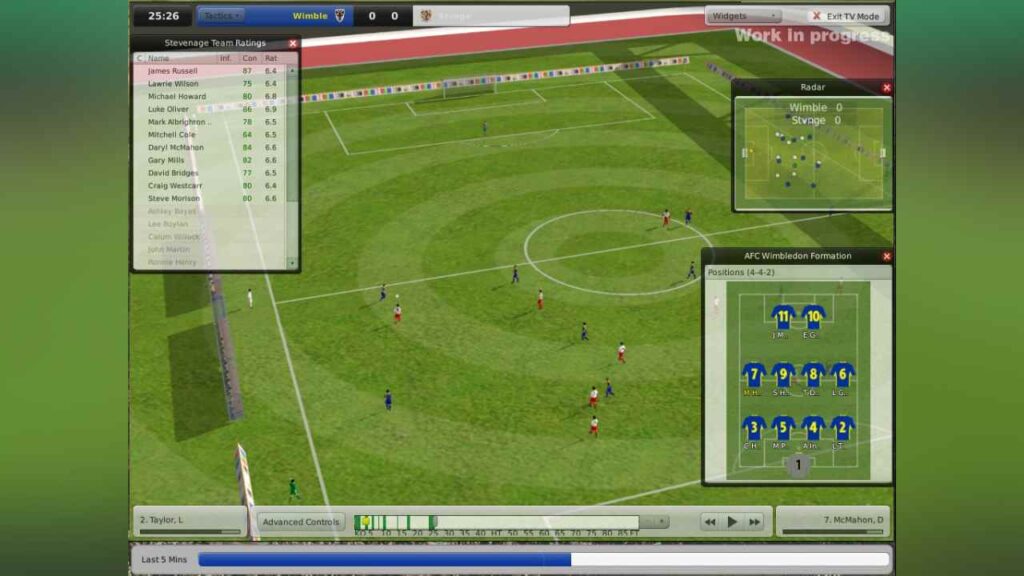
Football Manager 2009 sits top because it genuinely changed the direction of the series. This was the year the 3D match engine properly arrived and dragged Football Manager into a new era. Suddenly you weren’t just watching dots glide around a 2D pitch — you could see something that actually resembled football, which made it far easier to understand what your tactics were doing. The tactical system became more granular too, with sliders and role tweaks that feel much closer to modern FM logic. Reviews were strong at the time, and the impact lasted. Every Football Manager since has built on the leap FM09 made, which is why it earns the number one spot.
Conclusion
Looking back through the entire history of Championship Manager and Football Manager, a clear pattern emerges. The series has never relied on one single idea. Instead it’s grown through dozens of smaller improvements layered on top of each other over time. A better match engine here. A deeper transfer system there. A new way of analysing performances. Individually they might seem minor but together they’ve built the most detailed sports simulation in gaming.
What also stands out is how important the big turning points were. The shift from Championship Manager to Football Manager. The introduction of visual match engines. The gradual move towards analytics and data-driven decision making. Those moments didn’t just improve the game, they changed what players expected from it long-term
Even the weaker entries in the list still contributed something to the evolution of the series. Without those experiments, refinements and occasional missteps, the stronger versions wouldn’t exist. Which should give us some hope about Football Manager 26. Hopefully this clear misstep has a transformative impact going forward.
If history has taught us anything, it’s that Football Manager rarely stands still for long. There’s always another version coming, another system being rebuilt, another attempt to push the simulation forward. The only real question now is which future entry might eventually force its way into the top of this list.