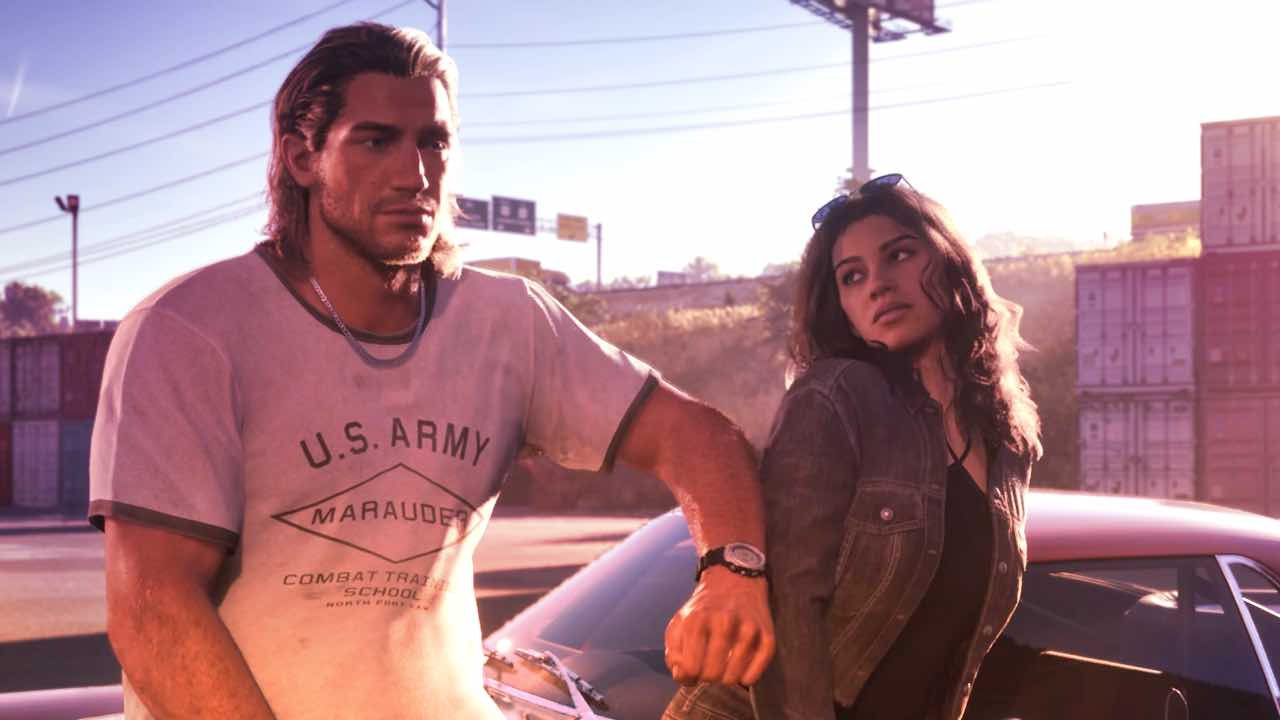
GTA V and Red Dead Redemption 2 are phenomenal games, but there’s one thing they both suffer from: stiff controls. While more forgivable in RDR2’s more realism-focused world, GTA V’s arcade-like, over-the-top Los Santos can still feel sluggish even at extreme framerates. With GTA 6, however, Rockstar has finally refined its movement systems to feel responsive, even if the game is locked to just 30fps.
While GTA 6 may target 30fps, a target it doesn’t always hit, the open-world action game feels more responsive than other games targeting that framerate. With the entry, Rockstar is very obviously still using a simulated animation system that merges between animations as you move around the world. This means walking and turning are smoothly tweened, for example.
In GTA V and Red Dead Redemption 2, this animation system was gorgeous to behold, but often led to sluggish controls. It often felt, especially in RDR2, that the game was less responsive due to this system, a system that was introduced in GTA IV and only got less responsive as Rockstar’s ambitious open world games continued. You can play Red Dead Redemption 2 at four times the frame rate as GTA 6, and its controls simply won’t feel as responsive. That’s not down to input lag, which high frame rates can fix, but the way in which movement is handled.
In GTA 6, this is simply no longer an issue, outside of very specific instances. When you’re in very specific locations where you can no longer run and are forced into a slow walk, such as your own house, it can feel like Rockstar’s clunky old movement systems are coming back to haunt you. But when you’re let free off the reigns? It’s the best-feeling game in Rockstar’s history.
This is evident right off the bat, as well. In the game’s intro, you play as Lucia during a mini parkour section, running over small buildings and hopping over fences. It’s not the slickest parkour system, but it’s a generational improvement over Rockstar’s past attempts, and it no longer feels like you’re trying to fight the environment as you’re trying to chase someone down or escape the police.
In contrast, though, driving is now heavier than in GTA V with GTA 6 handling sitting in a sort of mid-point between IV’s weighty physics and V’s Midnight Club smoothness. For my tastes, at least, it’s the perfect match for the world simulation Rockstar is trying to achieve with semi-realistic driving in a realistic world while core movement remains free.
YEs, there’s a sense of realism in Red Dead Redemption 2 and GTA V’s heavier human handling model. On the other side, when it’s less responsive than it feels like it should be, all that work that’s gone into making those worlds immersive can drop and falter as Michael De Santa or Arthur Morgan ends up rubbing against a rock because the animation tweening can’t decide which direction it wants you to take.
This has been my biggest problem with Rockstar’s games since their jump to HD, and it’s finally been fixed here. In my time with GTA 6, my immersion has not once been shattered due to the game’s movement controls, and the studio’s latest ambition is undoubtedly the best feeling game they’ve released… well, at leats since Table Tennis.
Unfortunately, we’re only a few hours into GTA 6 at the time of writing, and there could be sections where Rockstar’s refined movement starts to butt heads once again. But after over a decade of wrestling with the fun-but-finnicky movement, it does feel like Rockstar is finally addressing its games’ fatal flaws.