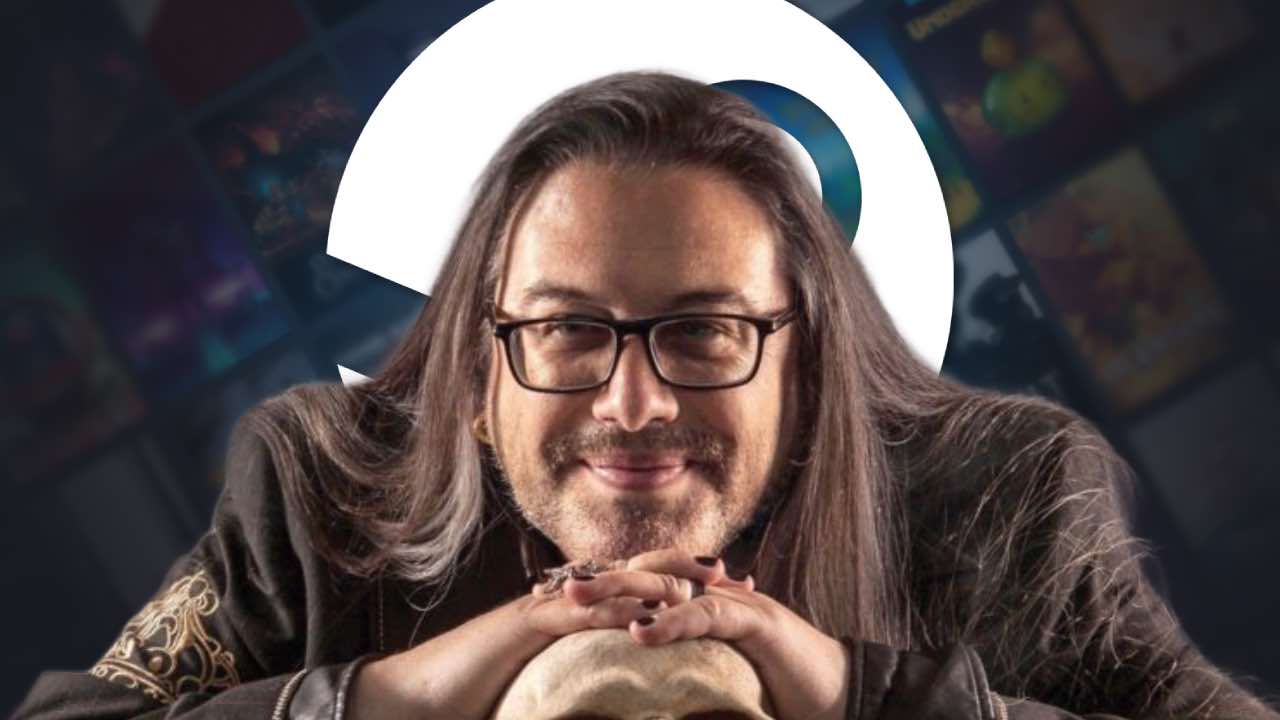
DOOM co-creator and iconic game designer John Romero isn’t too worried about the ever-increasing number of daily game releases.
Romero, who began working in the industry in the early 1980s, has seen the market for games evolve tenfold across his career. Speaking in an upcoming episode of the FRVR Podcast, the iconic game designer explained that distribution is easier than it has ever been, but developers need to be more focused on design than ever before.
“Distribution was the hardest thing to do back then [at the start of my career],” Romero explained. “Because if you didn’t have a mode, and I didn’t really care about being online back then, you needed to get a disc with a game on it, and those were in stores. And to get into a store that’s like another universe.”
Gaming and retail was still a major barrier to game developers as late as the 2010s. In the 1990s, Id Software famously partnered with Apogee Software to release its games via shareware and mail order. While this did lead to amazing mail-order sales, DOOM became the biggest game of the 90s because it was also available in stores.
While online marketplaces have suffered as of late due to the bloat of poor-quality software and AI clones, Romero believes the current landscape is still much better than that of the past. Romero reminisced about magazine deals and publishers, but explained that “getting a publisher was hard” as there was a limited amount of money going around to fund new games.
“Distribution was so hard back then,” he said. “Now, it’s really easy.” When discussing the mass increase of game demos during Steam Next Fest or the waves of poor-quality games in console eShops, the DOOM creator explained” “More than that’s being dumped onto Android every month.”
“Most of them are trash,” he continued. “Most of them are AI-generated or there’s a game making kit used to just generate them automatically, you know? A lot of them. But it’s great, that the democratisation of getting your stuff out there is a reality now. Any little kid can get their game out there, just making something and go ahead and put it up there. It’s awesome. I love that you can do that. There’s not a barrier to doing that other than the hundred bucks that you have to pay to Apple for iOS developer license.”
Romero explained that “now, more than ever, it’s about design”. As anyone can grab an engine and make a game without worrying about distribution, developers now need to have stronger ideas and continue to push design forward, something the DOOM creator feels is more important than hyper-real graphics and cutting-edge rendering.
“The ability is there now. You have engines, you have frameworks, you have so many SDKs and ways of building games. That’s great. It can make everyone creative in another way, a new way, right? But it needs to be really good before anyone’s going to care. I always get people asking, ‘well how do I get people to notice my indie game? I’m nobody and have no idea how. If I just tweet it, it’s gone. Nobody sees me. I have 57 followers or whatever.’
“My advice is to network as much as you can, get enrolled in as many indie game fests as possible… get your stuff out there… if it’s good and people like it, they will want to talk about it. The best promotion is when people want to talk about your game. So, yeah, it’s all about design. Have a really great design and people are going to want to talk about it.”
The rise of AI slop has definitely increased the annoyance of browsing digital marketplaces. Gamers have asked en masse for AI filters to eliminate low-quality titles, much to the chagrin of Epic Games CEO Tim Sweeney. Indie marketplace Itch.io announced the removal of terabytes of AI content from the service. Nevertheless, games with strong looks and great design are still pushing through.
At the time of writing, Romero is working on a brand-new FPS game with Unreal Engine 5. While the team size has shrunk after the studio’s Xbox partnership fell through, the game is still in active development.