Former Elder Scrolls loremaster and Skyrim co-lead Kurt Kuhlmann believes that the ongoing layoffs at Bethesda Game Studios make “no sense” as the studio continues work on The Elder Scrolls 6.
Kuhlmann, who left Bethesda in 2023 after completing Starfield, explained on an upcoming episode of the FRVR Podcast, that the slew of layoffs hitting Bethesda are a net negative for the studio, especially as the studio is actively developing a game that fans have been waiting 15 years for.
In the interview, the Skyrim co-lead said that this is the third round of layoffs to hit Bethesda Game Studios since their acquisition by Xbox in 2021. Prior to that, during Kuhlmann’s near two-decade tenure at the RPG developer, layoffs were unheard of.
“The only layoffs we ever had were after the Microsoft acquisition,” Kuhlmann told us. “Up until that point, the whole time—I mean, obviously people had been let go—there was never a layoff of ‘we are laying off this large group of people’.”
Kuhlmann explained that there was a naivety around the studio when they heard Microsoft would be conducting layoffs. “A lot of us were like, ‘well, that doesn’t have anything to do with us. We heard Microsoft is doing layoffs. Well, we’re not actually Microsoft employees, we’re Zenimax. We’re not getting Microsoft benefits. It’s probably nothing to do with us.’”
Those early, smaller layoffs were “an eye-opening experience” for the studio, the developer told us. However, those layoffs have now appeared at a frequent pace with the studio hit three times after decades of stability. These layoffs aren’t hitting junior newcomers to the studio, either, with veteran workers that have shipped titles since before the turn of the millennium being cut from their work.
“Very senior and longtime, like, the best people you can imagine [were cut],” Kuhlmann told us. “Surely, they weren’t laid off for any cause. They weren’t bad at their jobs.”
“These aren’t people that screwed up, were slacking off, or bad at their jobs. That means anyone could be laid off. That means you have no way to know. You can’t just be good and work harder and know you’re safe.”
Former Elder Scrolls, Fallout, and Starfield designer Kurt Kuhlmann on Xbox’s Bethesda layoffs.
Kuhlmann, who departed before full production started on The Elder Scrolls 6, explained that the mass layoffs targeting Bethesda don’t make any sense. “I can’t say I understand it, even from a pure just business money point of view,” the designer said. “If you want the money from TES 6, why would you fire people who are working on that and are going to make it happen, and make it better, and get it done faster? Why would you do that?”
For Kuhlmann, who spent two decades working at Bethesda, the crucial part is that is just “doesn’t make any sense” to cut so broadly. The designer and former loremaster revealed that his studio Lightspeed LA—which he has since publicly announced on LinkedIn—back in July. Those layoffs resulted in the end of their project, which at least makes sense to the developer, but to cut developers actively working on what should be a blockbuster release is simply short-sighted.
“Tencent was the owner of my studio, Lightspeed LA, they said, ‘okay, we’re cancelling the project so we’re laying most of the team off.’ That makes sense in a way, like, ‘okay, we’re not doing the project we don’t need the people making that game. But if you’re not cancelling the project, why are you laying people off? Inevitably, all you’re doing is slowing it down, creating chaos, lowering morale. Like, it’s not like you’re getting rid of the people who are screwing things up and are bad.”
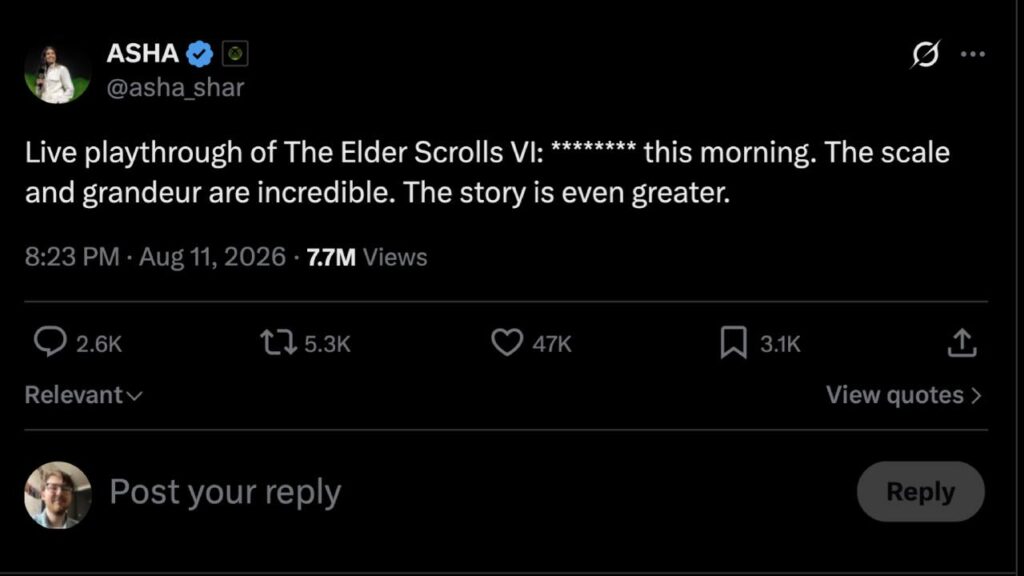
Upon announcing the layoffs, Xbox CEO Asha Sharma claimed that the mass layoffs and divesting of studios such as Double Fine was down to poor structure, claiming “work passes through as many as 14 layers of management”. For Kuhlmann, this statement also doesn’t make any sense, and other employees have taken aim at this statement with protesters holding signs saying “14 layers of Bullsh*t” outside the Zenimax offices.
“14 layers of management, that’s a total nonsense,” Kuhlmann told us. “I don’t even know what that means or what they’re talking about. They weren’t laying off the people managing things. They were laying off people that were creating the game.”
Compared to the wider industry, Bethesda was an incredibly stable studio, with “very little turnover”. Many devs that worked at the RPG developer stayed for decades, and these layoffs have cut extremely long-lasting employees, including Christiane Meister, a senior artist who was behind many of the foundational redesigns for The Elder Scrolls III: Morrowind that continue to this day.
Kuhlmann explains that the longevity of Bethesda’s staff is because it was a “good place to work”, and layoffs threaten that. Bethesda’s veteran staff not only have value in “institutional knowledge”, but the stability of the studio meant that every game was planned with the knowledge of what came after with ideas for how they could tackle the next game.
“I think when you start laying people off, especially when you’re laying people off for no reason. Good people. These aren’t people that screwed up, were slacking off, or bad at their jobs. That means anyone could be laid off. That means you have no way to know. You can’t just be good and work harder and know you’re safe. Clearly, that’s not the case.”
One of the major hits towards The Elder Scrolls 6 dev team and the Elder Scrolls Online dev team at Zenimax Online Studios has been towards the QA team. Bethesda titles are infamously buggy affairs due to the scale and dynamism of their heavily simulated worlds, and QA has helped to keep those games stable.
For Kuhlmann, laying off a heavy percentage of the Bethesda QA team “is one of the most short-sighted thing”. While outsourced QA can be cheaper, Kuhlmann argues its less effective, especially when working within a specific engine such as Bethesda’s in-house Creation Engine.
“The outsourcing QA versus the in-house QA, especially for games like Bethesda makes, it night and day,” the developer said. “Those people were absolutely invaluable. The difference between someone who doesn’t know the tools and has never seen the game, and is just told, ‘today, you’re doing this’, and they’re playing through and putting in bugs. The difference between that and someone who’s been working on those games, our games, with us for 10, 15 years, it’s night and day.”
Kuhlmann explained that the in-house QA team doesn’t only know “how the game can break”, but also they’re more effective in finding the root cause of bugs versus an outsourced team. “They know also not to put in 25 bugs that are actually one bug,” he said. “That’s what you end up getting, is this blizzard of bugs which are actually the same thing, which is a symptom of one thing.” As The Elder Scrolls 6 moves closer to release, the QA team’s knowledge is paramount, but they’ve been cut anyway.
Despite the layoffs, Kuhlmann doesn’t know if joining Xbox was necessarily the wrong move for Bethesda, arguing that Zenimax would’ve been sold eventually. “You can go down the list and say, what are the options? Ubisoft? EA? Take-Two? I don’t know. At the time, I think a lot of people felt like, if that’s going to happen, Microsoft may be not a bad option. That’s how I felt, I guess.”
With that said, Kuhlmann recognises that “the people who bought Bethesda, those people are now gone”. There’s a new management team with its own ideas, their own way of running Xbox, and their own thoughts on what to do about The Elder Scrolls. “The people that decided to buy Zenimax and Blizzard/Activision, those people are gone. Apparently, their decisions were terrible, and now we have to fix them.”
Kuhlmann believes that Microsoft and Xbox’s interest in Bethesda is that the “IP is valuable”. Nevertheless, The Elder Scrolls and Fallout are still gaming IPs, no matter what TV or movie deals can be struck outside of that. The value is in the games, and that requires a studio that knows how to make them.