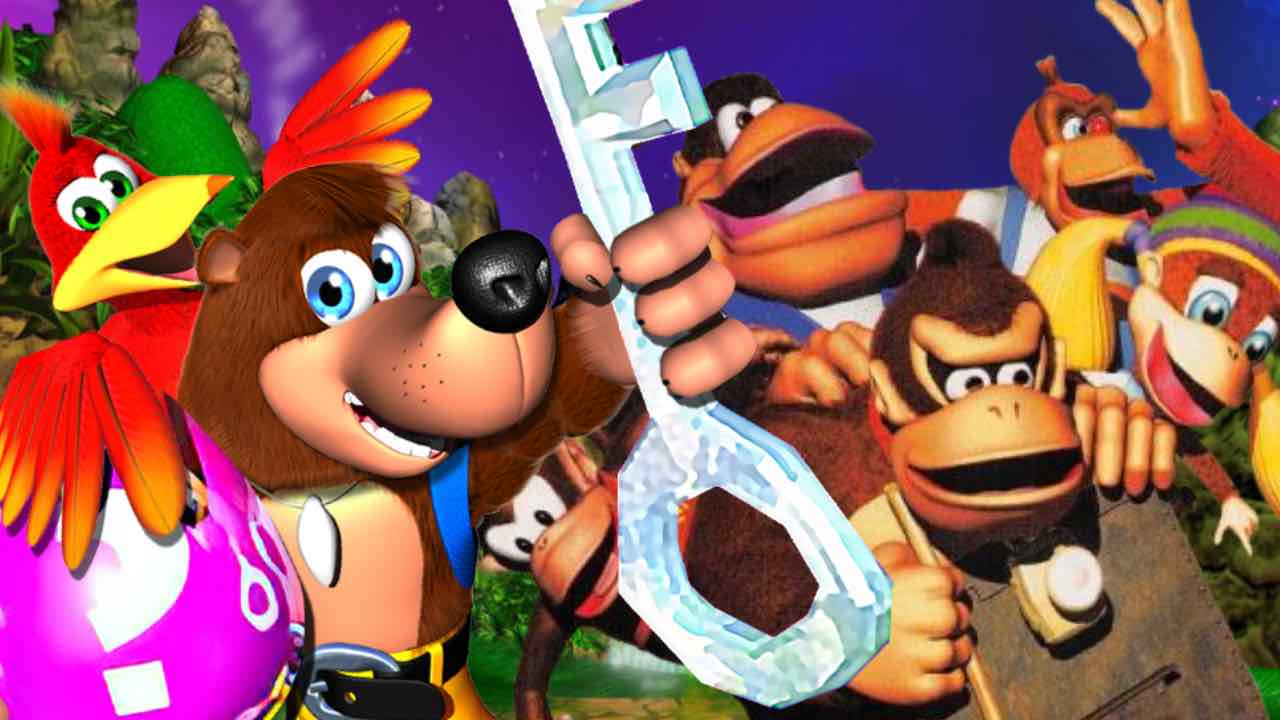
Banjo Kazooie, Donkey Kong 64, Viva Pinata and the slew of Rare titles iconic composer Grant Kirkhope has worked on are games revered for the scores. Over the decades, these games have been re-released, remastered and resold, but the devs that originally worked on those titles back in the day
Residuals for video games are, largely, non-existent. While games have existed in the home since the 1970s and music in games has existed since the 1980s, composers for games earn nothing from continued sales—or through services like Game Pass “plays”, for tracks they’ve composed whereas composers for film and TV continue to make money after the job is complete.
Former Rare composer Grant Kirkhope, who worked on the aforementioned trio of games, explained that this has only become worse through the current music subscription services and social media. TikTok, for example, was released as a music-themed app around existing songs and they’re still used today as “sounds” for short-form video, but Kirkhope receives pennies for millions of plays of their music.
“I get my statements every month,” Kirkhope told us in this week’s upcoming episode of the FRVR Podcast. “The DK rap had 5 million plays on TikTok and I got 56 cents for it. My music on TikTok is running at around 114 million plays and I’m getting, I don’t know, 50 bucks from it.”
Kirkhope explained that signing up to do video game music usually results in “a complete buyout”, although sometimes you’ll also receive a “writer share”. Even then, Kirkhope explains that having a writer’s share only really matters if music is played in a movie or TV show as the money generated via music streaming services is literal pennies.
“On Spotify and all the rest of it, it’s nothing,” the composer said. “It’s made the music business or even being in a band almost not worth doing anymore because you can’t make any money or make very little money from the whole Spotify thing. It’s a dreadful, dreadful thing.”
In August 2023, Kirkhope released a recompilation album of Banjo Kazooie’s tracks titled Banjo Kazooie Re-Jiggyed. For decades, Kirkhope, despite creating the music for Rare’s iconic platformer, was unable to make money from the music or release covers as they were not available on physical media until the release of the official vinyls in 2015. Even then, additional tracks weren’t able to be covered until the second expanded vinyl release in 2019.
“I can recreate anything. That’s why I’ve done albums like Banjo Kazooie and Donkey Kong and Viva Pinata pieces because I get to own the masters or the label that hired me to do it owns the masters and they pay a small royalty to do it… But the rule is that to be classed as a cover version it had to have a physical release like a CD or whatever,” Kirkhope explained.
Kirkhope has worked on almost 50 games across his career, and few of them have received physical soundtracks, locking the composer from making any money from much of his prior career. Unfortunately, in games, this is the norm with game composers forced to move forward instead of being able to continue earning from the past like most TV and film composers do.
“Video games, on AAA they do pay well,” Kirkhope was keen to clear up. “It’s not like I’m a pauper, right? But we are trying to change it now. Perhaps some way of getting residuals from video games will happen in the future. Or that’s the plan. Whether that actually succeeds or not, I don’t know. But the TV and film, that’s been locked in for a long, long time, but video games is very new compared to those.”
For Kirkhope, the composer hopes that game composers will have more ownership over the music they create. Perhaps composers would be able to create covers for games that don’t have their soundtracks released physically, allowing them to make some money from their prior works. Right now, though, the composer states that music rights are a “minefield” and a “bit wild westy” while highlighting that groups like the The Society of Composers & Lyricists are making headway in Congress.
The reality, though, is that video games are still treated as a lesser medium. TV composers that write a hit theme are made millionaires; film composers are often treated for life with their scores, but game composers are simply pushed to either jump from game-to-game, hope they can release cover versions of their own music, or move themselves into TV and film.