BioWare’s Mass Effect series wasn’t just a brilliant game, but an industry-changing event. Almost 20 years later, the sci-fi RPG is still inspiring new games. Its conversation wheel system is often picked up by new titles, its relationship system has been replicated in games like Baldur’s Gate 3, and its storytelling continues to inspire.
One of the biggest evolutions that Mass Effect had over its competitors in 2007 was its cinematic flair. At the time, few games really had movie-like cutscenes: Metal Gear Solid and Halo 2. But Mass Effect’s aim was to make every cutscene a cinematic event, even the basic dialogue scenes that most games would frame in very basic, video game-y shots.
Speaking on our FRVR Podcast, releasing later this week, Mass Effect cinematic designer and Mass Effect 2 lead cinematic designer Armando Troisi explained that this massive step up in production quality was at the behest of Casey Hudson.
“He would put these impossible goals in front of us,” Troisi recalled, recounting that Hudson was known as the “troublemaker in chief” of the studio. “He was just like, ‘okay, this is what we need to do, right?’”
Troisi explained that the cinematic team were all “in engine, rough and humble, hacking the engine to try to make things work”. Many of the team had come from backgrounds in machinima, the art of taking game engines and breaking them to make short films. The most famous machinma show, Red vs Blue, used Halo’s engine to tell a 20-season narrative which didn’t end until 2024.
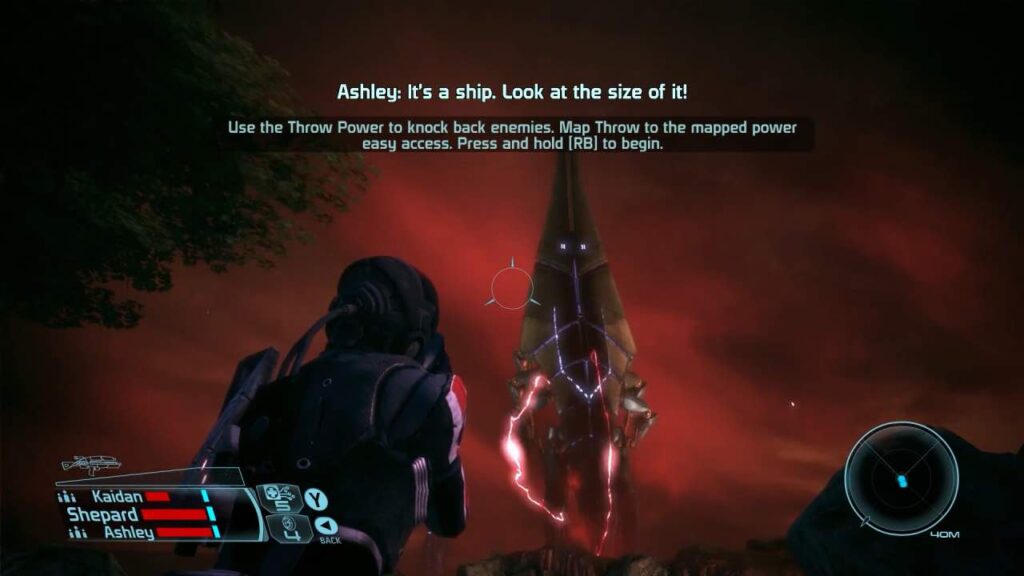
“We started experimenting with things like longer lenses to compress the frame and we would throw on things like The Good, The Bad, and The Ugly and it would be playing in the background. And we would look at the cinematography and we would look at it like how is this working, and how could we emulate that?”
While many fans would never notice it, Troisi explained that the brilliance of constructing Mass Effect’s in-engine scenes was due to the fact that every shot was designed around an internal set of rules. Today, many games simply rely on shot/reverse shot, a simple cinematic way of showing dialogue, but Mass Effect’s ruleset was more granular.
“We would do things like, if people were friendly to each other, they would share the frame, so ove-the-shouders [shots] meant that they were having a friendly encounter,” Troisi explained. “But if we had opposing shots, then they were hostile. They weren’t sharing the frame because there was a divide.” This also means that, sometimes, characters can share the frame before their full intentions are known, adding cinematic drama to the game without players even recognising it.
“It’s a level of ambition that I think was just unheard of at the time.”
Mass Effect cinematic designer Armando Troisi
“I think one of the worse things we can do as designers is freewheel it,” Troisi told us. “Like we actually sat down and wrote: ‘okay, this is how it’s going to work’. Here’s what a hostile camera is. Here’s what a friendly camera is. Here’s what a disagreement camera is, what an intimacy is going to look like.”
Troisi recalled that even simple scenes were pushing Mass Effect’s rickety engine to the max. “It was weird because it’s a game I feel should have never been made,” Troisi said. “It was a new engine, a new IP, a new console. It was a triple threat trying to get that to all [work]. Trying to get the streaming to work and getting it all to go.”
Troisi explained that Mass Effect’s development was tough, especially as BioWare was pushing the game’s cinematic technology further than any game had gone before. Mass Effect launched first as a console exclusive on Xbox 360 with PC trailing around half-a-year behind, but the game was only just about stable when release rolled around.
“A lot of people look at ME1 and think that it’s glitchy and this, that, and the other,” Troisi recalled. “But the story behind that is we didn’t have it working on console until the very end of development.” For 2007, Troisi explained that the game “really pushed the limits of what is possible in real-time rendering” with the team going through “21 days on, one day off kind of crunch to get this thing out the door”.
While gruelling work, Mass Effect 1 became a beacon of the Xbox 360 generation, and the game is still used as a north star for many games today. For Troisi, Mass Effect marked a significant shift in game design, partly down to its cinematic flair, but more because of everything it did as a cohesive whole.
“It’s a level of ambition that I think was just unheard of at the time,” he said, “And the fact that you’re going to make, it’s not just an interactive narrative, it’s an interactive film. And delivering that to our audience in such a profound way, I guess, and wrapping it in such a great story and a great fantasy was just something that we were just so proud of, and I’m still proud of. It’s one of the things I look back on in my life and go: ‘wow, that was really really hard, but really worth it.”