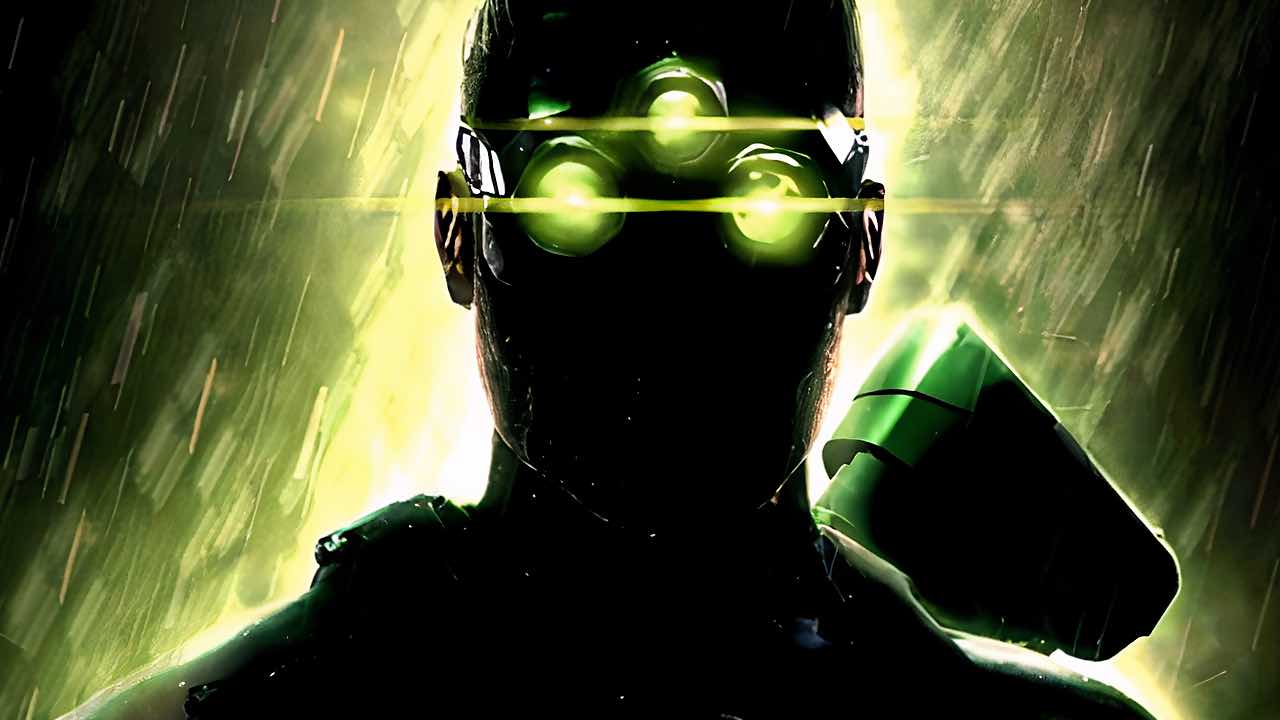
Splinter Cell designer and Chaos Theory creative director Clint Hocking explains that modern lighting solutions have made stealth games harder to parse compared to older processes.
Hocking, who worked on one of the first AAA games to offer hardware-accelerated ray-tracing in Watch Dogs: Legion, explained that modern lighting is one of the hardest elements of making stealth games today. Whereas the original Splinter Cell games relied on sharp shadows, modern setups introduce more abstract levels of shade and darkness.
“I actually think one of the difficulties with modern stealth games is the sophistication in the rendering has made lighting so much more realistic,” Hocking told us for an upcoming episode of our FRVR Podcast.
The game director, who is now founding their own studio Build Machine Games, explained that techniques like diffusion allow for more realistic looks, they’re “so much harder to read”, making it more difficult to discern whether you’re actually hidden or not.
“When you think about those old school stealth games because of their baked lighting, the lighting is very clean and readable and very understandable for the player,” he said. “But once you get into this diffuse and ambient occlusion and all of the stuff that comes with it, it gets very hard to tell what’s light, what’s shadow, what’s dark, what’s safe, what’s dangerous and all of that stuff.”

The Splinter Cell series itself has seen this change just based on its own games. While not perfect, the original trilogy’s lighting setup made it largely easy to know whether you were hidden or not, and a light gauge in the corner of the UI served as a backup tool for players to use. This gauge followed the Thief way of doing things, a tool that was recently reused for Otherside’s Thick as Thieves.
As games have come to use more advanced lighting setups, other techniques have been tried. Splinter Cell: Double Agent had an inconsistent light on Sam Fisher’s body that attempted to tell you when you were safe; Conviction would turn the screen black and white to indicate you were hidden. But, really, the most accurate way of knowing whether or not you’re properly stealth’d is with precise shadows.
“Part of it is also just lighting direction,” Hocking said, explaining that even realistic lighting systems can be properly tuned for stealth gameplay. “When you go and see a play on a stage, the lighting is often super dramatic. So, you can do it with real lights. It’s just that, you know, these places are often lit to be very realistic and not lit to be aesthetic to purpose for stealth gameplay.”
Hocking explains that this balance is “a tough bridge to cross”, especially as “people in the industry spent 20 years of their career thinking about how to make things look more realistic”. Theatre lighting and aesthetic lighting direction requires a lot of experience, it just helps that more basic lighting systems forced developers to work within constraints that pushed them towards a similar practice.

Ray-tracing, and path-tracing even more so, now allow for the most life-accurate simulation of light we’ve ever seen in games, but no one has properly used it for stealth. As with any new technology, Hocking explains that you can’t just take the technology and build a level and hope stealth works, that technique needs to be properly applied for the genre its in. That’s where realism and game design often cross; and it’s always a balance.
“I think there would be some learning if we wanted to really use these modern lighting techniques to have a really pure stealth experience,” the Splinter Cell designer said. “And, you know, people who go ahead and make that game, I think need to do some really deep thinking.”
Ray-tracing and path-tracing, once all available hardware can render it efficiently, will help developers to make games quicker. Baking lightmaps and shadowmaps is a major time-sink for development and also causes install sizes to balloon, and this technology is a revolutionary fix. However, as lighting becomes easier than ever, intent becomes more important than ever, especially in a genre that relies so heavily on it such as stealth.