Within the slick-white labs of Pragmata’s polished science labs, there’s a reminder of a generation filled with greys and browns—the Xbox 360 era. While Capcom’s latest new IP certainly looks like a shiny new-gen title on the company’s gorgeous RE Engine, its unique style of gameplay feels like something that would’ve only been attempted back in 2006.
Not everything works in Pragmata, and the game itself is a little unbalanced in a number of areas, but this feels like the work of the Capcom behind Dead Rising and Lost Planet, and not so much the Capcom of today. That may seem back-handed, but it’s a compliment. While there may be elements that would only exist in today’s industry—the father and daughter-like setup of Hugh and Diana would only exist in a post-Last of Us world—it’s a game that’s built around one core idea instead of a large number of trending mechanics.
Set on a research station on the Moon, protagonist Hugh Williams encounters the titular Pragmata, Diana amidst a security shutdown initiated by IDUS, the location’s security AI. As bullets deal little damage to the station’s robotic forces, Hugh and Diana must work together, combining her hacking prowess and his combat abilities to combo the threat together.
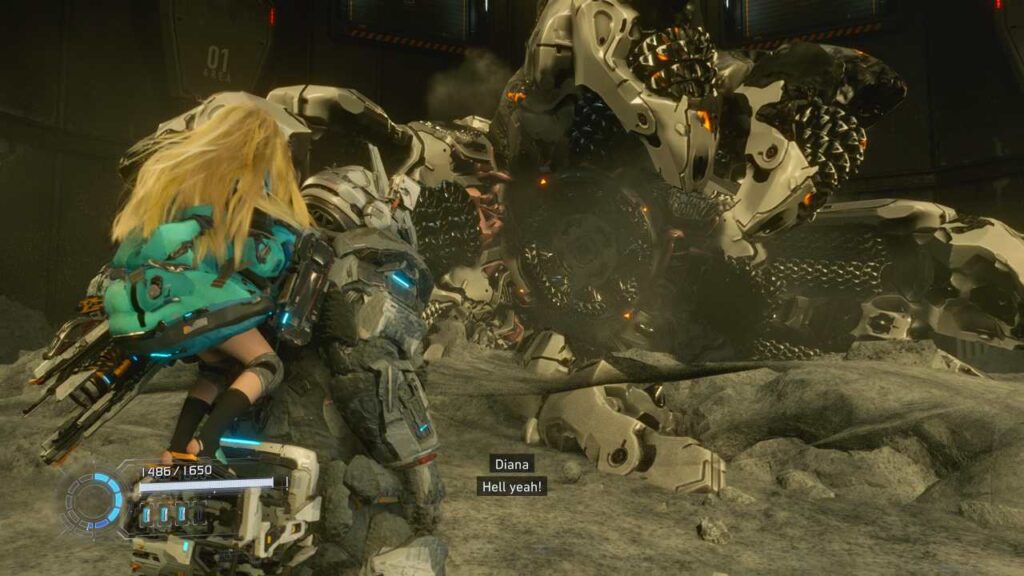
Pragmata focuses entirely on the one-two punch of Hugh and Diana’s synchronisation. As you manoeuvrer as Hugh with his combination of firearms and thruster platforming, Diana can hack robotic foes, locked doors, and other assorted items to fight or just explore your environment. During combat, Diana’s hacking appears in the form of a grid controlled by your controller’s face buttons as you simultaneously move and shoot with Hugh, allowing her to weaken enemy defences and apply a series of debuffs based on your equippable items.
With each enemy having its own weak points and attack patterns, Pragmata always keeps you on your toes. While early combat can feel a tad unsatisfying against the game’s more basic foes, later arenas have you dodging landmines, hacking missiles that return-to-sender, and dodging a robotic clone of Dune’s sandworms across the lunar surface.
There’s a remarkably satisfying loop to combat that only gets better the more your explore and the more you upgrade, allowing you to hold more weapons, create more hacking combos, and dish out tonnes of damage. From homing launchers to Halo-esque bubble shields, there’s combinations aplenty, and it makes you actively desire larger-scale battles. Where it annoys is in its claustrophobia as the game continues to create fights in narrow corridors even up to the end when its combat excels in open spaces, but even there it’s satisfying enough to keep you pummelling through robots until the credits roll.
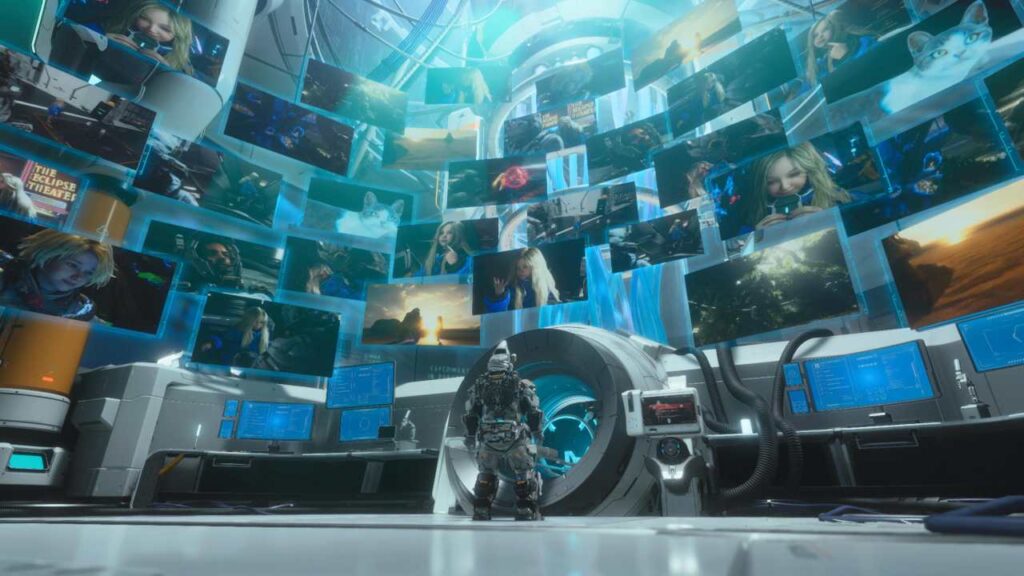
Alongside the game’s combat, there’s a healthy dose of exploration with a large number of collectibles to find around corners, within puzzles, and even behind false walls. While not necessary, you’ll want to hunt down a large number of these upgrades as they allow you to upgrade Hugh and Diana, your weapons, hacking abilities, unlock additional challenge rooms, and find new items for Diana to interact with in the game’s safe-hub Shelter.
Where Pragmata mostly falters is in its environmental variety. While there are moments of ingenuity, such as the game’s half-3D-printed version of New York City, the vast majority of the game is spent in reflection-coated science labs surrounded by shiny robots. Narratively, there are teases of other locations, but they never come to fruition, and it seems a return to the science labs may be more of a budgetary issue than an imagination issue.
Additionally, as far as video game stories go, Pragmata isn’t much to write home about, but the game does nail the core relationship of Hugh and Diana. There isn’t much in the way of a narrative, and lore-wise there isn’t too much either, but the game is carried by the camaraderie of its protagonists. Unlike most duos in gaming, the two take to each other immediately, and little optional dialogue moments flesh out their relationship in a sweet way. It’s not deep, but it’s refreshingly calming, and the parent-child connection between the two carries the paper-thin story on its back.
Pragmata, as a full experience, does feel a little unbalanced. I would’ve liked to see even bigger arenas and more bosses, especially as those fights offer the same brilliant spectacle that only Capcom truly offers, but what’s here is mostly great. While platforming can be clunky, especially during the game’s bespoke platforming challenges, the core combat is effortlessly satisfying once you get your head around it.
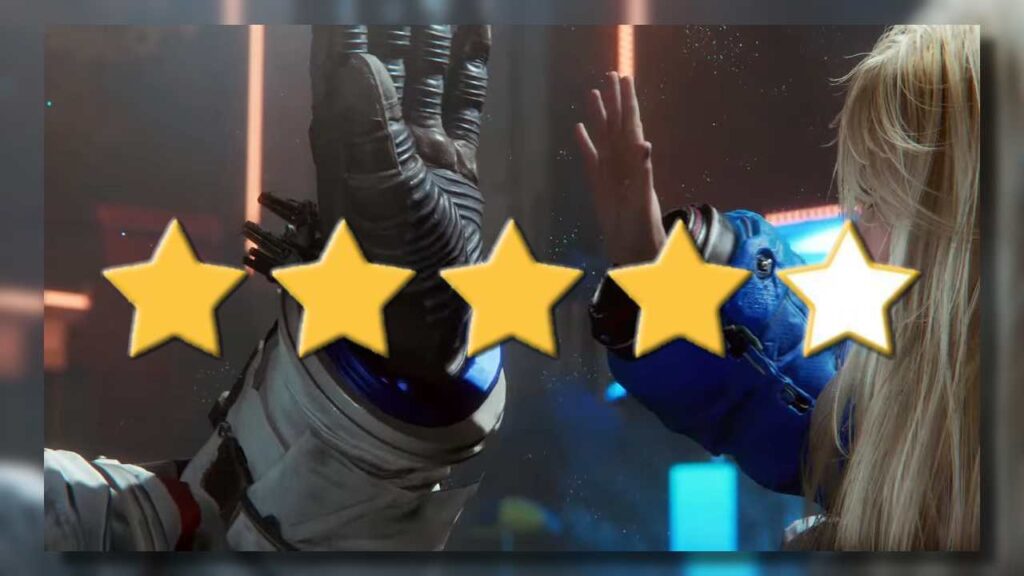
While not perfect, Pragmata feels like the kind of game that the industry needs right now. As far as modern gaming goes, it is surprisingly singular, there is nothing like it, and it’s a reminder of the Capcom we saw twenty years ago. It’s not so much genre-bending as it is genre-pushing, even if it’s not pushing entirely in the right directions all of the time.