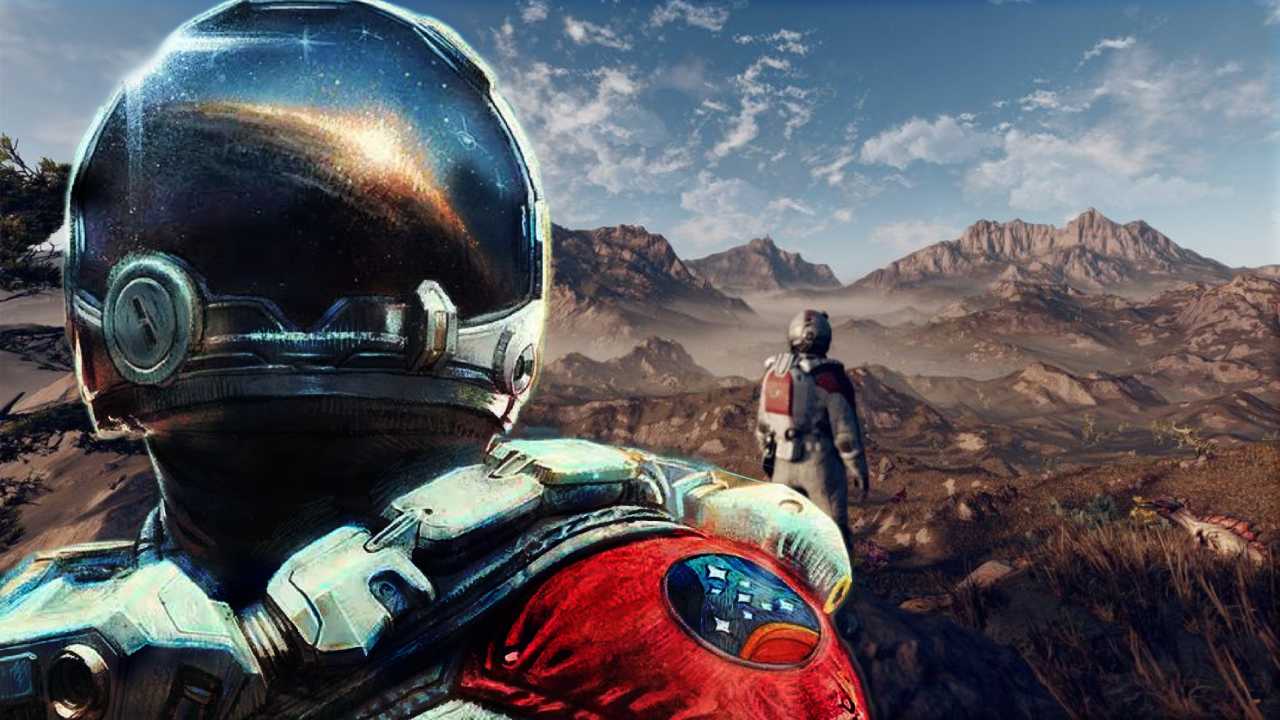
Bethesda Game Studios Starfield has taken a lot of hit from gamers in the two years since it released. Coming after the release of Fallout 4 and after the still-beloved Elder Scrolls V: Skyrim, it’s fair to say that the introduction of something brand-new from Bethesda came with a lot of expectations from fans.
To this day, Starfield has its fans, and it’s understandable why: just like how no fantasy RPG is quite like Skyrim, there is no sci-fi RPG quite like Starfield. However, a large portion of gamers have maligned the game for failing to meet the expectations that players had for a new Bethesda Game Studios product, and that’s also fair.
Speaking on an episode of the FRVR Podcast launching later this week (when I get around to it), former Starfield systems designer Bruce Nesmith—who left the project around a year before release—explained that Bethesda’s sci-fi RPG is still a “good game”, but it’s clear that the game didn’t latch on as well as other games from the beloved developer.
“I think it’s a good game,” Nesmith told us. “I don’t think it’s in the same calibre as the other two, you know, Fallout or Skyrim, or Elder Scrolls rather, but I think it’s a good game. I worked on it, I’m proud of the work I did. I’m proud of the work that the people I knew did on it. I think they made a great game.”
“When the planets start to feel very samey and you don’t start to feel the excitement on the planets, that’s to me where it falls apart.
Bruce Nesmith on Starfield’s procedural generation
Nesmith, who has since published multiple books such as Mischief Maker and the Glory Seeker series since his departure from the studio, explained that there are “expectations” when “the studio that gave you Skyrim and Fallout makes a space game” that simply weren’t met, and that’s impossible to deny.
“If the same game had been released by not Bethesda, it would have been received differently,” Nesmith said, explaining that the game still isn’t a failure despite the fact that it hasn’t latched on as well as prior Bethesda games. At the end of the day, it sold well, got an expansion, has a still-active modding community and has a decent daily play count for a single-player RPG.
As for why Starfield didn’t latch on as well as other games, Nesmith explained he “leans towards procedural generation” as the big problem instead of other complaints like the lack of real-time space travel.
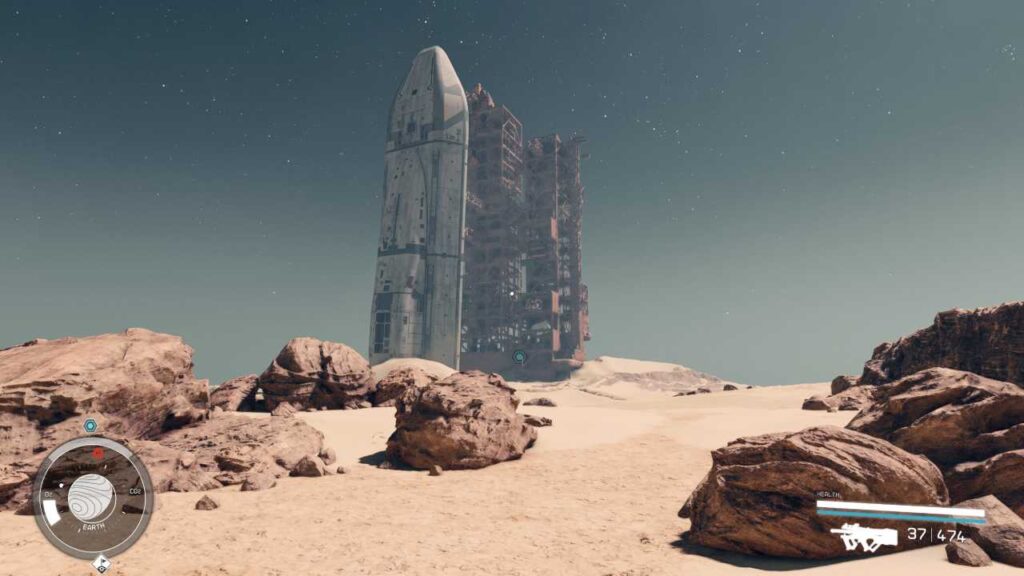
“I’m an enormous space fan, I’m an amateur astronomer, I’m up on all that stuff, a lot of the work I did on Starfield was on the astronomical data,” he explained, “but space in inherently boring. It’s literally described as nothingness. So moving throughout that isn’t where the excitement is, in my opinion.
“But when the planets start to feel very samey and you don’t start to feel the excitement on the planets, that’s to me where it falls apart. I was also disappointed when, pretty much, the only serious enemy you fought were people… there’s lots of cool alien creatures, but they’re like the wolves in Skyrim. They’re just there, they don’t contribute, you don’t have the variety of serious opponents that are story generators.”
As someone who has put well over 200 hours into Starfield, Bethesda’s sci-fi game is quite good, but it is a step down from what the studio is known for. Unfortunately, for many, the heavy use of procedural generation simply takes away from what Bethesda is known for: beautiful, hand-crafted environments that tell a story as well as their characters do.
There are parts of Starfield that do this spectacularly well, such as the main quest where you go back to the ravaged remains of Earth, but you have to hunt hard for them, and that’s where the game struggles. Maybe, if Starfield 2 ever happens, these problems will be addressed.