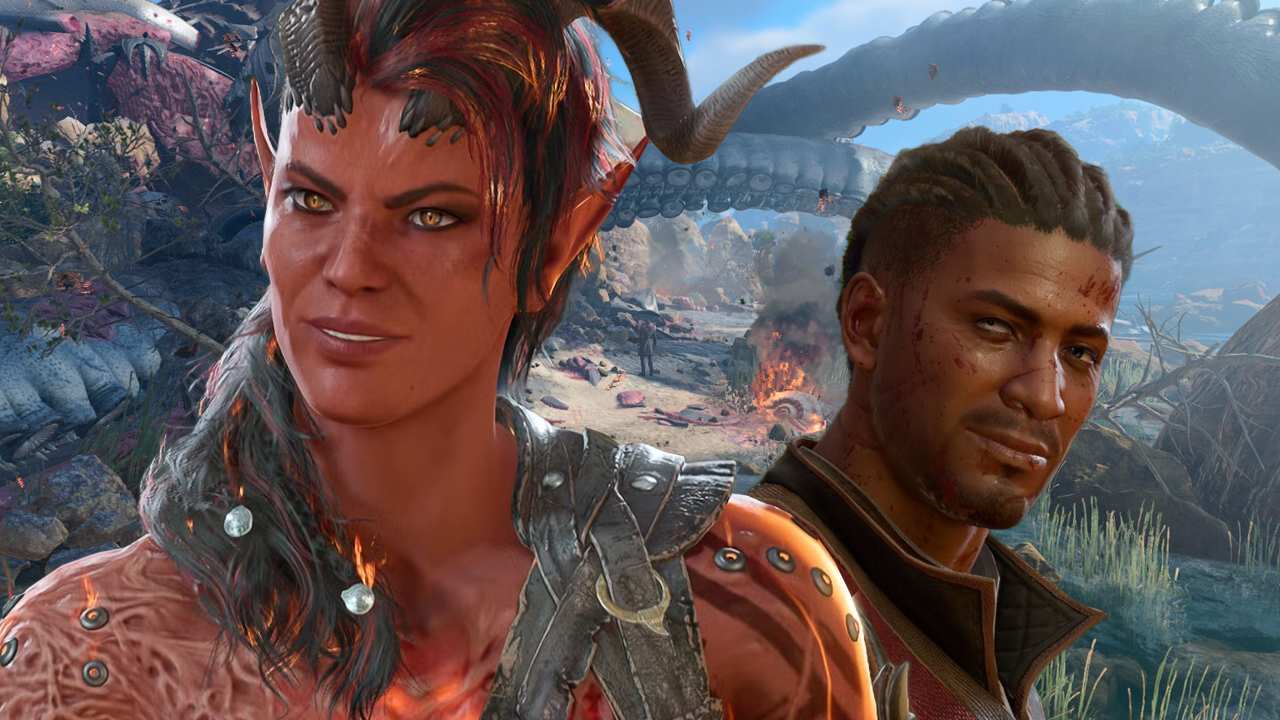
Larian Studios’ Baldur’s Gate 3 is one of the most beloved CRPGs of all time but, like any game, it isn’t perfect. As the studio continues work on its upcoming RPG Divinity, the team is hoping to fix some of the biggest mistakes with its Dungeons and Dragons-based predecessor.
While there are a few issues with Baldur’s Gate 3 that fans have pointed out over the years, writing director Adam Smith has revealed what he believes to be the biggest mistakes with the game’s narrative: a lack of companion diversity and a lack of story overlap.
In a recent AMA, where Larian confirmed it will now “refrain from using GenAI” for the development of Divinity, Smith was asked where they believe the “writing lacked” for Baldur’s Gate 3.
Smith explained that, due to the circumstances in which the game’s party characters meet each other—the crash of the Nautiloid and their infection with the Illithid tadpole—means that the main party lack diversity in terms of their goals. While they all have unique backgrounds, there is less diversity for motivation compared to other CRPGs.
“I’d like the companions – and other characters – to feel like a more natural part of the world [in our next game],” the writing director said. “I love the BG3 companions but the nature of their story means that they’re mostly displaced, strangers in a strange land (some of them are returning home, but they’re in unfamiliar territory as the game begins). I’d like to see how far we can push the diversity of companions and their stories even farther.”
This isn’t the first Larian CRPG to tie every companion’s storyline to the main events. In fact, Divinity: Original Sin 2 follows the same structure we see in BG3 with every Origin companion that must escape a prison island and reclaim their powers.
Smith also explained that, as Baldur’s Gate 3 largely focuses on one large overlapping story, it doesn’t have the same world complexity as other games in its genre. Smith notes that the “nature of CRPGs is that there are often several stories happening simultaneously”, but they’re hoping to create more “pleasing overlap” for their game compared to BG3, which feels largely segmented at times.
“I’m focusing on mapping the shapes of those stories so that there’s pleasing overlap in the narrative patterns,” he said. “It’s the science-y side of narrative, but it has a big impact on the writing of individual moments within those structures!”
While both of these points are true, they don’t make Baldur’s Gate 3 a bad game. In fact, for many, it makes the game easier to parse and all of the main companions are introduced early and succinctly, and the game’s simpler story structure means you rarely ever get lost despite the litany of choices you can make.
Baldur’s Gate 3 has been heavily praised by other CRPG developers with Warhammer 40K: Rogue Trader and Pathfinder studio Owlcat saying BG3’s success “reaffirms that there is a large audience for deep, story-driven” games. For a genre that has often been successful but never mainstream, BG3’s helpful structure may actually be a core reason behind its huge audience.