When Diablo 2: Resurrected released in 2021, it was a resounding success. Resurrected, for the most part, was simply a graphical overhaul with new networking capabilities, and it brought the brilliant weight of Blizzard’s turn-of-the-millenium gothic ARPG back to modern gamers with some very minor gameplay updates.
In a discussion with the Diablo 2: Resurrected team, it’s clear that there was immense pressure when changing anything. “Diablo II isn’t just a game, it’s really a collection of deeply ingrained player expectations,” we were told with quality-of-life changes having to be so obvious that players would think they were always there (such as automatic gold pick-ups).
“The community’s level of understanding is incredibly high,” a spokesperson from the team told us. “Players know the systems inside and out, so any change has to hold up not just emotionally, but mathematically.”
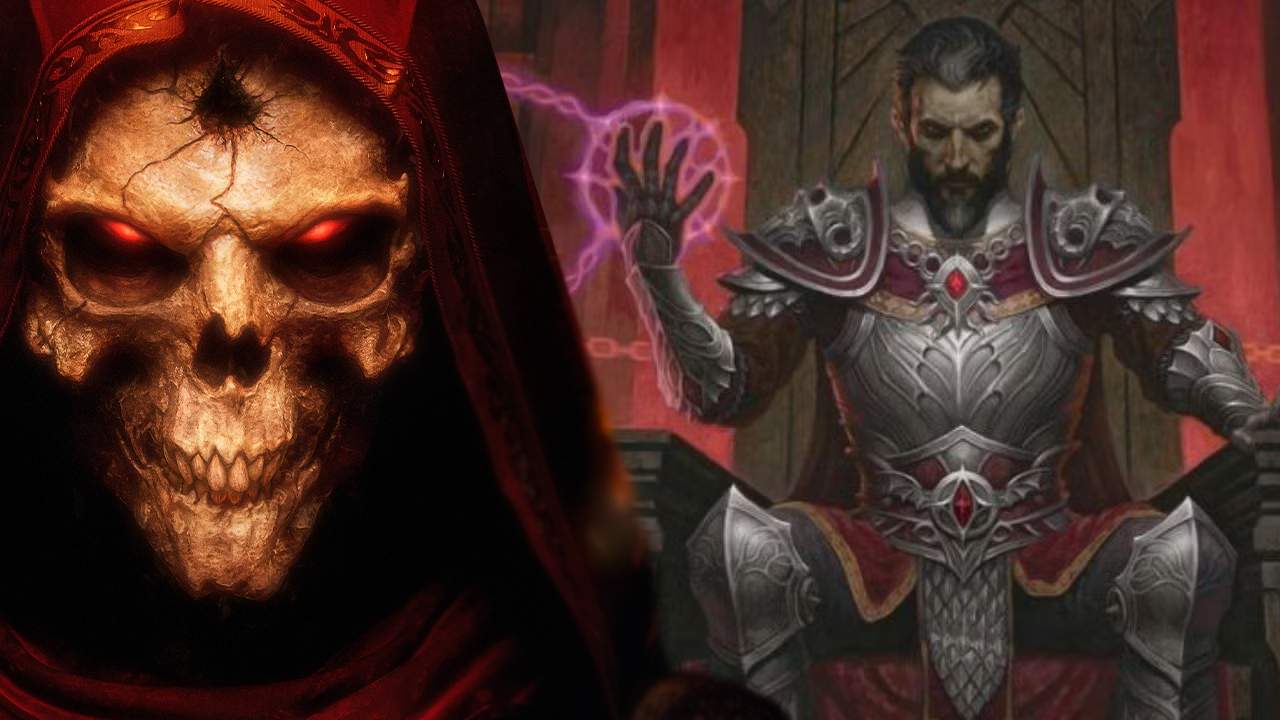
Of course, this has now changed. Earlier this year, as part of Diablo’s 25th anniversary, Blizzard commenced its “Year of the Warlock” event. This event oversees the Lord of Hatred expansion for Diablo 4, a major update for Diablo Immortal, and the first DLC for Diablo 2 in 24 years: Reign of the Warlock.
“We experimented with a few different options that were exciting on paper, but didn’t feel like Diablo II once we put them in context.”
Since the expansion’s release, Blizzard has teased that more expansions could come to Diablo 2 in the future, and we could also see more event synergy between multiple games as well. While 4 and Immortal’s take on the Warlock are their own, the team tells us that Diablo 2’s incarnation “had to feel like something that could have existed back in 2000, not something imported from a modern design philosophy.”
Reign of the Warlock couldn’t overhaul Diablo 2, only continue along its tracks. Whereas Diablo 4 updates can have transformative effects, adding to D2 cannot change what fans know and love. “We talk a lot internally about the ‘Mona Lisa’ idea: you don’t paint over it,” we were told. “You don’t want to mess up the Mona Lisa. So new content has to be very intentional. It needs to be additive. And players who want a pure experience should still be able to have exactly that!”
With Reign of the Warlock, and any future DLCs that may come, the team isn’t “trying to redefine Diablo 2”. Alongside expansions having to adhere to D2’s original design philosophy, Blizzard added the option to completely turn off every new addition if players wanted to move between Resurrected and the future platform for Diablo 2 content.
Taking a step back to design content that could feel 25 years old, but also new, was a unique challenge as well. “We experimented with a few different options that were exciting on paper, but didn’t feel like Diablo II once we put them in context,” the team told us. “We talked a lot about whether a feature felt ‘earned’ within Diablo II. Would longtime players accept this as something that belongs here? Would it feel recognisable to the spirit of Blizzard North’s original design philosophy? Those sorts of questions helped us stay disciplined throughout development.”
While there does appear to be a future for Diablo 2, Blizzard has imposed clear internal limits on what can and what can’t be done. “The limit is when you start rewriting player memory. If we invalidate the knowledge players have built up over decades, or change the core feel of the game, that’s when we’ve gone too far,” they said. Balance can be tweaked, a loot filter can be added as an option, but the core of D2 must stay rock solid.
With Diablo 2: Resurrected and anything that may come next, Blizzard sees its work as a “stewardship”. The team looked extensively at fan projects, also. “Fan projects are great for understanding what players are curious about and where they like to push the boundaries of the system,” they said. “They show you what resonates and what doesn’t. That said, a lot of mods explore ‘what if Diablo II was different?’ Our approach is more ‘what if Diablo II had continued, but stayed true to itself?’”
Despite the passing of decades since its release, the reverence for Diablo 2 is still high, but player counts are also high. There are still millions of active D2 players, and the team working on Resurrected understands exactly why this particular ARPG is still so beloved so many years on.
“Players really value systems that have consequences because it actually creates meaningful decisions. It also highlights how central itemisation is,” they said. “That’s really the engine of engagement in Diablo II, and it’s something we think about a lot across the franchise. More broadly, it’s a reminder that depth matters. While we start with simplicity to make learning the class accessible and fun, it’s the depth in the builds and ability to personalise your own Warlock that makes players stay.”