Browser games have a wonderfully simple idea behind them: You open your browser, choose a game, and just play! But there’s quite a lot happening behind that little “Play” button. If you’ve wondered what counts as a browser game, how web games actually run, or even what kinds of games you can play online, here’s an easy-to-follow version.
What is a browser game?
A browser game is a video game that you play through a web browser rather than launching it as a traditionally installed game. No need for a client or a desktop shortcut, all you need is a working browser.
Depending on the game, you’re usually able to start playing immediately from a webpage without installing anything else. Modern browser games commonly use technologies such as JavaScript, Canvas, WebGL, and Web Audio to handle everything from gameplay and graphics to controls and sound. You may also encounter them being called web games, online browser games, or HTML5 games.
How do browser games work?
When you visit a browser game, your browser retrieves the files and information needed to run it. The browser then handles the game’s code, graphics, sound, and your controls.
Simple games may need very little from your computer. More advanced games can use your device’s graphics hardware through technologies such as WebGL, allowing browsers to render accelerated 2D and 3D graphics without an additional plugin.
Some games also communicate with online servers for things like multiplayer matches, accounts, leaderboards, or saved progress. All of this can happen without asking you to install a traditional desktop game.
What do you need to play browser games?
For most browser games, you only need a compatible browser and internet access. A newer version of Chrome, Safari, Firefox, Edge, or another browser will generally give you the best chance of everything working properly. You don’t necessarily need a gaming PC either. Browser games range from lightweight puzzles and card games to much more demanding 3D titles.
What types of browser games are there?
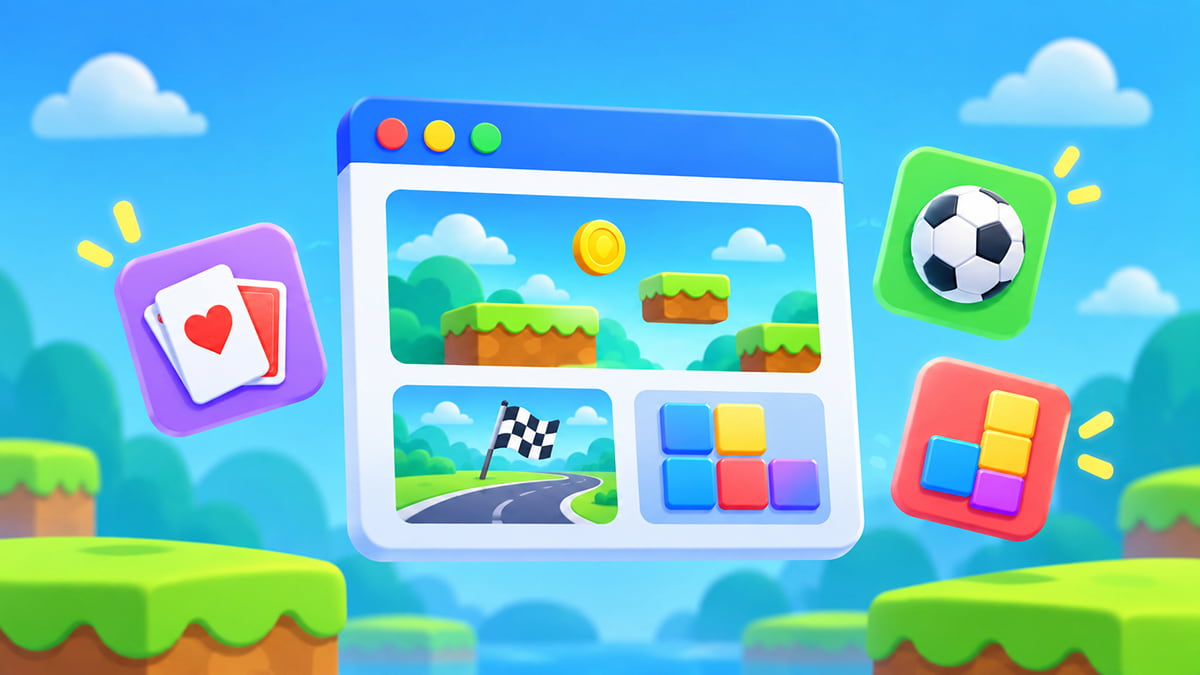
Browser gaming covers far more than one genre. Here’s a rough, non-exhaustive breakdown:
| Type | What to expect |
|---|---|
| Puzzle games | Matching, logic, word and number challenges |
| Card games | Solitaire and other digital card games |
| Arcade games | Quick reactions and simple controls |
| Sports games | Basketball, football, golf, and other sports-inspired games |
| Strategy games | Planning, resource management, and tactical decisions |
| Idle games | Games built around incremental progress and upgrades |
| Multiplayer games | Games that let players compete or cooperate online |
| 3D games | More visually advanced games using modern browser graphics |
The biggest difference between these isn’t that they’re all “browser games.” It’s simply the type of game you happen to be playing. That’s one of the actual strengths of the format: browser gaming describes where and how you play, not one particular style of game.
Are browser games the same as HTML5 games?
The two terms are closely connected, but they aren’t exactly the same thing. “Browser game” describes the playing format in which the game runs through a browser. “HTML5 game” usually describes the modern web technology behind the game.
For a deeper look at that side of things, read our guide to what HTML5 games are and how they work.
Do browser games need to be installed?
Browser games usually don’t need to be installed. That’s one of their main conveniences. You can often go straight from a link to the game itself. Your browser still downloads the files required to display and run the page, just as it does with any website, but there generally isn’t a separate installer.
Where is browser-game progress saved?
That largely depends on the game. Some games store information locally in your browser, while others tie progress to an online account or server. That distinction becomes relevant if you clear your browser data, switch browsers, or move to a different device, so we’ve covered it separately in our guide to how browser games save progress.
Why play games in a browser?
Convenience is the obvious answer. Browser games can be quick to open, easy to share, and accessible across a wide range of devices.
FRVR’s own interviews with browser-game developers directly highlight that low-friction quality. Web games can be opened through a link without going through the usual installation process, while modern browser technologies allow developers to support phones, tablets, and computers alike. That makes the browser particularly well suited to games you want to jump into quickly.
FAQ:
You’ll often see browser games called web games, online games, or HTML5 games, although those terms can have slightly different meanings.
Yes. Technologies such as WebGL allow compatible browsers and hardware to display accelerated 2D and 3D graphics.
No. Casual games are common in browsers, but modern web technologies can support many different genres and increasingly complex games.
Many do. Games designed with mobile browsers and touch controls in mind can work on Android phones, iPhones and tablets, as well as desktop computers.