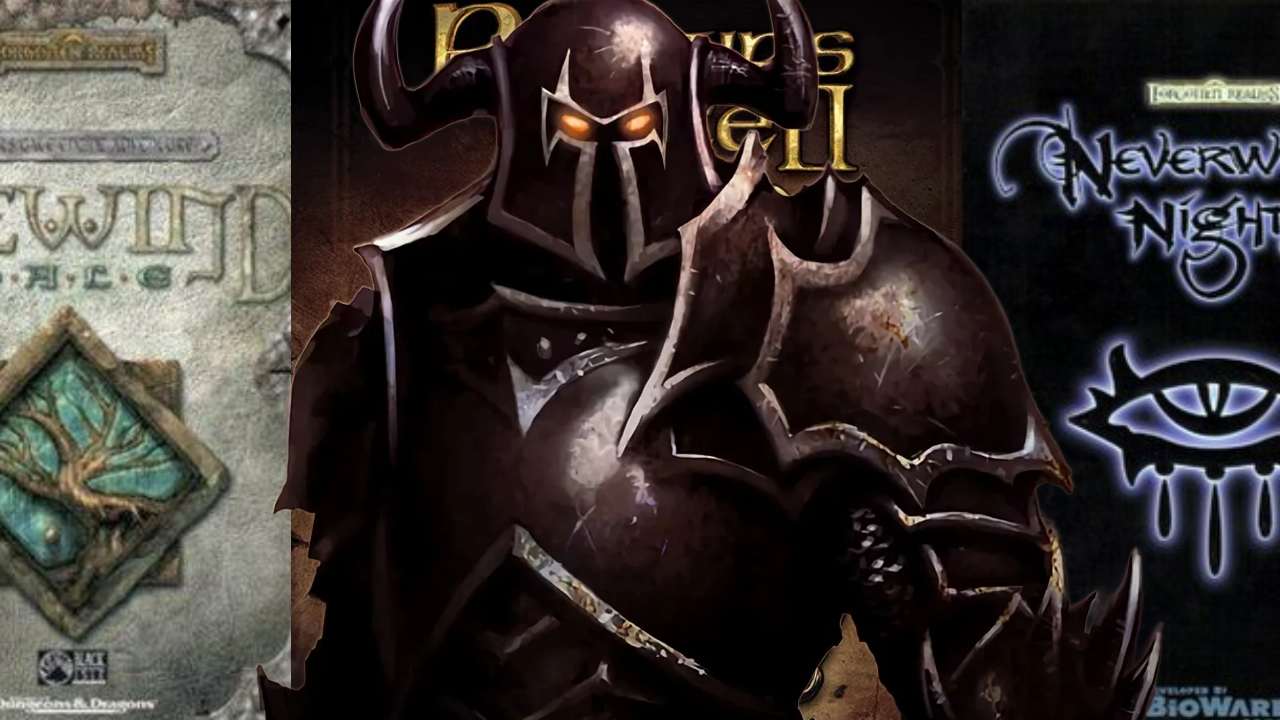
BioWare’s Infinity Engine has a legacy of its own. Debuted with the original 1998 Dungeons & Dragons RPG Baldur’s Gate, the engine was last used for an original game with 2002’s Icewind Dale. While BioWare as a studio is working on more modern, AAA titles, Canadian studio Beamdog has worked to bring the engine’s classic games back to modern hardware.
Founded by BioWare co-founder Trent Oster and Cameron Tofer in 2009, Beamdog’s remasters of Infinity Engine games have not been one-and-done affairs. In fact, just recently, the team announced a new update for the engine that adds dynamic language support, and there’s still more work to be done.
Speaking to FRVR, CEO Trent Oster and Live Ops Producer Derek French explained that “the connections to these games are personal for many people”, and there’s a need to preserve old worlds and old virtual friends so they don’t get lost amongst the progression of technology.
“Every so often, an older game will stop working, due to a variety of reasons,” we were told. “Usually, something has changed in the OS, or support for something has been dropped in an update. It is always unfortunate when something that you treasured stops working. When we settled on the curation approach to the game[s] a lot of questions became clear and the goal of keeping these games playable for old and new fans really became central to our efforts.”
For more than a decade, Beamdog has continued to keep Infinity Engine games—from the original Baldur’s Gate to Neverwinter Nights—playable on modern hardware. This doesn’t just include PCs, either; the team’s remastering efforts have brought the best classic CRPGs to mobile and console with refined UIs and modern controls.
“The classic Baldur’s Gate games have a Lord of the Rings–like quality to them.”
The team working on Infinity Engine upgrades explain that “mobile is the most challenging” due to the requirements of minimum OS versions, as well as the breadth of products available. While Infinity Engine games were designed to run on now-ancient hardware, a lot of what allowed the games to run that efficiently no longer exists, and new (often complex) translations need to be made.
“Since we rely on both OS support and certain open source solutions, it can be quite challenging to make changes and updates to keep everything running,” the duo explained. “The original code from 1995 did many “clever” things to allow the game to operate in 8mb of ram. Unfortunately, that clever coding was dependent on a lot of concepts which have changed over time, including multi-threaded code and multi-core systems. We started with small changes, but at some points, we had to tear apart entire legacy systems and rebuild them around new concepts.”
As Beamdog continues to push forward with additional updates to the Infinity Engine powering these games, the team explained that there is always more to do. “We plan to continue updating the Infinity Engine games for as long we can,” they said, adding that “there are other quality of life changes that we want to make”.
The team explained that there are “several” ideas they have that aren’t entirely possible right now as they fight to stay away from “scope creep”, which they state is “one of the biggest risks with making changes to older code bases”. Nevertheless, there are ideas for the future that they would like to introduce, if time and resources allow them to.

“Adding full and proper controller support to the PC versions would be a great feature, but the scope of the work is quite large,” they said. “It isn’t just reading the controller and making it work in the game, but all the additional work that would be needed to do it right. There is general UI work, new UIs, key and controller bindings, hot swap support, and probably many other things.”
For Oster and Tofer, remastering and updating these classic Infinity Engine games isn’t just about delivering a product, but about preservation. “There have been several situations over the years in which digital distribution systems have shut down, and customers have lost access to their titles,” they explained. Beamdog themselves shut down their own store just months ago, but did so while offering players keys of their choice for other, more popular storefronts including DRM-free store GOG.
Infinity Engine CRPGs like Baldur’s Gate are not a dime-a-dozen. While they dominated 90s PC gaming, they are unique beasts. Even today’s Baldur’s Gate 3 isn’t a full 1:1 replica of what BioWare and Black Isle were doing at the time. There’s a reason why fans keep coming back to them so many years later: they’re deep, gorgeous narratives with incredibly satisfying gameplay… bugs included.
“The classic Baldur’s Gate games have a Lord of the Rings–like quality to them: sweeping journeys through epic locations, memorable companions, strange creatures, layered mysteries, and narratives brimming with magic and high fantasy,” the duo explained. “On top of that, the games offer a staggering amount of customisation. Dozens of classes, kits, and party compositions let players shape their adventure in wildly different ways.”
Alongside an extensive modding community that Beamdog’s remasters still supports, even on mobile, Infinity Engine games are games that will live forever even without the efforts of Beamdog. However, with the care and attention these remasters continue to receive, they’re allowed to expand into new audiences, grip new fans, and continue to inspire future creators that may have never tried to install the multi-disc Icewind Dale: The Complete Collection on an out-of-spec PC.