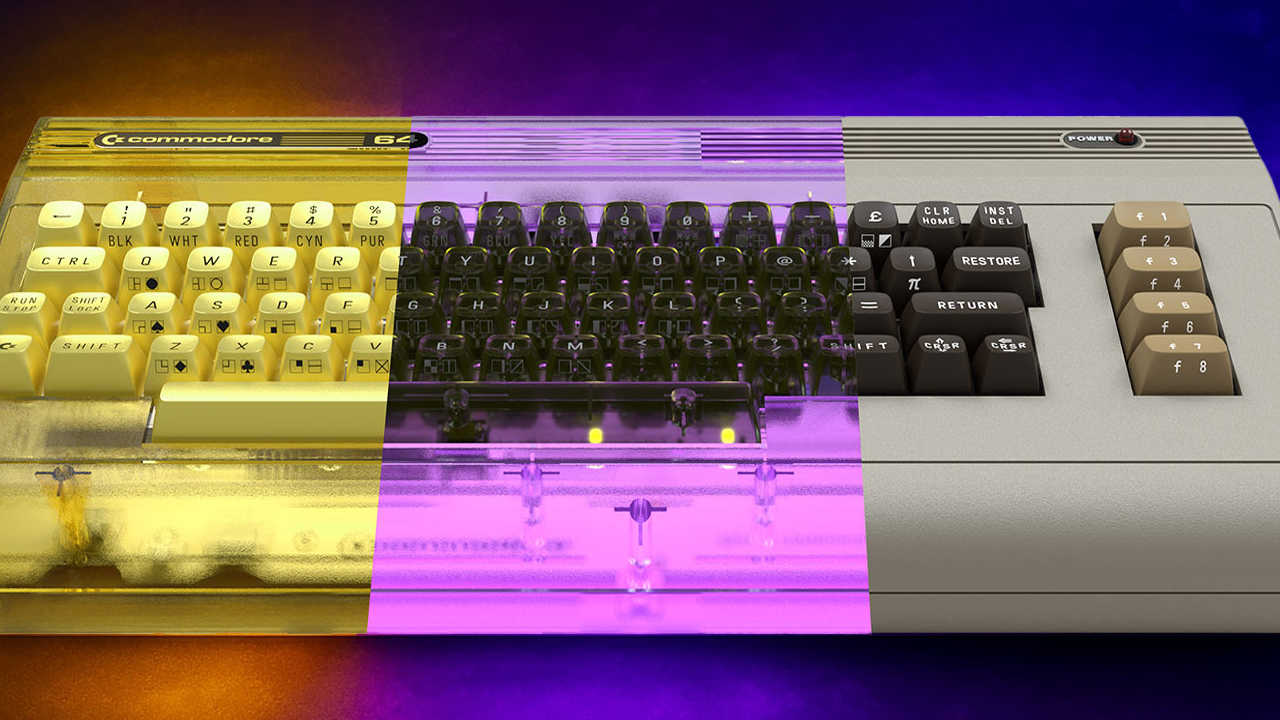
In 2025, Commodore returned. Since the 1990s, the iconic gaming brand had been split into so many different pieces, that no one knew who owned what. Today, some of the brand’s IPs are still somewhere out there, floating on the legal winds, but Commodore is back, the C64 is available to buy again, and software, such as the new Alien Breed 35th Anniversary Collection, has started to release.
“All of the properties and trademarks were sort of scattered to the four corners of the winds. A lot of things were sold off,” chief strategy officer Jim Squires told me yesterday. Commodore and Amiga had been torn apart, “different people’s hands were licensed for different things”.
Squires explains they they could create a massive flowchart of what happened to what, which shell companies owned which bits and pieces, and how those scraps of a great gaming brand were picked up by people who thought they owned them. Simply put: “It’s very, very messy”, a little “boring”, and so complicated that Squires worries it might “break” them trying to piece it all together.
Commodore’s return has been spearheaded by actor and YouTuber Christian ‘PeriFractic’ Simpson who sought to bring the gaming brand back from the grave. “He made it a project and, shockingly, was able to lock down the remaining original 47 trademarks and acquire them and then do the fundraising needed and incorporate Commodore again,” Squires said.
Since the return of the gaming brand, myself and others have often used the term “New Commodore”, similar to the way many talk about the current revival of Atari. But Commodore as a revival hasn’t just been about reforging hardware and software, but also bringing back key members of the original team, including Father of the C64 Albert Charpentier and others to continue the brand’s legacy.
Legacy in itself is an important discussion. Commodore has been twisted and regurgitated for decades now, but re-lighting the olympian flames of the retro gaming brand and continuing to carry it forth has been an immense pressure for the new team.
“I think that was both Peri’s biggest fear and, from the time the acquisition happened, I would say ongoingly in a lot of ways, one of our biggest challenges,” Squires said. “Because no matter how committed we are to doing this authentically and correctly, it’s very understandable—and I think everyone in this room would agree because we’ve all been on the other side of the fence—when there’s something we love, and it’s gone, and someone says they’re going to bring it back… we’ve seen what happens.”
Squires notes that there’s “additional pressure with Commodore because the company has gone since 1994, but Commodore has continued to live” through its community. The fanbase around the hardware and the software may be smaller than during its peak, but it has never disappeared. In fact, the hardware has been upgraded, tweaked, and exploited for so long that the platform essentially belongs to the community as much as it belongs to the resurrected company.
“The Commodore community has never slowed down,” Squires says. “There has been new software constantly generated, homebrew software. There have been annual conventions.” New Commodore is not only aware of the importance of community, but is actively partnering with active demo scenes for software, such as the exclusive software demo coming in their Cyberpunk 2077 crossover.
“Demo scene folk know how to push the hardware better than anybody else,” he continued. “The games that have come out in the last, I mean, you know, since the 90s, have been tremendous. But really, I would say, since like 2010 and forward, one of the things I love… about programming for old platforms is that you can only do what you could do back in the day. The technology hasn’t changed, the limitations of the technology are still there, but what they didn’t have back then are all the learnings we’ve had overall from future technology that we can now bring back.”
In the games industry, and especially in games press, there’s the constant discussion about games preservation. As PlayStation seeks to axe physical media for its games, that discussion is more prevalent than ever before. But the conversation of preservation is often dominated by software, the topic of emulators to play old games on modern platforms. The reality is that preservation also includes hardware, giving modern players the chance to experience games as they used to be on that original machine.
The Commodore 64 Ultimate, which released in December 2025, aims to tackle that exact issue. As Commodore 64 computers started to age, Squires adds that fans were “buying used ones to start pulling parts out”. While a fun project—for the most part—those parts are only dwindling, and the point of bringing back a “full recreation of a Commodore 64” with FPGA parts specifically tackles this issue of preservation. If the hardware disappears, the scene disappears.
“This is what the company’s here for,” Squires said. “Software perseveration has been going very well for quite some time. I think it’s something that has been lacking in our industry forever. In the last 10 years, that’s changed quite a bit… I think we’ve proven ourselves on hardware preservation, and we’re ready to start dipping our toes into software preservation as well.”
Alongside bringing back the C64 with the Commodore 64 Ultimate, the company is also reviving beloved accessories. The Tac-2 joystick has been fully recreated with thicker, more expensive plastics than modern clones and with just one design change. “There was a piece inside that was a piece of metal that connected to a piece of rubber, and it could sometimes snap,” we were told. “So for the recreation, that’s the only thing we changed. We just made it a single piece of stainless steel so it can’t break. Feels the same, plays the same, no problem.”
Squires explains that it would be easy to hyper-monetise nostalgia. In fact, it’s been done with the Commodore brand plenty of times in the past with poor-quality recreations and stocking-stuffer minis. “It’s not just about making bank on nostalgia… The point is genuinely preserving these things, ensuring that the way they come together, they play like you remember how they feel,” Squires said.