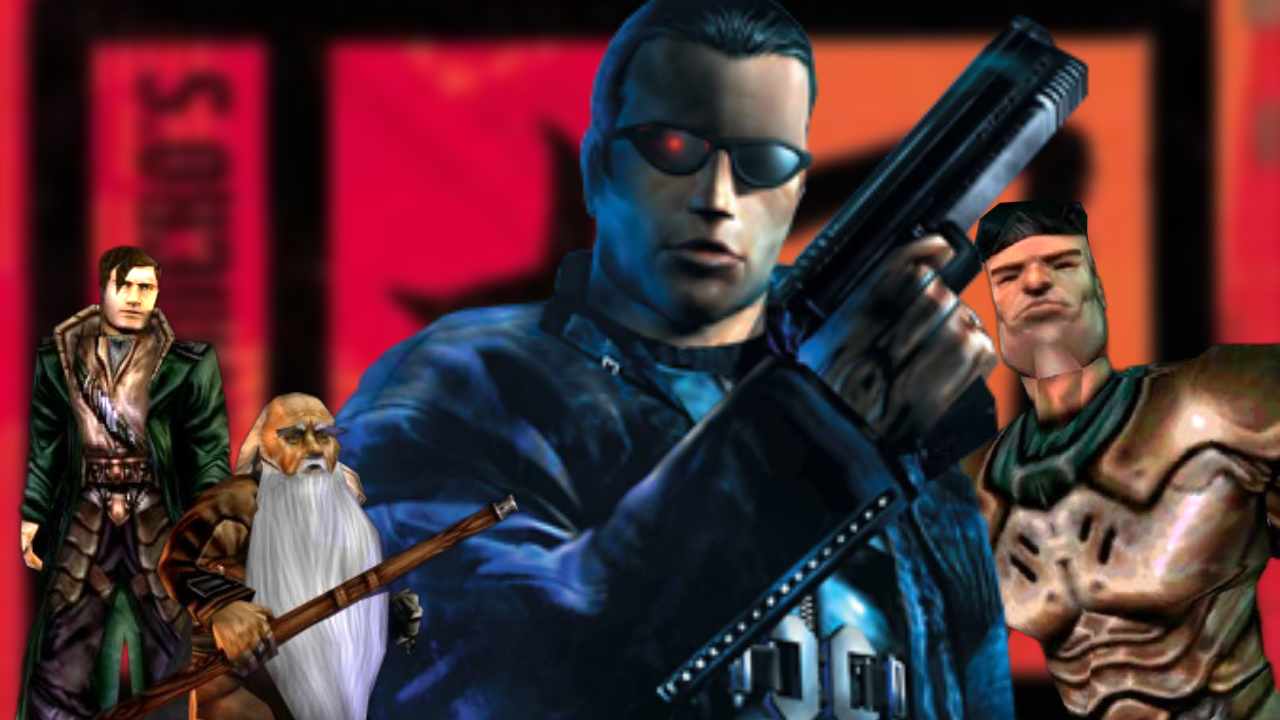
John Romero’s Daikatana is one of the most iconic video game failures in history. While the game itself is better than many give it credit for, the troubled FPS was one of the first instances of a game that was expected to be the best game ever launch in a terrible, buggy state.
We see it more often nowadays that budgets and marketing are so much higher than they used to be. Cyberpunk 2077 famously launched in an atrocious state, although that game benefited from years of patches and improvements that many high-profile failures don’t get to see. Unfortunately, Daikatana never got fixed.
Speaking to FRVR, art director Jerry O’Flaherty recounted his time at Ion Storm and Daikatana. Ion Storm was one of the first huge developers, working out of a penthouse suite at the top of the Chase Tower in Downtown Dallas, Texas, a $2 million office that was filled with flashy furniture so uncomfortable that no one actually wanted to sit on them. While it “started out awesome”, the flashiness of the studio was a sign that not everything was right.
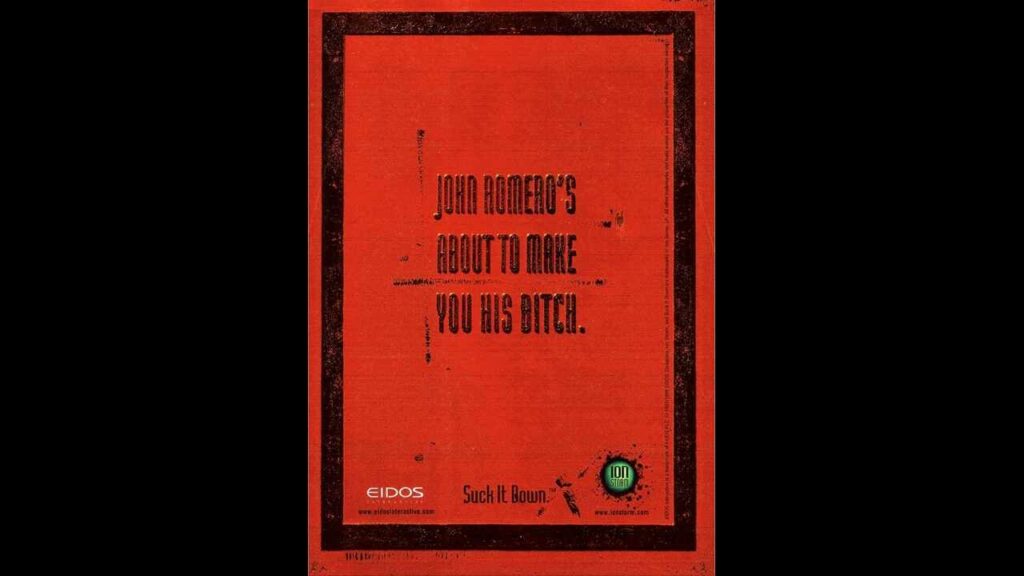
“The offices themselves are a whole story,” they recounted. “Build-out took forever, we moved into this space. We had these leather couches everywhere that nobody could sit on because they were stiff as sh*t so we put them in storage and I think somebody went to frickin’ Pottery Barn or something and got some comfy couches. That was it in a nutshell: it was spend all this money, face value, just look frickin’ amazing, but under the hood it’s not there. That’s not the reality of game development. People need to sleep on these couches`because they are going to work late because it’s a bunch of passionate people who don’t know how to turn off and when they turn off it’s literally just bleh.”
The art director explains that Ion Storm was “just a bunch of kids who were faking being adults and making stuff”, himself included. Game development had just become flashy, publishers were realising how much money could be in the industry, which has led to the medium being worth more than music and film combined.
As explored in the amazing book Masters of Doom—which chronicles all of Id Software’s creation and the formulation and failure of Ion Storm—the Daikatana and Deus Ex studio lost a lot of its lustre as time went on. “Towards the end, obviously, as tensions rose, it got pretty not-fun to walk into that office,” O’Flaherty told us. “But really an office is an office, it’s really just the people, and I still enjoyed a lot of the folks… there were lots of really good people, Ken Scott, there are these really amazing individuals who have gone on to have really amazing storied careers, worked on some of the best products out there.
“We were all young, [we’re] jaded vets now, who look back at it, like, it’s cool to have been a part of it.”
Daikatana and Deus Ex Art Director Jerry O’Flaherty
O’Flaherty explains that a time like Ion Storm makes almost unshakable bonds. “That, in the end, was the cool part of it. [It] was this moment in time where we all went to war together, we all got the f**king scars for it, we can all talk about it now. I can still get anxiety when somebody brings it up. To me, it’s fascinating that it holds that kind of space in my brain that it can still create that feeling in me that many years later.
The developer explained that when he read John Romero’s recent memoir, Doom Guy: Life in First Person, reading through the chapter on Ion Storm’s construction and failure still resulted in a hit of panic. “It was funny,” he said, “it’s been 20-something years since that happened and when he got to the chapter on Ion Storm, the anxiety level just f**king pumped through my veins. I was shocked. You know, I feel like I’ve done a lot since then, I’ve moved on, you know. It was crazy frickin’ times and what I like is to be credited and seen for what I’ve done, and what I hated about Ion Storm was I felt like it was the cart before the horse.”
Outside of some already established developers like System Shock lead Warren Spector and John Romero, who worked on Wolfenstein, DOOM and Quake, O’Flaherty explained that Ion Storm didn’t feel earned. It doesn’t help that after the Dallas office closed in 2001 and the entire company closed in 2005, many developers outside of the group would want to talk about what happened there.
“I remember interviewing for Epic Games and sitting there with Mark Rain and Tim Sweeney, and Cliff [Bleszinski],” they said. “At some point they were like, ‘Yeah, yeah, okay. Tell us about Iron Storm.’ And it’s just one of those things where, regardless of the notoriety, there was just within the games industry, ‘Holy sh*t, we can become rockstars, we can reach bigger heights, the industry can be more than just a bunch of nerds making game’. I think the promise was there, we just didn’t follow through with it. I think other people and other games have come in and finished that for the early days.”
While Daikatana was a high-profile failure, Ion Storm did produce great games, but those great games didn’t sell. Deus Ex was fantastic, and is beloved now, so much so that its new remaster’s art direction is causing a stir, and that same team continued to make Thief and Thief 2 under Ion Storm, two great titles that also didn’t sell. Additionally, Tom Hall’s Anachronox was somewhat-flawed but very fun, but it also didn’t sell.
O’Flaherty never expected Ion Storm to be so notorious that it would have multiple books written about its failure, but, like anything in the games industry, it was a learning experience, and one that the artist still talks about with his former colleagues to this day. “It was crazy,” he said. “We learned a lot. We were all young, [we’re] jaded vets now, who look back at it, like, it’s cool to have been a part of it.”
What’s most important about Ion Storm is that, for the most part, the games got made. Right now, with so many layoffs and studio closures, entire teams are ripped apart before they even release their first titles, such as The Initiative which was working on Perfect Dark, or Jackalyptic Games who has seen its debut Warhammer MMO cancelled following an end of funding by NetEase. While Daikatana didn’t release in the state that its creators wanted it to, it did release, and sometimes that’s a miracle in itself.