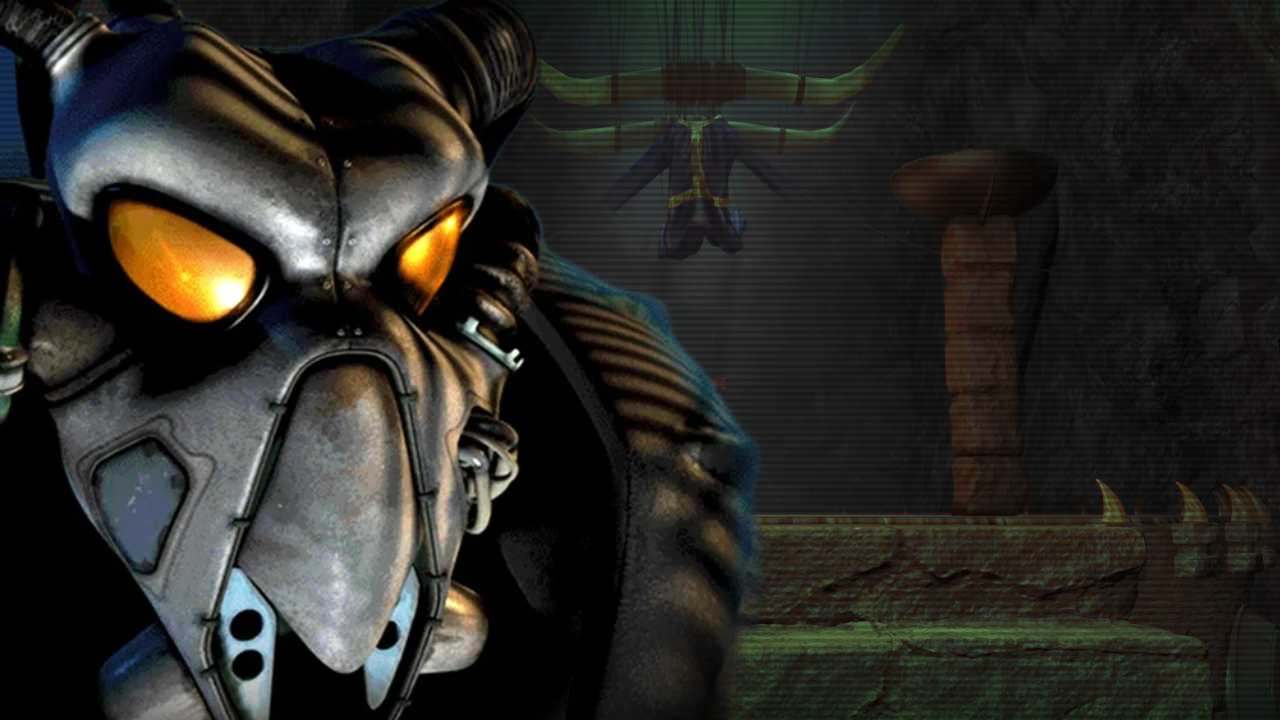
The number one word for designing an RPG is “choice”, at least that’s what Fallout creator Tim Cain believes. Cain, who created the original Fallout duology and worked on other RPGs such as Vampire: The Masquerade– Bloodlines and South Park: The Stick of Truth explains that designing for choice is essential in creating a true RPG.
As far as Fallout games go, almost every game in the series does well to accommodate choice, although Fallout 4’s irksome dialogue system causes trouble in that regard. Nevertheless, as choice dominates the genre, Cain explains that designers catering to RPG players need to make sure not to “assume anything the player is going to do in a particular order”.
The Fallout creator discusses the limitations that assumptions can bring in the laatest episode of his ongoing and very insightful YouTube video series. “Rule one, our game is non-linear,” Cain says. “Don’t assume that players will go somewhere first or talk to someone first”.
Cain uses a very simple example of a “guard outside the town”. In most games, this guard will welcome you to the area, tell you some interesting lore, maybe point you in the direction of a few stories. However, with the freedom of an RPG, designers shouldn’t expect every player to talk to that guard, or even arrive at the city in the same direction that guard is posted.
“I wanted to remind level designers that just because you put a guard outside the town, don’t assume that everybody will stop and talk to that guard,” the game designer says. “If you want to force that, you can put a gate in the town that doesn’t open until you talk to the guard, or worse, force the guard to go into conversation with the player”.
Some players may want to talk to the guard, some may want to avoid him; more chaotic players may even see the guard as a target and vie to kill him. That’s the nature of an RPG, and designing with the assumption that players will follow a guided path—or even guided paths—means you aren’t playing into the freedom that the genre offers.
“In general, I just like to remind level designers, don’t assume anything the player is going to do in a particular order,” Cain says, “Your job is to provide a nice map for them to play on and not make such assumptions”.
Of course, that’s not an easy task to accomplish, but that’s why RPGs like Skyrim have seen such long tails. There’s a million things to do in Skyrim and a million ways to accomplish them (obvious hyperbole), and giving the player the chance to find out how they want to succeed in their goal, not necessarily the most optimal way to do so, is why RPGs are so wonderful in the first place.
As for Cain, the Fallout creator is working back at Obsidian Entertainment after serving as a creative consultant on The Outer Worlds 2. After a brief stint of retirement, Cain is now working on a brand-new IP at the beloved RPG studio.