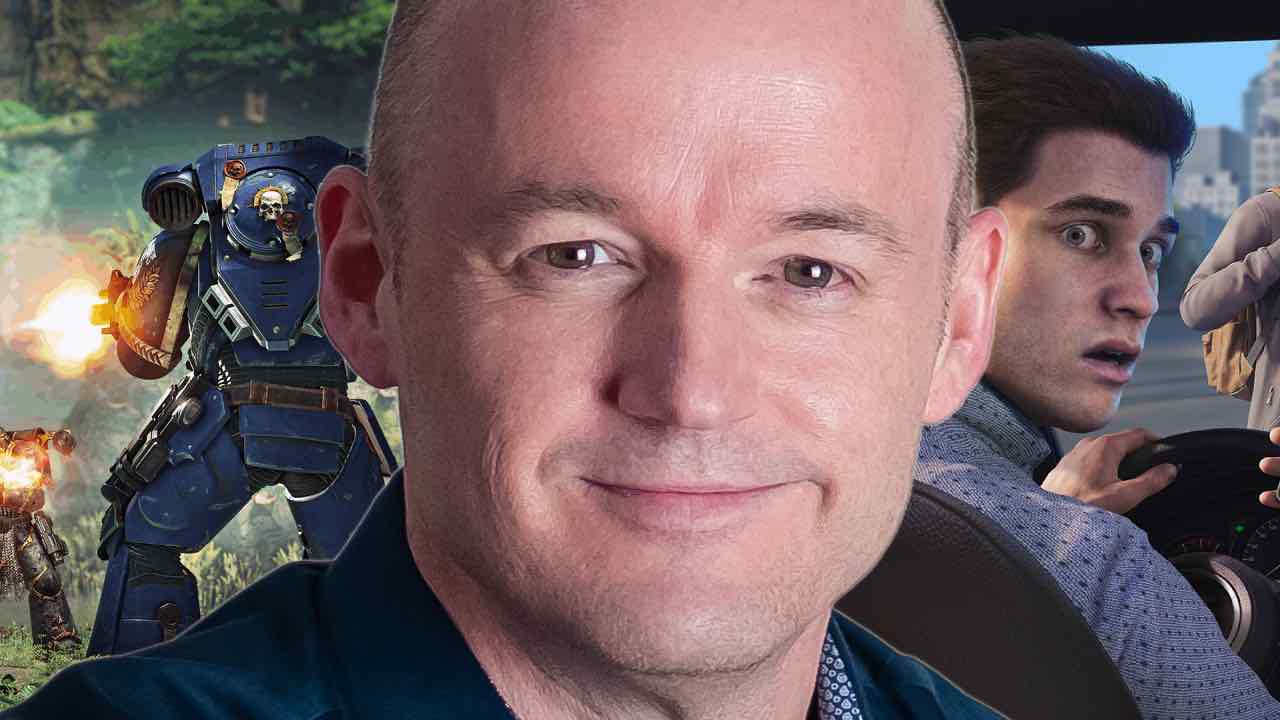
Saber Interactive CCO Tim Willits has backed the studio’s push to use Generative AI in a number of titles as the company continues “experimenting” with the technology behind the scenes.
Willits’ comments come after an intensely controversial pushback against the Space Marine 2 developer’s upcoming Uber-like video game Rideshare Simulator which replaced a writer to focus on generative AI.
While Saber CEO Matthew Karch has since apologised for comments they made about the fired writer and the lack of AI disclosures on Steam, Willits explained that Saber is going to continue to use generative AI in some titles.
“We are experimenting with it,” the CCO told Eurogamer at Gamescom. “A game we announced called Rideshare, it’s a small game, we’re going to try to figure out if it works of it it doesn’t work.”
Willits explained that the games industry doesn’t “really know how it [AI] fits” in development, and Saber will continue to try the tech in some titles. At the time of writing, Saber is working on a large number of titles including Warhammer 40,000: Space Marine 3, Star Wars: Knights of the Old Republic Remake, a John Wick game, and many, many more.
The CCO also claimed that gamers don’t know if they want AI or not, despite the heavy pushback against ‘AI slop’ across more than just gaming. “Consumers don’t really know what they want or they don’t want,” Willits told the outlet. “So it’s kind of like a disruptive technology that society has seen for a long time.”
With that said, Willits explained that there is no mandate for developers to use GenAI on projects for Saber. “We don’t actually use it on our projects except for our experiment with Rideshare,” he explained. “We don’t have an official policy, we don’t use it outright across all our projects.”
Furthermore, as Saber works so often on licensed IPs, there is an expectation that GenAI cannot be used in some cases due to brand guidelines as well as copyright protection. Right now, many courts argue that works that use generated content are not protected by copyright due to the nature of AI.
For example, one of Saber’s teams is currently hard at work on Warhammer 40,000: Space Marine 3 alongside additional Space Marine 2 content. Last year, Warhammer owner Games Workshop declared a ban on generative AI for Warhammer products to “respect our human creators”, and that ban is still in place.
Willits further defended the use of AI in Rideshare, claiming that it’s “literally one game mode of a game” and that “if you’re going to experiment, you better do it on something small… because there’s risk there”. Additionally, the CCO claimed that public sentiment will change if AI is able to make something groundbreaking.
“Everyone has their own opinion, and maybe I’m being too optimistic, but somebody will make the Half-Life 2 of AI,” he said. “I’m making a silly example, but someone will make something that will change people’s minds.” He likened the technology to the arrival of Steam which saw some pushback from gamers, adding that “if one of our teams came up to us with an idea they thought could change everything, of course we’d try it”.
Will the “Half-Life 2 of AI” ever happen? Who knows? The reality is that consumers don’t want it. In a world where AI guff is creating anything from ugly videos of celebrities fighting to ugly faux restaurant menus, it’s consistently proving itself as a useless piece of tech for creative works.