Warhammer 40,000 designer and Blood Bowl creator Jervis Johnson spent a couple of years in retirement before peeping back out to design myriad board games. Currently working on both IDW’s Godzilla tabletop game and the brand-new Dreadball: All-Stars, Johnson is very much still creating exciting tabletop experiences.
In an interview with FRVR, alongside dubbing AI the “asbestos of the internet” and recalling the surprising history of blister packs in the miniatures space, Johnson explained discussed the rising popularity of Warhammer and Warhammer 40,000.
While Johnson never expected the tabletop franchise to become anywhere near as popular as it is right now, the veteran game designer praised Games Workshop for keeping its retail stores alive, explaining that their existence is key to bringing fans to all parts of the hobby.
Johnson explained that tabletop gaming is more than just playing the game with some fans more interested in painting or diorama building, and “only a small minority actually read the rules anyway”. As for Warhammer stores, these allow all manner of players with different learning styles to see all parts of the hobby in action and decide what they want to participate in.
“If Games Workshop just wanted to make money, it would be better off just making the product and letting others sell it. Running stores is an expensive business.”
Warhammer and DreadBall: All-Stars designer Jervis Johnson
“If you look back at Games Workshop, Games Workshop stores are sort of ubiquitous all around the country,” the designer said, “but actually their most important function is to teach people about the hobby, give them the skills they need so they can participate in the hobby and then just let them go and explore it.”
Over the past 40 years, this has not changed as much as many would expect. To this day, Games Workshop stores—now called Warhammer stores—still see heavy use, and the main demographic of the stores are teenagers and early adults that largely learn by actually jumping into the hobby.
“The importance of Games Workshop stores are that they teach you the skills you need to participate in the game,” Johnson said. “And that’s not just teaching you how to play the game. That’s teaching painting, how do you construct them, how does this work, and they teach you those skills. And it’s a huge [part of the company] – Games Workshop has always considered that to be a hugely important part of the structure of the company.”
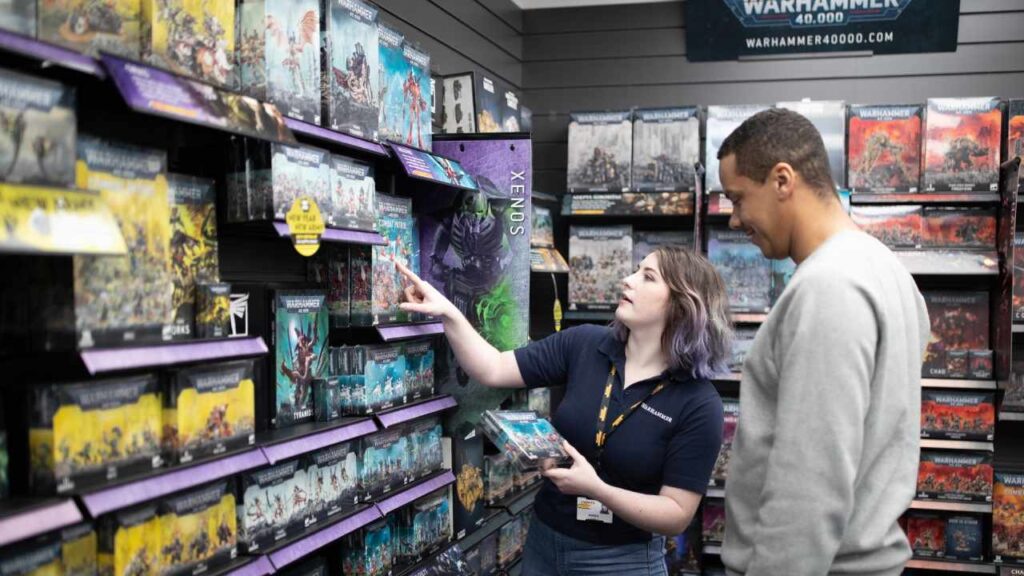
Johnson explained that Games Workshop doesn’t do TV ads, explaining that its “promotional budget is primarily through running the retail stores”. The designer explained that the company does this at a massive hit to revenue—in fact, the company is opening even more Warhammer stores after hitting record breaking profits—but because it wants to introduce people to the hobby. “To be honest, if Games Workshop just wanted to make money, it would be better off just making the product and letting others sell it. Running stores is an expensive business.”
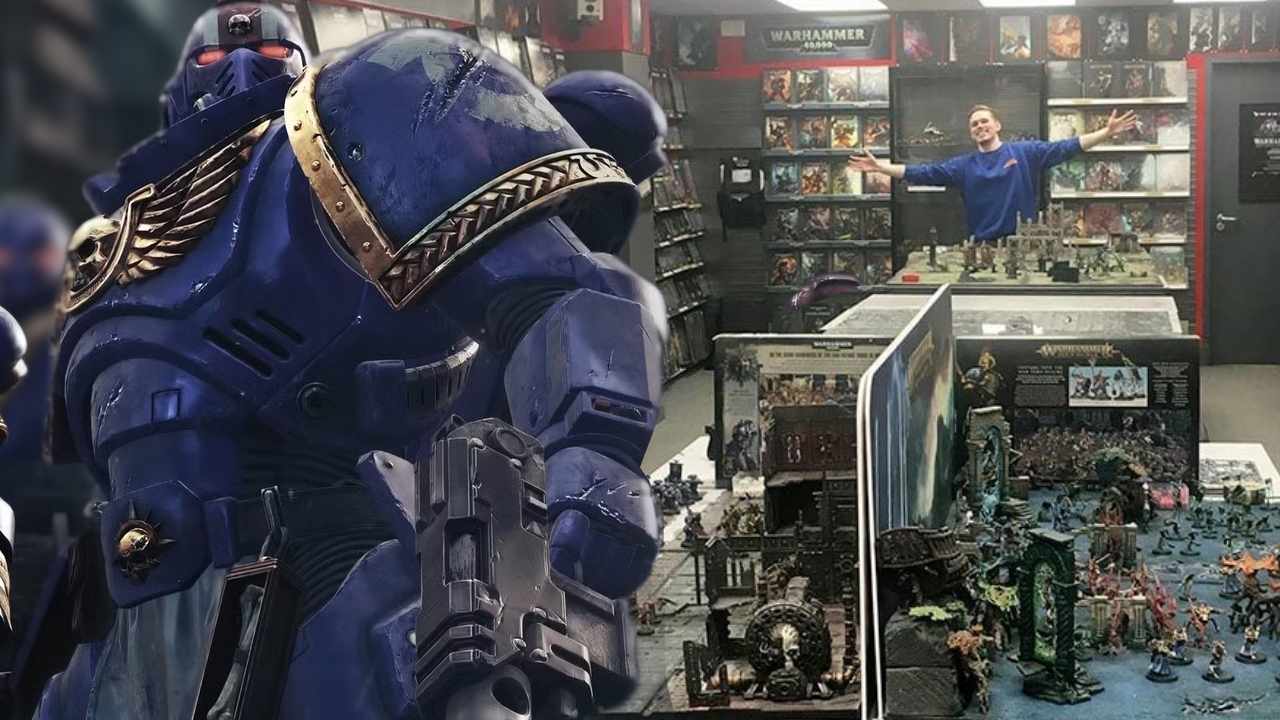
If you go into a Warhammer store, Games Workshop employees don’t just sell you miniatures, paints, and brushes. Every Warhammer store I’ve ever entered boasts employees that truly love the brand, paint miniatures, and want others to participate. There are free miniatures, painting lessons, painting competitions, live games, displays of miniatures—you’ll often even see employees painting if the shop is less active.
“Games Workshop has always appreciated that it’s a niche, and it’s a hobby, and that there are certain skills that you need,” Johnson said. Those are skills that can be learned in a litany of different ways, but they’re better learned by hand.
In a time where the High Street is dying, the presence of Warhammer stores is more important than ever. For many teenagers and young adults, the modern world has simply axed a lot of their freedom, but Warhammer stores are still an inviting place for many to learn a new hobby and also socialise with like-minded people.
As Johnson says, running stores is an expensive business, but running Warhammer stores is an even more expensive venture. Some people who go into the stores learn to paint, grab a free model, and never return. Nevertheless, the fact that the door is open to learn the hobby is far more inviting than anything else you’ll find on the High Street these days.