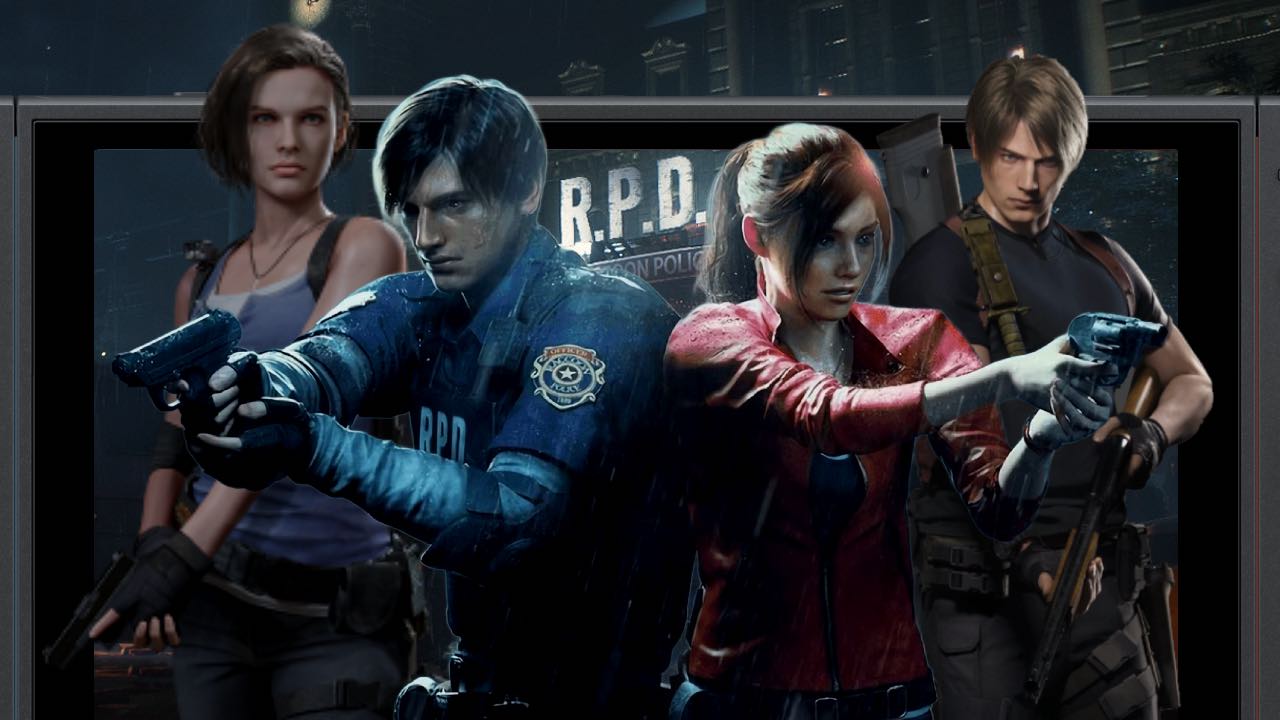
Following the release of Resident Evil Requiem for Nintendo Switch 2, alongside the same-day ports of Resident Evil 7 and Village, it was inevitable that ports of the series’ remake trilogy would soon find their way onto Nintendo’s newest miniature workhorse.
Players of Requiem’s aforementioned Switch 2 incarnation may already know what to expect, at least in terms of performance, but these anticipated ports may still disappoint for some. While many ports to Switch 2 have excelled in utilising the system’s core features, Capcom’s latest efforts are far from an S-Rank.
Performance-wise, Resident Evil 2, 3, and 4 on Nintendo Switch 2 are something of a mixed bag. Resident Evil 2 and 3 aim for 60 FPS in both docked and handheld mode, but there are a lot of trade-offs made to achieve this, whereas the more recent Resident Evil 4 is a lot more unclear, with the frame rate fluctuating quite heavily throughout.
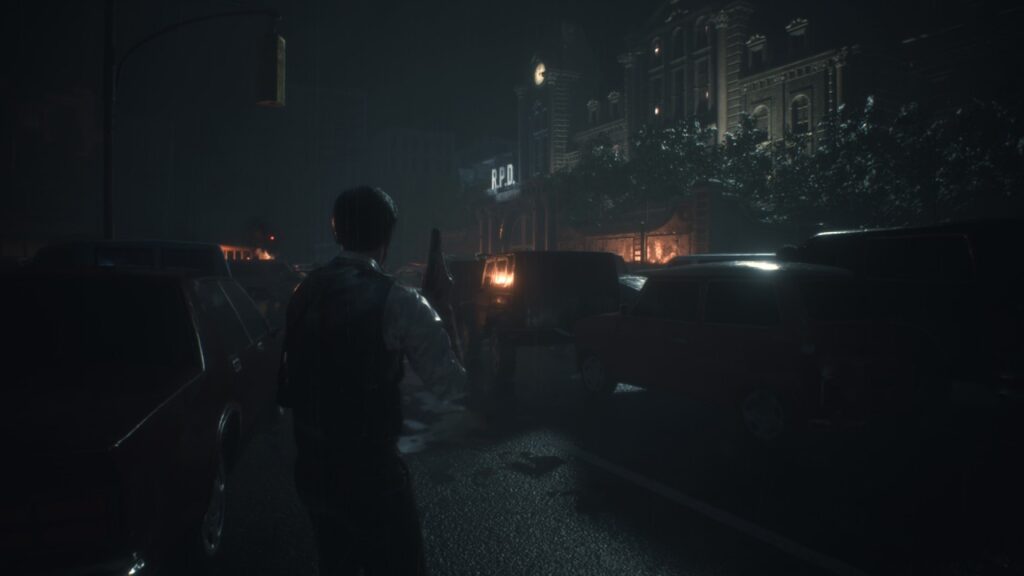
In Resident Evil 2, texture quality is much lower all around compared to the PS5 and Xbox Series versions of the game — barring the game’s high-quality character models — and the game’s cinematic lighting has taken a hit. Expect the game to be more reminiscent of the original last-gen console versions, though not an exact match. For the most part, these games still do a great job at maintaining a consistent frame rate, with only a handful of short sections causing stuttering. Handheld mode struggles a bit more in that department, as you might expect, but still holds its own.
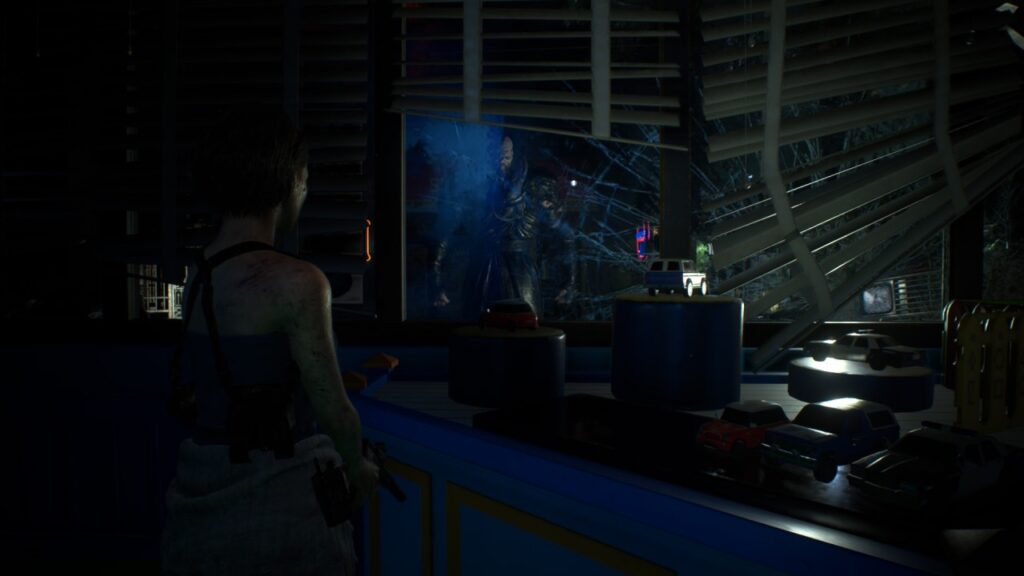
Resident Evil 3 is a bit more impressive overall here; the more detailed models help distract from some of the lesser elements. Of course, this is a more simplistic game than its predecessor, with smaller maps and certain areas forgoing the ability for the zombies to roam around outside their designated areas. It’s not unlikely that this could make headroom for this port to have a slight edge in performance to increase its visual heft, and it’s certainly a looker on Nintendo’s system.
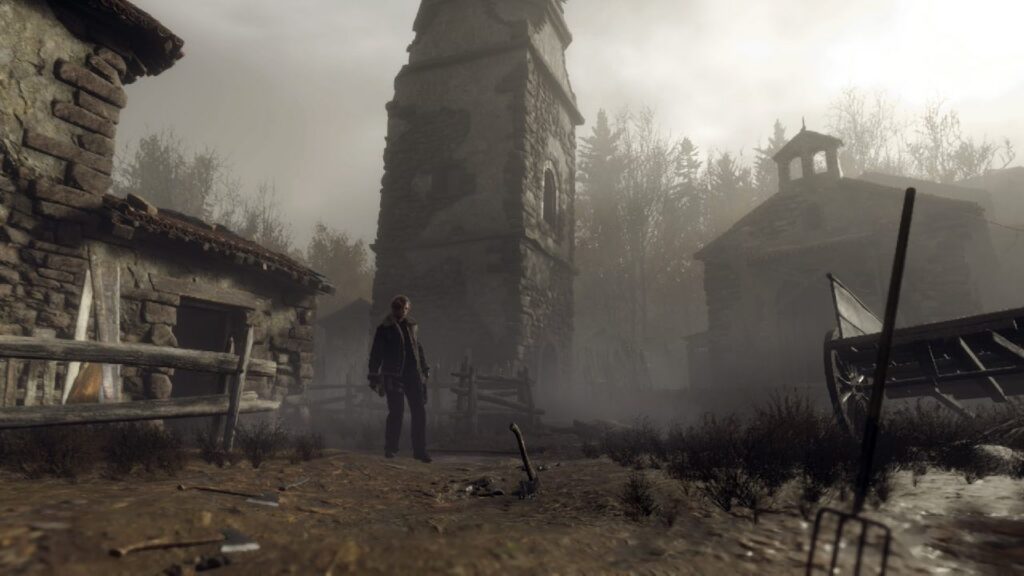
Resident Evil 4 is a much more technically ambitious game, and as a result the Switch 2 has a tougher time handling it. The castle section, with its claustrophobic interiors, does the best at achieving the most consistent frame rate, while the opening village and forest section, with dense foliage and larger areas, struggle the most. In fact, the more demanding parts of the game can see the internal resolution drop quite heavily, especially in handheld mode.
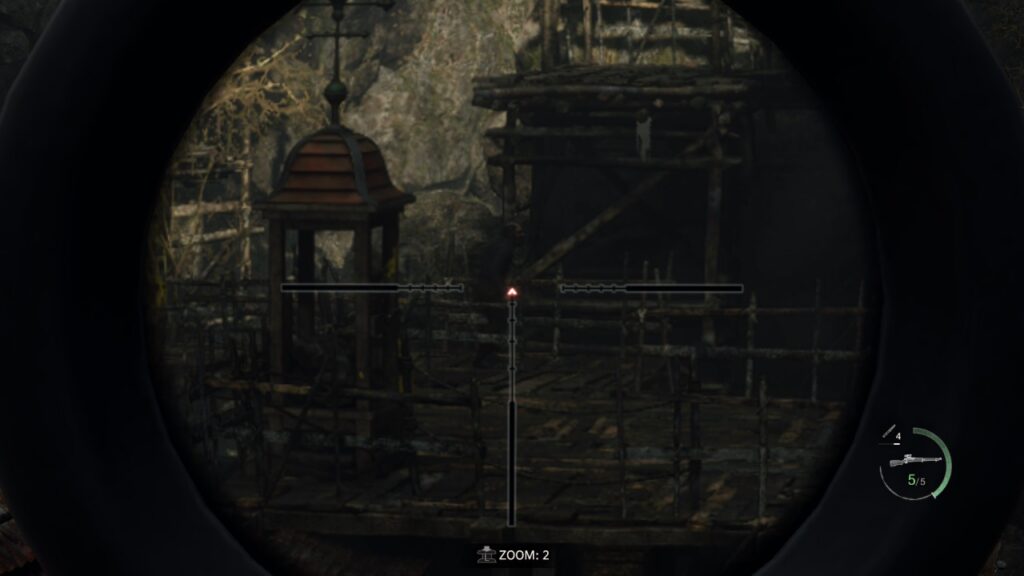
Speaking of dropped resolution, one of the bigger points of contention I have is with the optional rifle scope. The resolution while using the scope is drastically lowered. In docked mode you can just about get your headshots in, whereas using it in handheld mode will have you squinting like Leon’s life depends on it (which it very much does). This is a long-standing issue with other versions of the game, especially on PC, where the game doubles scene rendering when the scope is active, and performance suffers.
While Resident Evil 4’s inconsistent frame rate might be off-putting for some, it’s worth noting that this is Capcom’s least performant game in the modern Resi series. On all platforms, performance is substantially lower than its predecessors and even its successor, Requiem, and it shows in this port.
Something you will not find in any of these three ports are graphical options. There’s no way of disabling motion smoothing, nor is there an option to prioritise performance or graphics, or even set your own frame rate cap. Whether this is a downside is purely down to personal preference, though I feel that most of the effort that went into these versions was to optimise for performance as much as possible, which I think was the right way to go.
One of the more bizarre aspects of these ports are their lack of features. While Requiem was fully-featured with HD Rumble 2 and motion controls, Resident Evil 2 and 3 don’t support these features at all.
Instead, Capcom has opted to use a very disappointing (and sometimes distracting) standard vibration. Resident Evil 4 is mildly better here, at least on paper. This port does utilise HD Rumble 2 and motion controls, but both of these implementations are so bad that I almost wish they hadn’t bothered. Rumble is essentially one-step removed from the standard vibration of 2 and 3, while gyro controls are inexplicably locked to vertical aiming, with no customisation options to adjust to your own preferences. What’s more, when gyro aiming is enabled, it also disables vertical aiming on the right stick, which is a mind-boggling decision.
There are a few other areas where a bit more consideration could have been given to the console these games are being ported to. For one, the boat controls haven’t been adjusted to account for digital triggers. This means that hold down ZR immediately ratchets your speed up to 100%, which makes quick turns tricky, and tight navigation a hassle.
Regardless of these downsides, these are still three fantastic games, and they are now playable on Nintendo Switch 2 outside of their annoying cloud versions. Resident Evil 2 is a terrifying rollercoaster ride with some of the best level design in the series, Resident Evil 4 is a non-stop series of immaculate action set pieces against some of the most gorgeously gothic and grotesque backdrops, and Resident Evil 3 is a comparatively bite-sized — but still very fun — intermediary between the two juggernauts.
There is certainly a sense that these ports are quicker, less-refined ports than Capcom’s prior releases of Resident Evil 7 and Village. Nevertheless, these games are more than playable, despite some odd decisions here and there, and they are games worth playing if you’ve never had the chance.
If the Switch 2 is your primary, or only, system, then you can’t really go wrong with these ports, warts and all. If you have other current-gen consoles, then that’s a different story. Unless you really want the portability of the Switch 2 editions, which come with their own baggage, you will probably find the versions on those consoles to be far superior, but you’re still left with some of the best survival horror games no matter where you choose to play.