
Among the roguelike deckbuilders, Slay the Spire 2 is poised to redefine the genre with its 2026 Early Access launch. With the return of fan-favourites like the Ironclad and brand new classes like the new Star-based mechanics of The Regent, players are learning everything that’s new and different compared to the original Slay the Spire. Knowing which cards to prioritize in your draft can make the difference between a failed run and a Heart-slaying victory. Our guide breaks down the five best cards for every class in the current Slay the Spire 2 meta, so that your deck can remain lean, synergistic, and powerful.
How We Ranked Our Picks
In Slay the Spire 2, a card’s value isn’t just about its raw damage or block. Instead, we have to judge its ability to solve specific challenges that the Spire throws at us. To curate our list, we evaluated cards based on three primary criteria:
- Scalability: Can this card provide the infinite or exponential growth needed to defeat Act 3 bosses?
- Consistency: How much does the card rely on other specific synergies? We prioritized cards that are strong early while being able to become broken with the right support.
- Energy Efficiency: With the introduction of Stars as secondary resources, cards that offer high impact for low Energy (or even better, 0 Energy) were given a measured boost in our rankings.
The Ironclad: Top 5 Cards
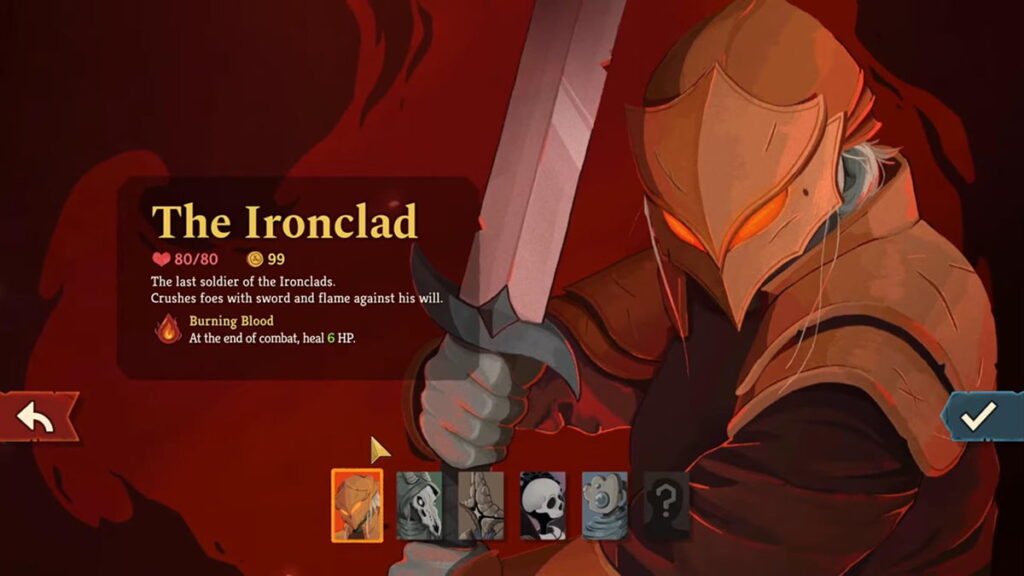
The Ironclad remains the king of sustain and raw power. In the sequel, his kit has evolved to reward Exhaust synergies and Self-Damage archetypes more than ever.
| Card | Rarity | Type | Primary Benefit |
|---|---|---|---|
| Corruption | Rare | Power | Massive Energy Cheat |
| Rupture | Uncommon | Power | Infinite Strength Scaling |
| Body Slam | Common | Attack | Block-to-Damage Conversion |
| Hellraiser | Rare | Power | Strike-based Free Attacks |
| Offering | Rare | Skill | Explosive Turn Momentum |
1. Corruption
- Cost: 3 (2) Energy
- Type: Power
- Effect: Skills cost 0. Whenever you play a Skill, Exhaust it.
Corruption is arguably the most powerful card in the Ironclad’s arsenal. By turning every defensive skill into a free play, it allows you to spend all your Energy on offensive attacks while maintaining a perfect defense. It synergizes perfectly with “Feel No Pain” and “Dark Embrace,” turning your Exhaust pile into a resource engine.
2. Rupture
- Cost: 1 Energy
- Type: Power
- Effect: Whenever you lose HP on your turn, gain 1 (2) Strength.
Unlike the first game, the “Lose HP” archetype is now top-tier in Slay the Spire 2. Rupture turns cards like Bloodletting and Offering into Strength generators. With the upgrade, gaining 2 Strength every time you tick down your HP allows you to out-scale even the toughest Act 3 bosses.
3. Body Slam
- Cost: 1 (0) Energy
- Type: Attack
- Effect: Deal damage equal to your current Block.
Body Slam remains the centerpiece of the good old “Barricade” build. In the sequel, new cards like Colossus and Evil Eye make generating massive Block easier. As before, at 0 cost when upgraded, this card provides a way to deal triple-digit damage while staying completely safe behind a wall of armour.
4. Hellraiser
- Cost: 2 (1) Energy
- Type: Power
- Effect: Whenever you draw a card containing “Strike”, it is automatically played against a random enemy.
A new addition to the Ironclad’s repertoire, Hellraiser breathes life into the “Perfected Strike” archetype. It effectively turns every Strike in your deck into a free auto-hit, allowing for high-speed “Strike-cycle” decks that can clear hallways in a single turn.
5. Offering
- Cost: 0 Energy
- Type: Skill
- Effect: Lose 6 HP. Gain 2 Energy. Draw 3 (5) cards.
Offering is the ultimate “get out of jail free” card. It provides the two most important resources in the game, Energy and Draw, at the cost of a small amount of HP. In a Rupture-heavy deck, this card buffs your damage simultaneously while setting up your turn.
The Silent: Top 5 Cards
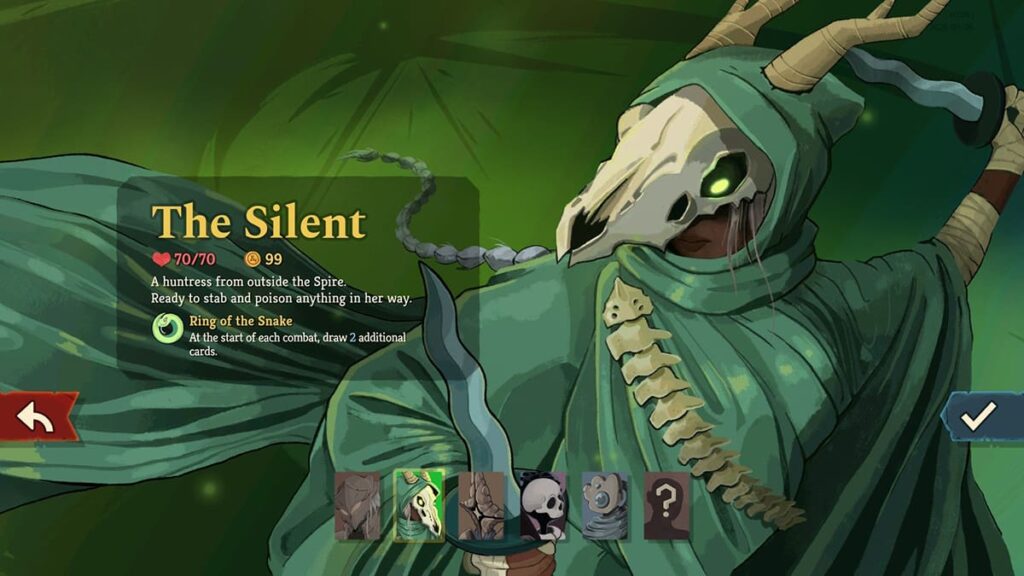
The Silent excels at thousand-cut victories. Her new Sly mechanic allows cards to trigger automatically when discarded, making her the fastest-cycling class in the game.
| Card | Rarity | Type | Primary Benefit |
|---|---|---|---|
| Accelerant | Rare | Power | Exponential Poison Scaling |
| Master Planner | Rare | Power | Discard Engine Enabler |
| Calculated Gamble | Uncommon | Skill | Mass Sly Triggering |
| Knife Trap | Rare | Attack | Shiv-based Finisher |
| Acrobatics | Common | Skill | Essential Card Cycle |
1. Accelerant
- Cost: 1 Energy
- Type: Power
- Effect: Whenever Poison deals damage, it no longer decreases (and increases by 1).
Accelerant is the new “Catalyst.” Instead of a one-time burst, it ensures that your Poison stacks only go up. This makes long boss fights nearly trivial, as the damage numbers reach astronomical levels within a few turns of defensive play.
2. Master Planner
- Cost: 1 Energy
- Type: Power
- Effect: All non-Sly Skills in your hand gain Sly.
This card is the linchpin of the modern Silent Discard deck. By giving the “Sly” keyword to your entire hand, any mass-discard effect (like Survivor or Tools of the Trade) suddenly plays half your deck for free, completely bypassing Energy costs.
3. Calculated Gamble
- Cost: 0 Energy
- Type: Skill
- Effect: Discard any number of cards. Draw that many cards. Exhaust. (Upgraded: Does not Exhaust).
In the sequel, the addition of the Exhaust keyword to the base version significantly changes its utility. For one, it is no longer a “spamable” cycle card from the jump. Instead, it acts as a surgical tool to trigger Sly effects and clear “Status” or “Curse” cards from your hand while digging for your win condition. Once upgraded to lose the Exhaust trait, it returns to its status as the premier engine for infinite discard loops.
4. Knife Trap
- Cost: 1 Energy
- Type: Attack
- Effect: Deal 4 damage for every Shiv played this combat.
Shiv decks are faster than ever in StS2. Knife Trap serves as the ultimate finisher. Unlike Finisher from the first game, which only counts the current turn, Knife Trap scales across the entire combat, making it a nuke for Elite and Boss encounters.
5. Acrobatics
- Cost: 1 Energy
- Type: Skill
- Effect: Draw 3 (4) cards. Discard 1 card.
Acrobatics remains simple but effective – it is the glue that holds the Silent together. This card provides the necessary draw to find your powers and the discard outlet needed to trigger Sly effects. It is a “must-pick” in almost every archetype.
The Necrobinder: Top 5 Cards
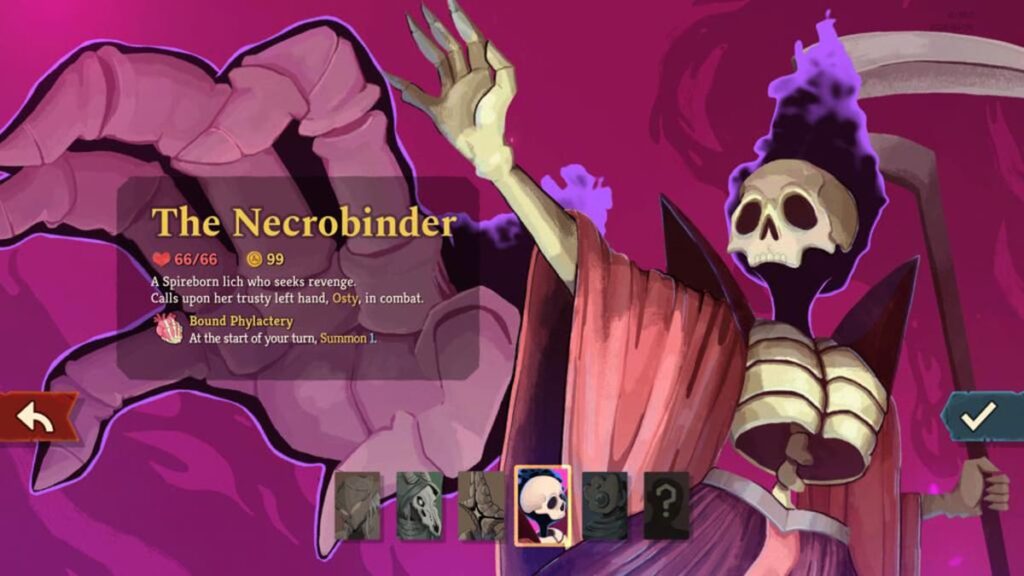
The Necrobinder is a high-risk, high-reward lich who fights alongside her skeletal hand, Osty. Her mechanics revolve around Doom (an execution threshold) and managing Osty’s HP.
| Card | Rarity | Type | Primary Benefit |
|---|---|---|---|
| Scourge | Common | Skill | Efficient Doom Application |
| Death’s Door | Uncommon | Skill | Massive Doom-based Block |
| Rattle | Uncommon | Attack | Multi-hit Osty Damage |
| Time’s Up | Rare | Attack | High-HP Execution |
| Oblivion | Rare | Skill | Soul-based Card Cheat |
1. Scourge
- Cost: 1 Energy
- Type: Skill
- Effect: Apply 10 (13) Doom. Draw 1 card.
Scourge is the foundational card for any Doom build. It applies a significant amount of the “execution” debuff while replacing itself in your hand. Because Doom ignores Block once the threshold is met, stacking Scourge early allows you to bypass the defenses of armoured enemies.
2. Death’s Door
- Cost: 2 Energy
- Type: Skill
- Effect: Gain 6 (8) Block. If you applied Doom this turn, gain Block 2 additional times.
The Necrobinder is fragile, starting with the lowest HP in the game. Death’s Door is her primary survival tool. By scaling Block based on Doom application, a single upgraded card can provide 24 Block, keeping both the lich and Osty alive.
3. Rattle
- Cost: 1 Energy
- Type: Attack
- Effect: Osty deals 4 damage 3 (4) times.
Rattle is the “Twin Strike” of the Necrobinder, but with much higher scaling potential. Since Osty acts as a separate entity for buffs, any Strength or Summon-scaling you apply to him makes Rattle hit like a truck, making it the premier choice for Osty-focused damage builds.
4. Time’s Up
- Cost: 2 Energy
- Type: Attack
- Effect: Deal damage equal to the amount of Doom on the enemy.
While Doom normally waits for the end of the enemy’s turn to execute, Time’s Up allows you to “pop” that value immediately. Against bosses with massive health pools, this card acts as a massive burst of damage that can end a fight a couple of turns early.
5. Oblivion
- Cost: 3 Energy
- Type: Skill
- Effect: Reduce the Soul cost of all cards in your hand to 0 this turn.
Oblivion is the “Adrenaline” of the Necrobinder. It allows for massive, explosive turns where you can dump your entire hand for free. When combined with the Necrobinder’s ability to manipulate her discard pile, Oblivion facilitates infinite or near-infinite loops.
The Regent: Top 5 Cards
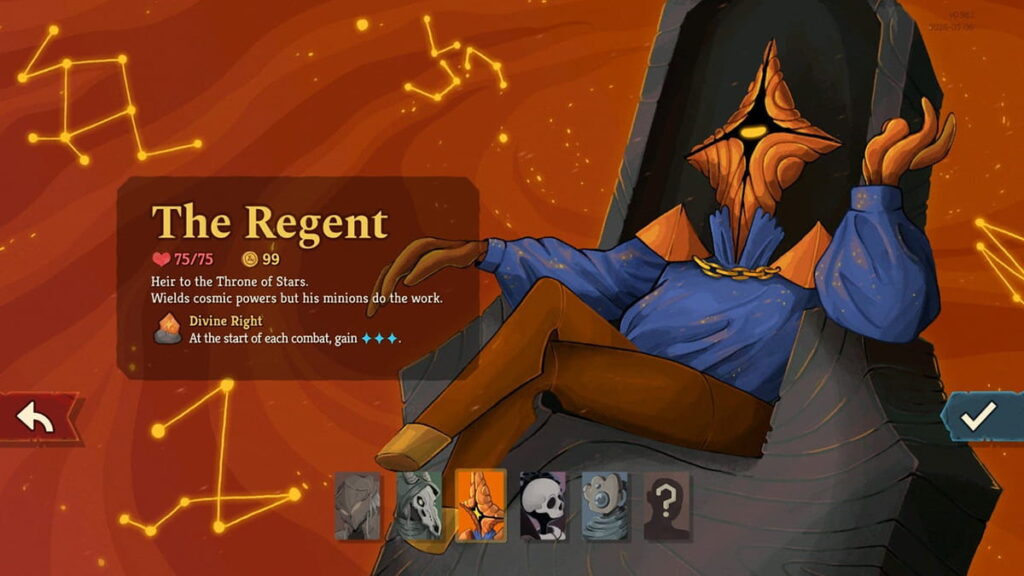
The Regent is a master of cosmic resources, utilizing Stars as a second currency and the Forge mechanic to upgrade his permanent “Sovereign Blade” during combat.
| Card | Rarity | Type | Primary Benefit |
|---|---|---|---|
| Sovereign Blade | Special | Attack | Ramping Permanent Damage |
| Bulwark | Uncommon | Skill | Reliable Star-based Block |
| Quasar | Rare | Skill | Colorless Card Generation |
| Divine Right | Rare | Power | Consistent Star Generation |
| Wrought in War | Common | Attack | Basic Blade Scaling |
1. Sovereign Blade
- Cost: 2 Energy
- Type: Attack
- Effect: Deal X damage. Retain. (Damage increases via Forge).
While technically a generated card, the Sovereign Blade is the Regent’s identity. Since it Retains, you can keep it in hand until it has been Forged into a world-ending weapon. It is the most reliable win condition for the class, making it the most important card for the class.
2. Bulwark
- Cost: 0 Energy (2 Stars)
- Type: Skill
- Effect: Gain 12 (16) Block.
Bulwark highlights the Regent’s unique economy. By costing Stars instead of Energy, it allows you to defend yourself on turns where you need to spend all your Energy on Forging or playing high-cost cards. It is the gold standard for Star-based defense.
3. Quasar
- Cost: 0 Energy
- Type: Skill
- Effect: Add 2 (3) random Colorless cards to your hand. They cost 0 this turn.
Quasar is the Regent’s “chaos” card. Colorless cards in StS2 remain incredibly high-value, and getting 3 of them for 0 Energy can completely swing the momentum of a fight, randomly providing unexpected utility, powers, draw, or burst damage.
4. Divine Right
- Cost: 1 Energy
- Type: Power
- Effect: At the start of your turn, gain 2 (3) Stars.
We have found that a Regent without Stars is a Regent without options. Divine Right is a highly essential power for any build that relies on Star-cost cards like Bulwark or Nova. That way, you have a constant stream of “free” resources every single turn.
5. Wrought in War
- Cost: 1 Energy
- Type: Attack
- Effect: Deal 7 damage. Forge 5 (8).
Wrought in War is the most efficient way to scale your Sovereign Blade in the early game. It provides respectable chip damage while permanently increasing the power of your Blade for the rest of the fight. It is a high-priority pick in Act 1, so that your damage can keep up with Elites.
The Defect: Top 5 Cards
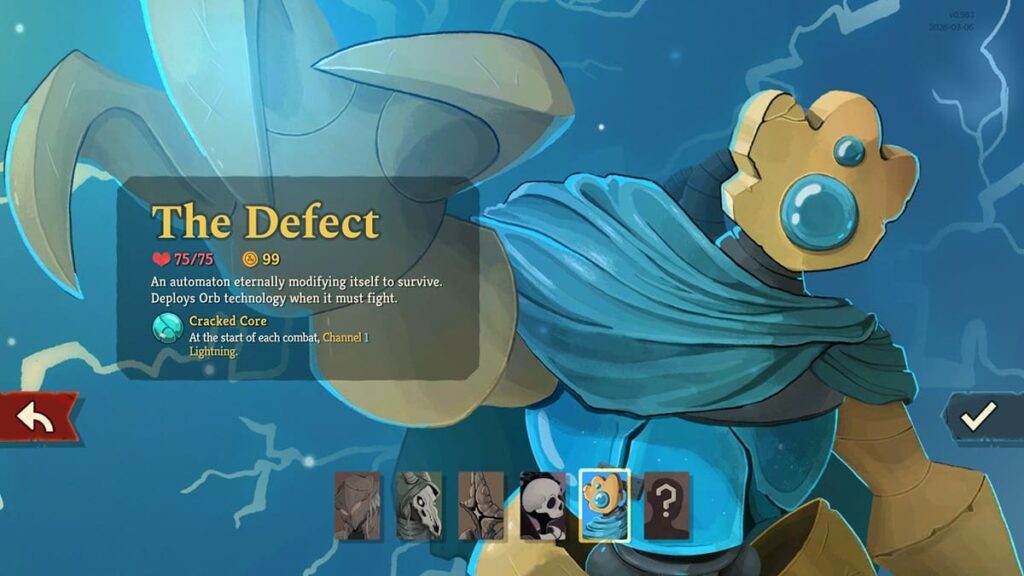
The Defect returns with its signature Orb system, but with new orb types like Glass and Plasma taking center stage in the sequel’s meta.
| Card | Rarity | Type | Primary Benefit |
|---|---|---|---|
| Biased Cognition | Rare | Power | Massive Focus Boost |
| Echo Form | Rare | Power | Doubled Card Impact |
| Glass Cannon | Uncommon | Attack | High AoE Glass Orb Burst |
| Defragment | Uncommon | Power | Essential Passive Scaling |
| Coolheaded | Common | Skill | Frost Generation + Draw |
1. Biased Cognition
- Cost: 1 Energy
- Type: Power
- Effect: Gain 4 (5) Focus. At the start of each turn, lose 1 Focus.
Biased Cognition remains the best “finisher” power for the Defect. It provides an immediate, massive boost to your Orbs. If you can end the fight in 4 turns (or use an artifact to negate the Focus loss), this card is effectively a win button.
2. Echo Form
- Cost: 3 Energy
- Type: Power
- Effect: The first card you play each turn is played twice. Ethereal.
Echo Form is the ultimate greed card. While expensive, playing your best card twice every turn is an insurmountable advantage. You can use it to double your Focus gains or your high-damage attacks – Echo Form is the definition of ramping up.
3. Glass Cannon
- Cost: 2 Energy
- Type: Attack
- Effect: Deal 10 damage to all enemies. Channel 1 (2) Glass Orbs.
Glass Orbs are a new mechanic in StS2 that deal high AoE damage that diminishes over time. Glass Cannon allows the Defect to handle multi-enemy encounters with ease, providing an immediate effect that Lightning orbs often lack.
4. Defragment
- Cost: 1 Energy
- Type: Power
- Effect: Gain 1 (2) Focus.
Defragment is the bread and butter of the Defect. It is a simple, permanent increase to the effectiveness of every Orb you channel. It remains true that there is almost no Defect deck that doesn’t want at least two copies of this card.
5. Coolheaded
- Cost: 1 Energy
- Type: Skill
- Effect: Channel 1 Frost. Draw 1 (2) card.
Coolheaded is arguably the best Common in the game. It provides Block (via Frost), moves you through your deck, and sets up Orb evokes. The upgrade to “Draw 2” makes it a useful engine piece for any Frost-Focus “Turtle” build.
Honorable Mentions
While the cards above represent the pinnacle of each class, these runners-up were narrowly excluded and can often mean the difference between a mid-game death and a successful run.
Feed (The Ironclad)
- Cost: 1 Energy
- Type: Attack
- Effect: Deal 10 (12) damage. If this kills a non-minion enemy, raise your Max HP by 3 (4). Exhaust.
Feed remains among the best meta-scaling cards in the game – if you can make it work. Getting this early in Act 1 can lead to an Ironclad with over 150 HP, allowing you to tank your way through the final boss’s most dangerous attacks.
Wraith Form (The Silent)
- Cost: 3 Energy
- Type: Power
- Effect: Gain 2 (3) Intangible. At the start of your turn, lose 1 Dexterity.
- Wraith Form is still the ultimate panic button. While the Dexterity penalty is steep, three turns (upgraded) of taking only 1 damage is usually enough for a well-built Poison or Shiv deck to close out any encounter.
Seek (The Defect)
- Cost: 0 Energy
- Type: Skill
- Effect: Choose 1 (2) card from your draw pile and put it into your hand. Exhaust.
Seek is the king of consistency. In a class that relies on complex orb-shuffling setups, the ability to find your Echo Form or Biased Cognition exactly when you have the energy to play them is invaluable.
Reaper Form (The Necrobinder)
- Cost: 3 Energy
- Type: Power
- Effect: Whenever you deal unblocked damage, apply that much Doom.
Reaper Form turns the Necrobinder into a legitimate speed-runner. It bridges the gap between traditional damage builds and Doom execution builds, allowing your standard attacks to contribute directly to the execution threshold.
Big Bang (The Regent)
- Cost: 0 Energy
- Type: Skill
- Effect: Gain 1 Energy. Gain 2 Stars. Draw 1 card. Forge 5. Exhaust.
Big Bang is the most efficient utility card in the Regent’s kit. It hits every major mechanic for the class in one click. Even though it exhausts, the immediate injection of resources often sets up a win-state turn during the difficult Elite fights.
Frequently Asked Questions (FAQ):
The Ironclad remains the most beginner-friendly class. His high starting HP (80) and the Burning Blood relic, which heals 6 HP after every combat, provide a safety net that other classes lack. It reliably allows new players to learn enemy patterns without a single mistake ending the run.
In Slay the Spire 2, characters are unlocked in a specific chain:
The Silent: Play one run as the Ironclad.
The Regent: Play one run as the Silent.
The Necrobinder: Play one run as the Regent.
The Defect: Play one run as the Necrobinder.
Sly is a new keyword introduced in the sequel. Cards with the Sly keyword are automatically played for free when they are discarded from your hand. This makes discard-heavy decks incredibly fast and energy-efficient, as you can trigger multiple attacks or blocks simply by cycling your deck.
Stars are a secondary resource unique to The Regent. Unlike Energy, Stars do not reset at the end of your turn and have no cap. They are used to power high-impact cosmic spells or to Forge the Sovereign Blade – a permanent attack card that grows in power throughout the duration of a combat.
Yes, Slay the Spire 2 features an online co-op multiplayer mode. It allows you and your friends to climb the Spire together, sharing certain resources and coordinating card plays to take down boosted versions of the game’s bosses.