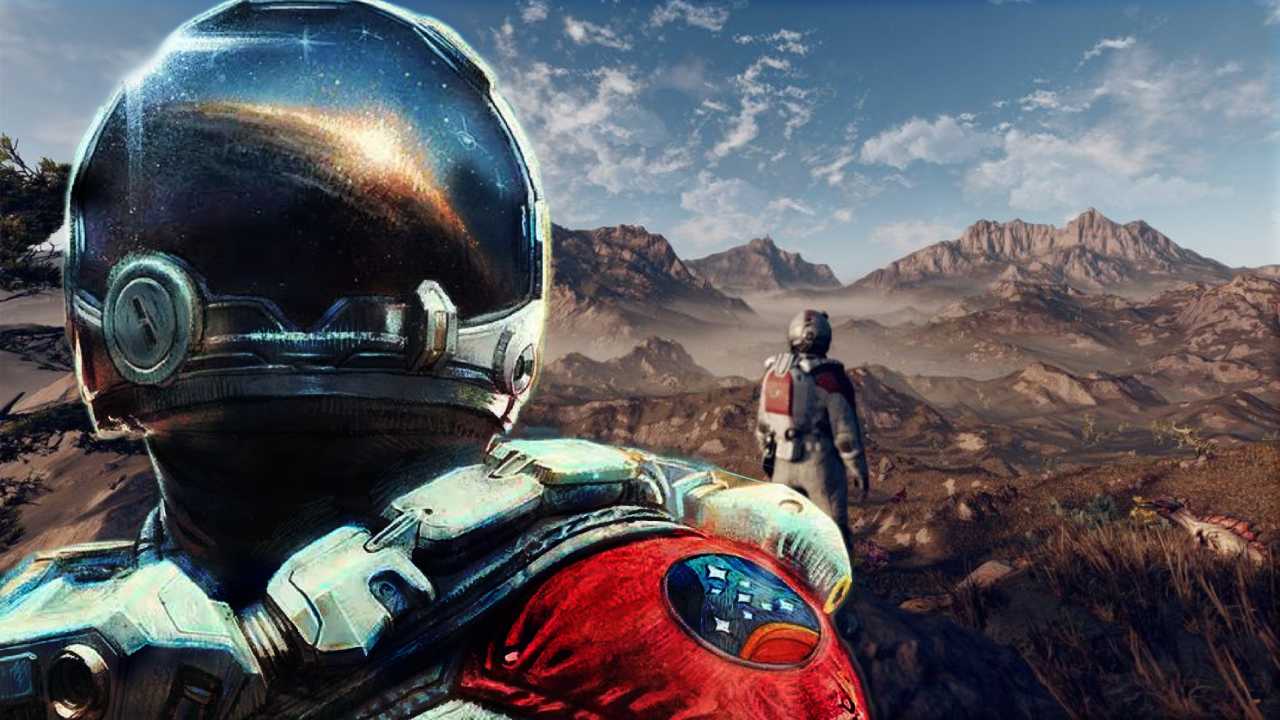
I’m a huge fan of Starfield, although it is Bethesda’s worst single-player RPG since the release of Morrowind. Outside of the rougher spin-offs of Shadowkey, Redguard, and others, Starfield does often feel like its crippled by a litany of design issues that we’ve discussed at length, often with the game’s own developers.
There’s a lot that rides against Starfield. It’s procedural generation, as Bruce Nesmith explained to us in the past, is “where is falls apart” the most. However, curiously, it suffers most because it often feels like it’s trying to do the opposite of what Bethesda does best, and it often feels like it’s at odds with the technology Bethesda builds.
There’s been a lot of discussions online about Bethesda’s internal Creation Engine, a piece of technology that the studio has advanced upon once again for The Elder Scrolls 6. Many online slander the technology, while others praise it, but the core issue with Starfield is that it is often built for the opposite of what Bethesda and its technology does.
At its core, the Creation Engine is built for mass simulation. It’s built for dense environments and tracking unique objects and, more importantly, unique NPCs, giving every character a place and a purpose. This is why, in Starfield, you can steal tens of thousands of potatoes and fill someone’s house with them, allowing you to come back and pick them back up again hours later.
What the Creation Engine does best, however, is its simulation of NPCs. In Skyrim, the first game to use the actual Creation Engine, every NPC is simulated with their own daily routine. It’s an advancement of the Radiant AI system found in Oblivion and Fallout 3, although far less goofy than its prior Elder Scrolls incarnation.

This means that every NPC knows what they have to do. Some characters wake up before others, start tilling the farm, they go on journeys to the pub and back home. While it’s not all that deep, and less noticeable than it was in the batcrap-crazy world of Oblivion, it made the world of Skyrim feel alive. I knew when and where characters were, I knew how they were related to each other, how they reacted to specific actions.
In Skyrim, killing someone in the streets will result in a number of responses as the Radiant AI system spins up a response for them. Some will run, some will fight, some will even try to steal dropped weapons from dead citizens and guards. Again, it’s simple, but combined with the aforementioned scheduling system, and Skyrim feels like a working world—a clockwork miniature of a world, but a world nonetheless.
By comparison, in its quest to simulate the universe, Starfield feels less like a working world. It’s not because all the cats and dogs are dead, it’s not to do with the lore (which I actually enjoy), it’s not entirely to do with its humongous size, but instead because it often loses the little moments that make Bethesda games feel inviting.
In practice, Starfield’s biggest hubs, such as New Atlantis and Neon, feel less like locations and more like pit stops for quests. Yes, there are quite a few memorable named NPCs that you can find dotted around, but the random civilians are lifeless. Some of this feels apt. After all, Starfield is a post-apocalyptic universe, but when even Fallout 4 pumped its random NPCs with character, life out in the stars doesn’t really feel alive.
Skyrim, Fallout, and Oblivion work at their best when everything is simulated, when all the gears on the clockwork people combine with the systems that are handed to you. They’re not just worlds to jump and out of, but worlds to stay and breathe in. Unfortunately, for as fun as its gameplay can be, Bethesda’s sci-fi adventure simply lacks that, and often plays against it. You are encouraged to jump in and out of places, complete a dungeon and move on. While fun, it does leave you wondering: ‘Huh, I wonder what this place would feel like in a real Bethesda game?’
Nevertheless, Starfield is still a fun game, one that will receive years of additional content that it truly does deserve. There is no other game like it, and there likely never will be, and I’ve spent hundreds of hours touring the virtual universe across its lifetime.
It seems, though, that Bethesda has learned a lot of lessons from its “creative break” with Starfield and Fallout 76. As the studio works on The Elder Scrolls 6, it does so with the knowledge that fans do actually want Bethesda games to remain Bethesda games. The full simulation is important, the quirky NPCs are important, but the feeling of exploring an actual world and not a series of places is, by far, the most important.