Just 13 years after its original release, Assassin’s Creed: Black Flag is back. In a period of remake culture – Resident Evil, Halo, Silent Hill, etc–Ubisoft’s turn at the trend appears rather cynical at first glance. Alongside Black Flag, there’s the upcoming Rayman Legends Retold, both games rapidly returning to hyper-popular entries that can already be played on every modern platform.
The question that Black Flag poses then is whether or not it deserves to exist, and it’s a rather bold question. Resynced comes after a daring RPG-focused transformation for Assassin’s Creed, shifting the series’ genre outside of what the pirate-themed adventure was back in its heyday. When a franchise becomes so contorted compared to its original design philosophies, the remake can become a dreaded experience, but does Resynced fall into that trap?
Assassin’s Creed: Black Flag Resynced is a wordy-but-fitting subtitle. Ubisoft’s revival of its 2013 pirate adventure isn’t a 1:1 recreation, although much of it is also mirror-like in its similarity. While cutscenes are largely identical and areas spruced up, the mechanical underbelly of the open-world affair has been ripped out in favour of a midway point between old and new.
Near-exactly like the original, you inhabit budding pirate Edward Kenway as he falls drunkenly into the age-old war of Assassins versus Templars. Powered by an obsession to find the mystical ‘The Observatory’, the story is one millions have already experienced, albeit with the surgical removal of the original’s dated modern-day storyline. What’s old is old, but what’s new is intriguing, and Black Flag’s mechanical reframing does make it an intriguing retrofit of modern and classic in a way few remakes ever are.
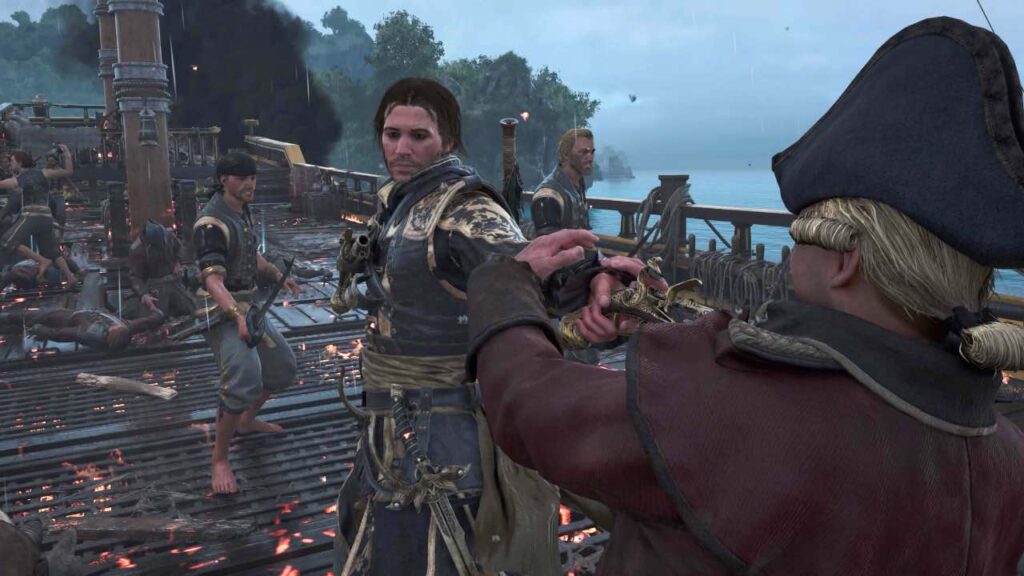
While lacking depth, early Assassin’s Creed games’ Arkham-lite ‘parry-kill’ gameplay felt swift and satisfying, something their RPG successors removed in favour of more long-form combat. Black Flag puts emphasis on the modern AC gameplay, but does so in a way that fits the classic game more than expected. Parrying and instant kills are still possible, but they feel more demanding on the player, and it’s actually all the better for it.
Instant-kill assassinations are also back after their somewhat unruly appearance in other games. While the recent Japan-themed Shadows entry allowed for instant assassinations in most areas, Black Flag has them everywhere, allowing some boss fights to be avoided entirely if your stealth is up to snuff.
Admittedly, learning the amalgamation of combat here can take some time; parry and dodge timings can be slightly off, causing Edward’s desynchronisation far more often than I care to be honest about. However, when you do learn it, it becomes far more satisfying than both the old-school Assassin’s Creed games and the newer ones. In searching for a way to adapt the classic gameplay into the frame of modern titles, Ubisoft may have inadvertently created the best path forward for future entries.
Unlike the severely bloated worlds of Origins, Odyssey, Valhalla, and Shadows, Black Flag Resynced is remarkably brisk. With new and old melding together, I found myself excited to be in battles while still finishing the main story within just 15 hours. Furthermore, Kenway’s adventures continue after the credits lapse with a brand-new questline exclusive to the remake, making up for its removal of the admittedly-poor modern day sequences in the original.
Without spoiling its contents, Black Flag’s new tale represents the best of what Resynced has to offer. Themes of vengeance and the real treasures of life may be on the nose, but they build upon the throughline of Edward’s ongoing dilemma while not boring with even more content in the open world, the same open world you’ve likely experienced before.
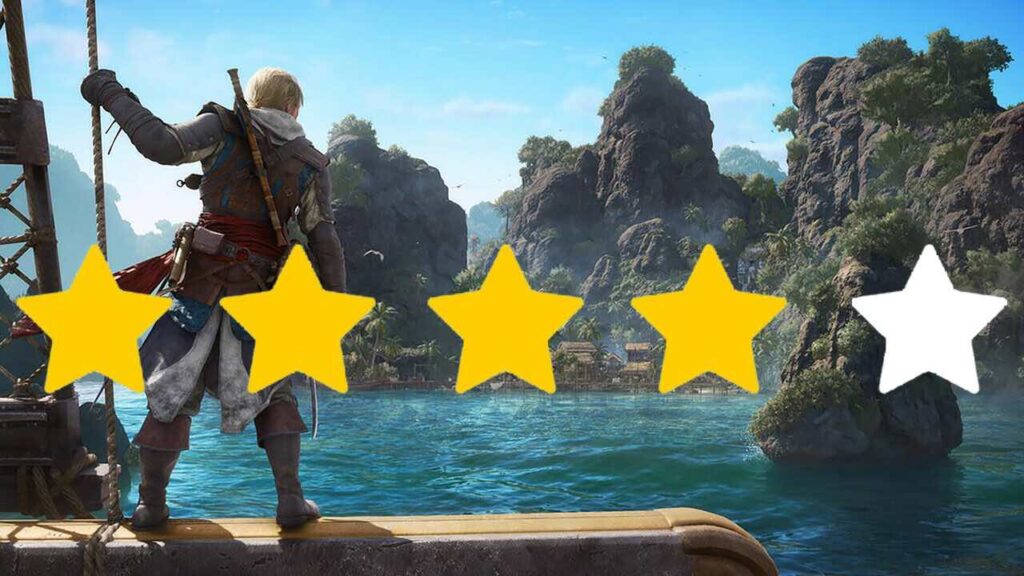
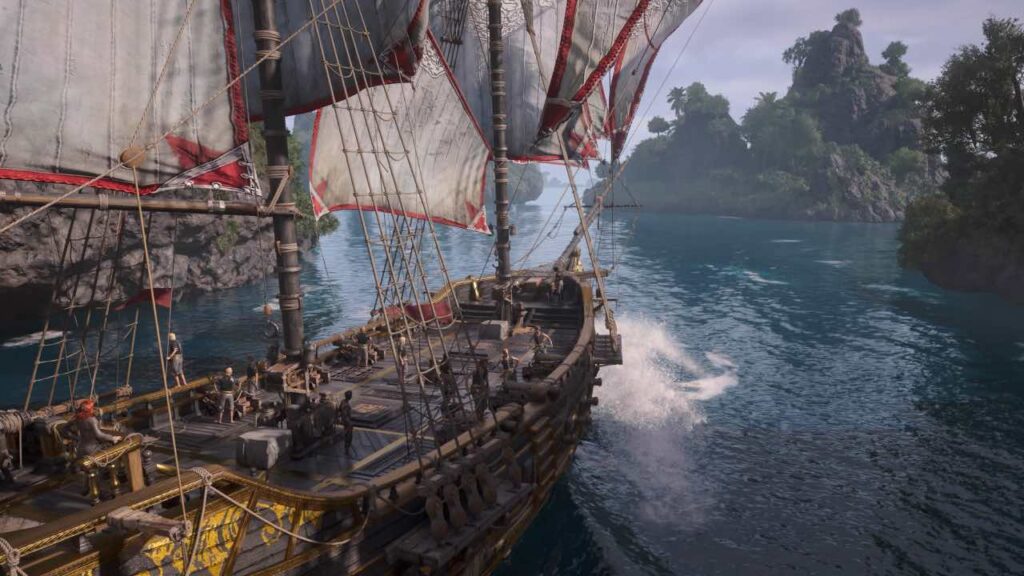
Alongside the new combat and the new stories, Black Flag Resynced’s arguably bigger overhaul comes in the form of its new visuals. At first glance, the pastiche pirate islands and vast open seas look the same as you remember the original game looking, but that’s simply the sign of a strong retread. Assassin’s Creed: Black Flag Resynced is definitely still familiar in its construction and aesthetic, but it’s considerably more impressive now if you’re interested firmly in better rendering.
At spots, the overhauled visuals combine into a gorgeous screenshot of virtual pirate life, making the same Seven Seas just as exciting as it was over a decade ago. Rogue waves in a brutal storm feel more dangerous than ever as they lash against the Jackdaw while the dense forests of each island feel comforting as an assassin. It never feels like a massive upgrade over the original game, but enough to make an impression, and perhaps justify the remake’s existence.
That’s not to say Black Flag Resynced makes the best strides forward all of the time, it undoubtedly stumbles. New Naval Officers and side quests add to the world, expanding ship battles or the world respectively, but the new ‘Rifts’ scenarios aren’t a solid replacement for the modern day storyline in a Desmondless world. Also, the stark difference between the new voice lines by Matt Ryan compared to his younger version of Edward are instantly apparent, and it can be bizarre hearing two different versions of the character within minutes of each other.
The largest question, though, is simple: does Black Flag Resynced deserve to exist? There are plenty of Assassin’s Creed games that could likely do with a remake, the 2006 original being the prime candidate. (Although, some could argue that Mirage is essentially a non-narrative remake of the original game.)
Shockingly, the answer is ‘yes’. Swift new combat represents the best of both worlds, something that makes me excited for a post-Shadows era for the franchise, but it doesn’t change what was already great, it just heightens the experience in general. Resynced also doesn’t solely exist just to recapture nostalgia or new players, but to cater to both. Those returning, like myself, are getting the exact same narrative, but with improvements and new additions sprinkled on top. RPG era players get to play arguably one of the franchise’s best entries without having to buy old hardware or deal with aged mechanics that have since been updated and then removed.
Assassin’s Creed: Black Flag Resynced is, largely, everything I had expected from a remake, but there is undeniably something extra hidden underneath its assassin’s hood. After a few duds in a row, Resynced marks Ubisoft’s best release in a while while also setting a precedent for video game remakes as a whole. Resynced isn’t without issues, and it can be a bit deflating to be playing a barely decade-old game instead of a new adventure, but it finally feels like I can say “Assassin’s Creed is back”, with all seriousness intended.