Yuji Horii’s Dragon Quest is widely considered the genesis of the JRPG, role-playing games created in Japan. While JRPG is a far-reaching term, many use it for very specific instances. While the genre itself doesn’t require it, many view JRPGs as turn-based, for example, and there’s a specific vibe that many look for in the genre. This is why many view French-developed RPG Clair Obscur: Expedition 33 as an honorary JRPG.
In reality, role-playing games made in Japan come in a large variety. Mainline Dragon Quest, up until now, opts to stay turn-based whereas Final Fantasy’s cinematic focus has led it to push towards real-time action combat. Pokemon, by far the most successful JRPG franchise, has changed a lot over the years, offering a wealth of variety all on its own.
Despite the diversity of options within the genre, Dragon Quest, at least to me, still feels like the ultimate JRPG. In 40 years, the series has evolved endlessly with monster taming, open worlds, time-travel storylines, and a large collection of spin-offs, but its mainline entries—for all they do innovate on—have the same core. (I mean, remember when IX was originally a real-time action game?)

Even at their most complex, Dragon Quest stories are simple to engage in: the inciting incident is brisk and to the point, the journey is quickly laid bare, and the threat of an evil Demon Lord is largely the same. You often fight the same enemies, use the same spells, and tactics more than often translate from one entry to the other.
Dragon Quest’s greatest strength is that it almost always feels like a love letter to the genre its in. Just like a Dungeons and Dragons campaign, it adheres to its own set of essential building blocks almost every time, and it revels in crafting new adventures within a similar pool of ideas. DQ is not about breaking the mould, although it can, it’s about crafting unique narratives and characters within an easily understandable container.
It can certainly be argued that Final Fantasy’s quest for complete reinvention between modern entries is more exciting. While Final Fantasy often feels like going to a brand-new restaurant, Dragon Quest feels like your favourite meal every time. In a new Dragon Quest, the ingredients are jumbled around, a new spice may be used, but it’s a reliable dish.
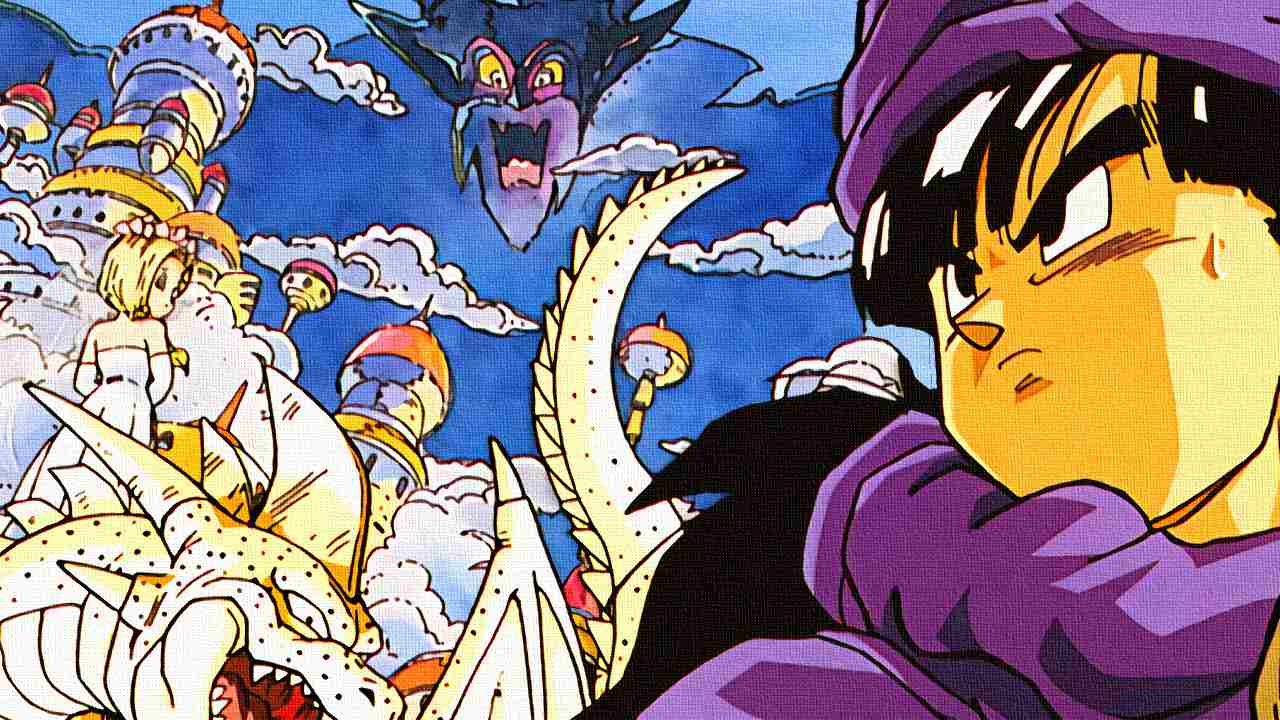
For those outside of the fandom, it can appear that Dragon Quest often sticks too closely to its roots, but that’s not the case. For example, the beloved fifth game—Hand of the Heavenly Bride—tells a story through generations, and Dragon Quest IX is a bold, online co-op entry in the series before X’s MMO push. There’s a lot of invention in the series, while also knowing when and where to reign in new ideas. Every entry has something new, but it also always respects what players like.
There’s an air of simplicity and an air of respect in every entry, and there’s a reason why DQ stands as the bastion of the JRPG genre to this day. In the same way that the conventions of a horror story are largely the same today, albeit more visceral, Dragon Quest knows exactly what notes it needs to hit, and exactly where it can craft something new.
For me, there’s not a single franchise that is as reliable as Dragon Quest. Even the worst mainline entries in the series are fun and reliable, and there’s never been an entry that has disappointed. (Outside of the fact that Square Enix still won’t translate DQX for the West.) It’s rare that, after 40 years, a series can have every entry be beloved, but DQ pulls it off.
As we look to the future with Dragon Quest XII on the way and even more remakes in development, it’s good to remember that true, classic JRPGs aren’t dead. Dragon Quest is the start and the present of the true JRPG, and it’s now popular across the world than its ever been.