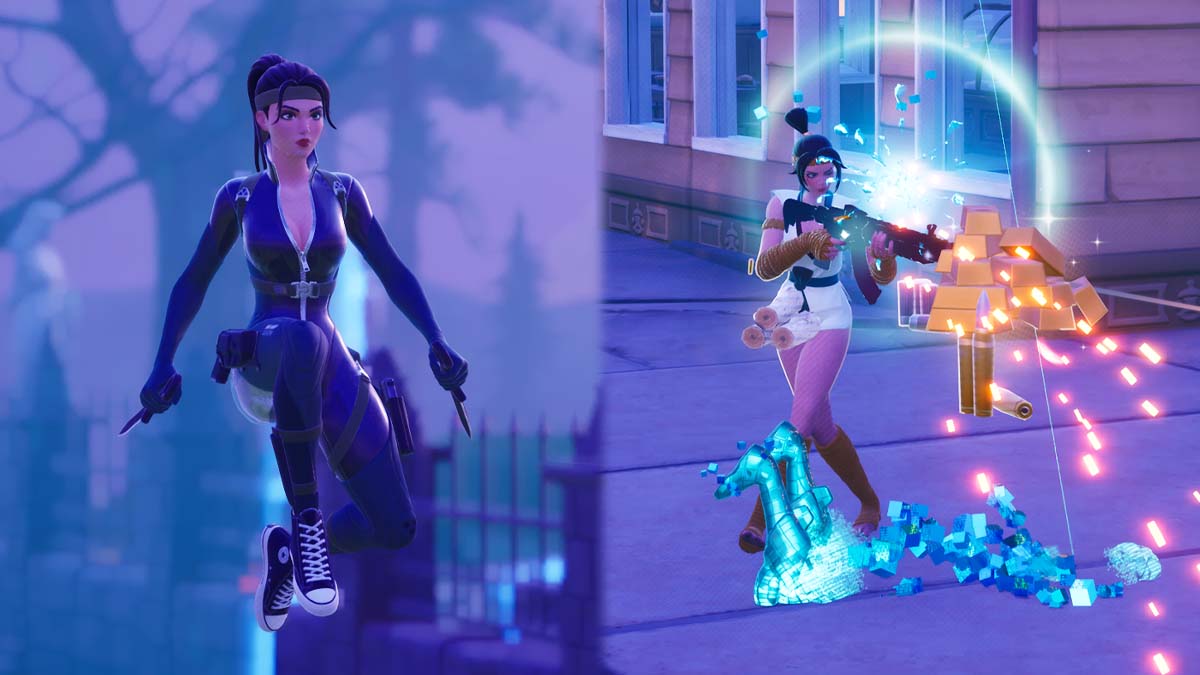
Learning how to get better at Fortnite starts with the habits that lose fights before anyone fires: a crosshair pointed at the floor, a sprint across open ground, and a fight taken at half shield. Fix those first, and your aim, building, and Zero Build play all improve faster.
This guide breaks aim, movement, building, and Zero Build down into drills you can run today, with settings advice for PC and console players. If you want to know how to get good at Fortnite without grinding for hours, the practice islands and the 25-minute routine below show exactly where to start.
Getting better at Fortnite takes more than good aim, especially since the game changes its weapons, mechanics and modes with almost every season. I have been playing Fortnite since October 2017, and this guide covers the tips that helped me improve the most. You can use these tips whether you are a new player or a veteran chasing more Victory Royales.
How to get better at Fortnite with five improvements
The quickest way to get better at Fortnite is to work on five habits. They are all important, whether you are a Build or Zero Build player:
- Crosshair: Keep your crosshair at head height on the spot where an enemy will appear, so fights start with your crosshair already close to the target, as this gives you a damage multiplier
- Cover: Never cross open ground without knowing where your next piece of cover is.
- Fight selection: Take fights with full shields, a loaded weapon, and a way out, and leave the rest.
- Defense: Place a wall in Build, or step behind hard cover in Zero Build, the moment you take damage.
- Practice: A short daily routine can teach more than hours of matches with no goal.
How to improve your aim in Fortnite
Good aim in Fortnite is mostly preparation. Players with good aiming skills usually have their crosshair close to the target before the fight began, which allows them to score quick headshots. The three habits below cover the moment a fight starts, close-range fights, and mid-range fights.
Fix your crosshair placement
Crosshair placement means keeping your crosshair where an enemy is most likely to appear, at the height of their head or upper body. If you walk around looking at the floor, every fight starts with a large vertical correction, and that delay is often the gap between shooting first and getting shot.
In practice, aim at doorframes, the edges of walls, the top of ramps, and the crest of a hill as you approach them. When you clear a building, hold your crosshair at head height on each doorway before you step through, rather than snapping to it after an enemy appears.
To train crosshair placement, follow these steps:
- Load into an aim course.
- Walk while keeping your crosshair at head height on every corner, window, and doorway you pass.
- Before each corner, check that your crosshair already sits where a head would appear.
- Repeat for five minutes before your first match of the day.
Win close-range shotgun fights
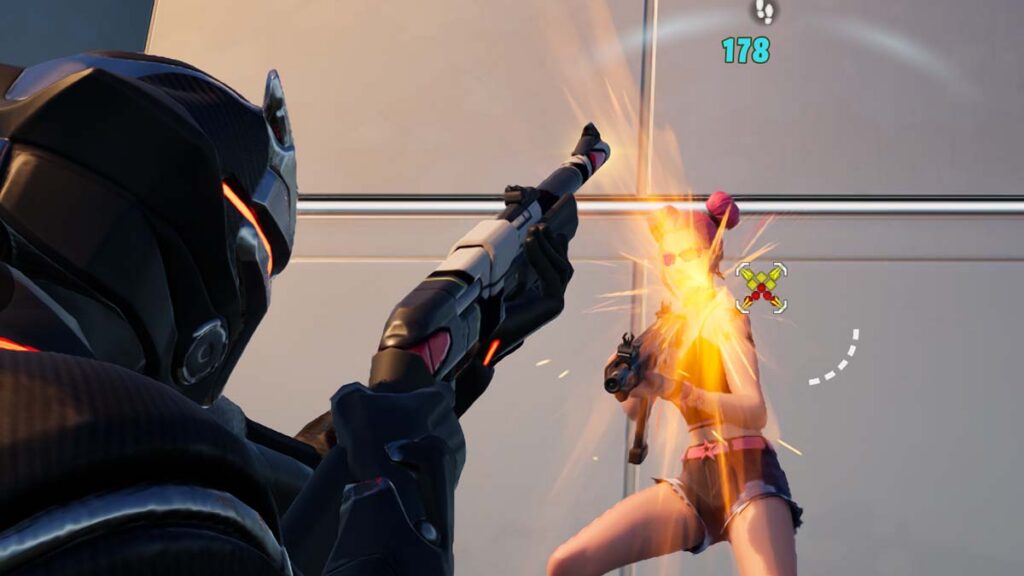
Shotgun fights decide many close-range battles in Fortnite, and many are lost to rushed timing rather than bad aim. Most shotguns have a delay between shots, so a missed first shot hands your opponent a free window. Take the shot when your crosshair is on target, not the moment a body appears on screen.
Aim at the head or upper chest, as headshots deal more damage, and shoot from an angle where only part of your character is exposed. If you miss, switch to an SMG or rifle for follow-up damage while the shotgun recovers, or break line of sight instead of standing still and trading.
A badly timed reload can lose a fight as easily as a missed shot, so make sure your weapon is fully loaded before you fight at enemy. If you prefer a faster-firing weapon over a shotgun, an SMG is just as good for close-range fights.
Track targets at mid range
Mid-range fights reward tracking, which means keeping your crosshair on a moving target for the whole burst instead of flicking to it once. Move your mouse with your arm and wrist together, or your stick in one smooth motion, and fire in short bursts so your crosshair can settle between them.
Many Fortnite weapons are less accurate in the air, so take your first burst from a planted position behind cover. At long range, land a few shots to crack a shield, then move before your opponent finds your angle.
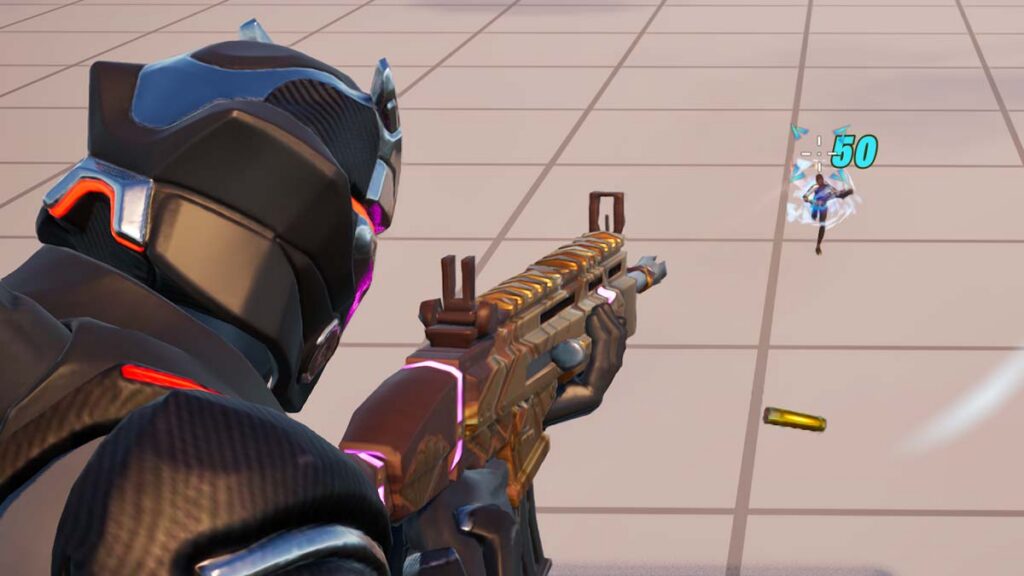
For a quick tracking drill, pick a moving-target course on an aim map, set a five-minute timer, and count how many full bursts you keep on target. Try to beat that number each session rather than chasing a single perfect run, and note which direction of movement you lose most often.
Finally, take advantage of first-shot accuracy, which is mostly available on assault rifles. This mechanic gives you 100% accuracy on your first shot if it’s fired after a small delay. Because of this, it’s always better to tap-fire your weapon instead of unloading an entire magazine on your enemy.
Movement and positioning tips
Good movement in Fortnite makes you a harder target to hit. Sprinting, sliding, mantling, and jumping all exist to move you from one safe spot to the next.
Move between cover, not across open ground
Before you rotate, pick your next three pieces of cover, such as a rock, a building, a ridge, or a vehicle. Sprint between them, slide into the last few meters, and pause behind each one to scan before you move on. One long exposed run becomes several short hops that are much harder to punish.
Inside a fight, avoid predictable patterns. Jumping on the same beat or strafing in one steady rhythm lets opponents lead their shots, so mix short strafes, crouches, and changes of cover. Each change forces your opponent to adjust their aim again, which buys you time to land your own shots first.
The same idea applies to your landing. The Ground Rush mechanic lets you free-fall the last stretch of your drop in every Battle Royale playlist, including Ranked, so landing before nearby players and reaching a weapon first now comes down to how well you time your glider.
Take height and peek from the right
High ground gives you a better view and forces enemies to expose more of their body when they aim up at you. In Build, you can create height with ramps. In Zero Build, you have to walk, mantle, or use mobility items to reach hills, roofs, and ridges that already exist.
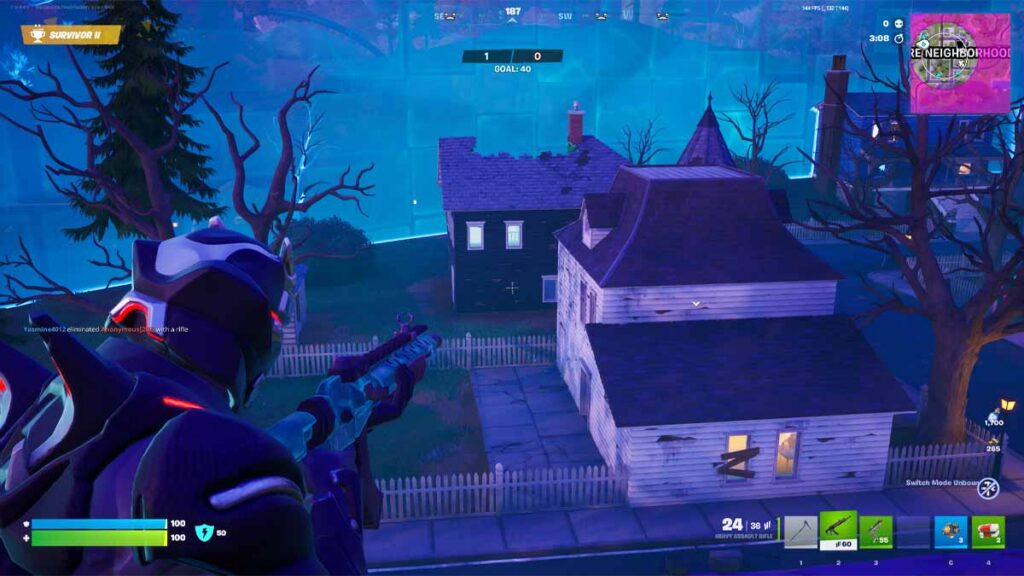
Fortnite’s camera sits behind your character’s right shoulder, so your character appears slightly left of your crosshair. You can shoot around the right side of a wall or tree while most of your body stays hidden. Approach cover from its left side so your peeks happen to the right, and avoid peeking left.
How to escape a fight you are losing
Escaping is a skill, and it starts the moment you realize a fight has turned against you. Players often die while healing in the open or re-peeking the same spot, so follow these steps instead:
- Break line of sight first, with a wall in Build or hard cover in Zero Build.
- Move away from the last place your opponent saw you, since that is where they will aim.
- Heal only once you are out of view.
- Return from a new angle or rotate away, rather than peeking the same spot again.
If you carry a mobility item, save it for leaving a bad fight rather than starting one, since a Shockwave Grenade spent on an early push cannot pull you out of trouble a few seconds later.
How to win more fights in Fortnite
Winning more fights starts with taking fewer bad ones. Epic’s Ranked guide says late-game performance carries far more weight than early actions, and that the Storm circle you reach often matters more than your exact placement. Surviving into the endgame should come before chasing early eliminations.
Before you commit to a fight, run a quick check. Are your shields full? Is your weapon loaded? Do you know where you will go if the first few hits go badly? Is another team close enough to hear the shots? If two of those answers are wrong, heal, reload, or reposition before you engage.
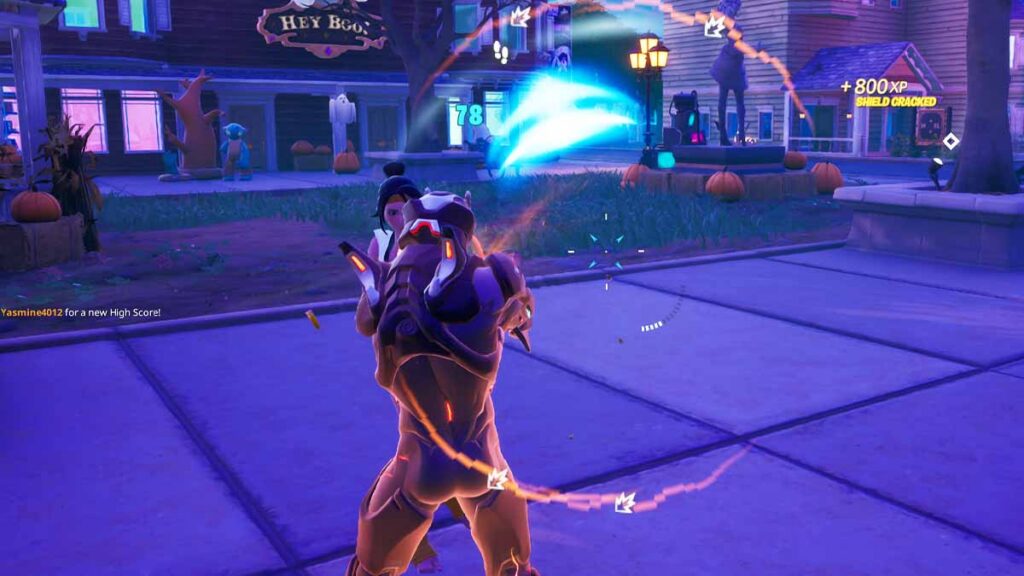
A third party happens when a fresh team joins a fight between two others and finishes whoever is left. After you win a fight, heal and reload behind cover before you loot, as every gunshot told nearby teams where you are. Looting first is exactly how many winning players lose the very next fight.
You can use the same logic yourself. When you hear a fight nearby, approach from cover and wait until one side is low before you commit, rather than joining at the first shot and taking fire from both teams at once.
Fortnite building tips for beginners
The most useful Fortnite building tips for beginners are defensive. Learn to put a wall between you and incoming fire, then turn it into a box. Fast, flashy building can wait, as a correctly placed wall at the right moment wins more fights than a tower you cannot use.
Learn the four pieces and the box
Fortnite gives you four building pieces: walls, floors, ramps (Epic calls them stairs), and cones (also called roofs). Walls block shots, ramps gain height, floors stop shots from above and below, and cones cover the top of a box. Wood finishes building fastest, while metal ends up strongest but starts weaker.
To build a basic box, follow these steps:
- Place a wall in the direction the shots are coming from.
- Turn and place walls on the other three sides.
- Add a cone or a floor above you to stop shots from above.
- Place a ramp inside if you need height or a second layer of cover.
Practice the box until you can build it facing any direction without thinking about your keybinds. Then practice it while turning and moving, since real fights rarely give you time to stand still and line everything up.
Make your first edits and resets
Editing changes the shape of a building piece, such as opening a window in a wall so you can shoot through it. Learn two edits first: a window in the middle of a wall, and a peanut butter edit, which opens three tiles in a top corner in an L-shape so you can peek from an angle.
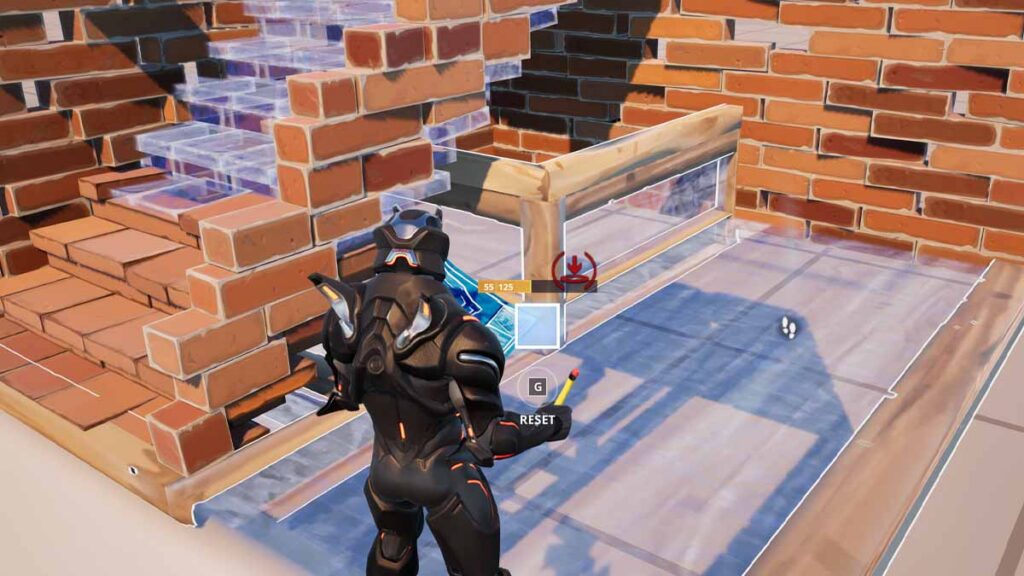
To make a safe edit, follow these steps:
- Aim where your opponent will be before you open the edit.
- Select the tiles from the top down, so your crosshair finishes near the center of your screen.
- Take one shot through the opening.
- Reset the edit right away, so the wall protects you again.
Two settings make this easier. Confirm Edit on Release completes an edit when you let go of the edit button, and a Reset Building keybind on an easy key closes an edit without opening the edit menu. Test both in a free-build area before taking them into a match.
Fortnite piece control explained
Piece control means owning the building spaces around you and your opponent before they can. Every wall, floor, or cone you place in a shared space is one your opponent cannot build there, which limits where they can move, peek, or escape when the fight gets tight.
A simple starting habit is to take the open spaces around an opponent’s box with your own walls and cones before you go for the shot. Once your pieces surround them, they have to edit through your builds to get out, and that edit tells you exactly where they will appear.
When to build and when to shoot
Build when you are taking damage, when you need height, or when you need time to heal. Shoot when your opponent is exposed, reloading, healing, or stuck behind one damaged wall. If you are the one being shot at, build first and shoot second, and check your materials before any build fight.
Should you use Simple Build and Simple Edit?
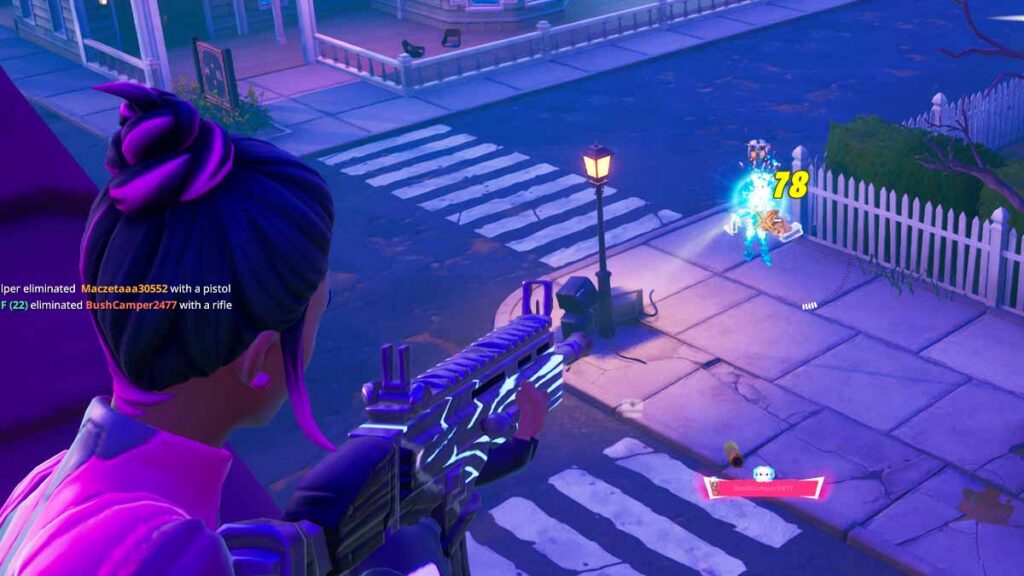
Simple Build and Simple Edit cut building and editing down to fewer inputs. With Simple Build on, one input builds stairs when you look up or down, and another builds a wall when you look forward. Simple Edit edits the piece under your crosshair with a single press, and pressing edit on it again resets it.
We recommend trying both if building feels overwhelming, so you can focus on positioning while you learn. You’ll find Simple Build under Settings, Game, Building, and Simple Edit under the Game tab. It’s important to note that Epic says Simple Edit is not available in competitive game modes.
Fortnite Zero Build tips
Most Fortnite Zero Build tips come back to one idea: the map is your cover, so you have to reach it before the fight starts. If you want to get better at Fortnite Zero Build, stop treating open ground as a shortcut and start treating it as the most dangerous place on the island.
Peek from hard cover
Hard cover means objects that stop bullets, such as rocks, walls, ridges, and buildings. Bushes and tall grass hide you but stop nothing. Fight from hard cover by stepping out, taking a few shots, and stepping back before your opponent can answer, then peek from a different edge the next time.
To practice the peek, follow these steps:
- Pick a rock or wall with two usable edges.
- Step out from one edge, fire one burst, and step back.
- Wait a moment, then peek from the other edge or from a crouch.
- Never peek the same edge twice in a row against the same player.
Use your Pocket Item and Overshield
Every Zero Build player has a recharging Overshield, an extra layer of protection on top of health and shields that refills after you stop taking damage for a short time. Breaking line of sight for a few seconds can win back part of a lost trade, so resetting a fight is rarely wasted time.
Zero Build also gives every player a Pocket Item on the button that used to switch into building. Pocket Items are unlimited-use utility tools with cooldowns, such as Shockwave Grenades, Med Mist Grenades, and Shield Bubbles, and you can swap yours at Vending Machines around the map. Epic’s May 2026 update also added Overshield restores on eliminations.
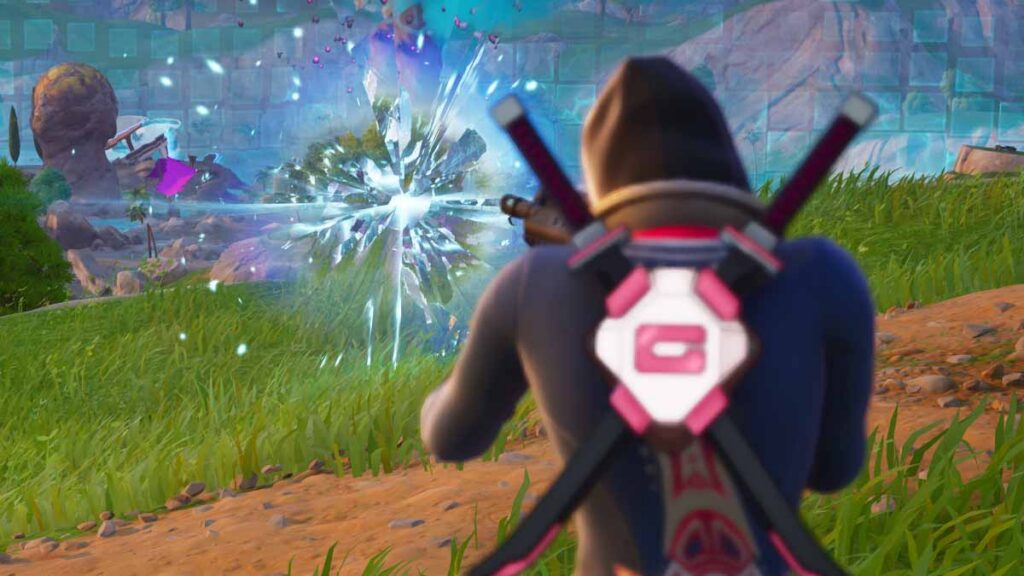
However, a Pocket Item on cooldown is no help in the next fight. Decide before each engagement whether yours is your escape or your opener, and keep it ready while crossing open ground. A Shield Bubble saved for a revive or a Shockwave Grenade saved for a retreat often decides the fight that follows.
Rotate early and avoid third parties
Rotate toward the next safe zone early and travel along its edge, using ridges, buildings, and water edges that give you cover the whole way. Players who wait for the Storm to push them end up crossing open fields while teams already inside the circle have time to aim.
Without walls to reset a fight, a slow trade in the open gives every nearby team time to arrive. Win quickly or break off, heal behind hard cover before looting, and assume the gunfire has already drawn the next team toward you, even if you cannot see them yet.
For more Zero Build fights per hour, play Reload or Blitz Royale with Zero Build switched on. In duo and squad Reload matches, eliminated players drop back in while a teammate is still alive, so you get far more fights than in a standard match and learn from each mistake faster.
Improve your game sense
Game sense is your ability to read what is happening around you and choose the right action. It improves fastest when you feed it better information, and most of that information reaches you through sound before you ever see an opponent on your screen.
Turn on 3D Headphones and Visualize Sound Effects in the Audio settings. Visualize Sound Effects shows the direction of footsteps, gunshots, chests, and other sounds as icons around your crosshair. Since June 2026, those icons fade with distance, and footsteps show up at a shorter range than gunshots, so a solid footstep icon means someone is close.
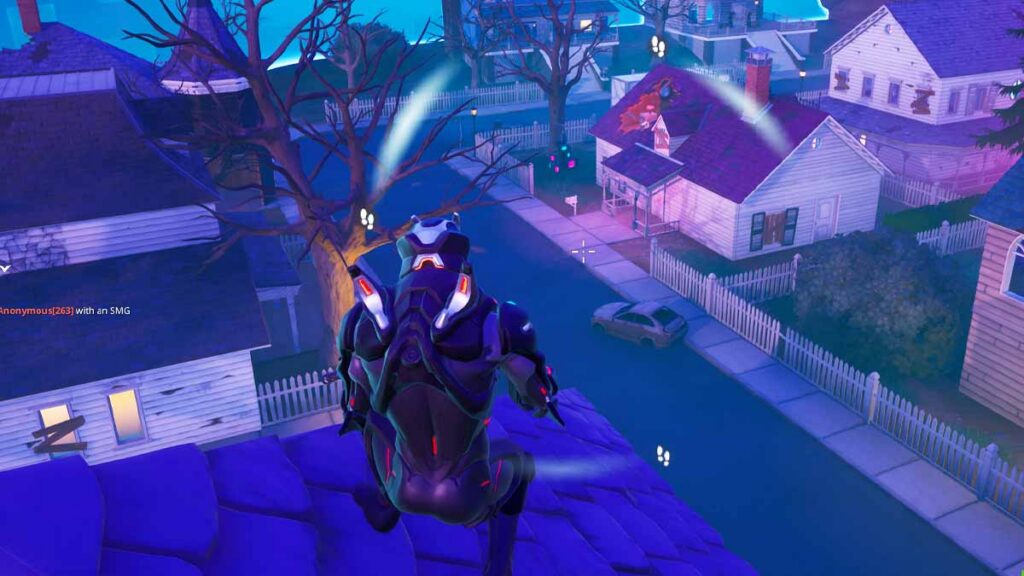
Inventory discipline is part of game sense too. Carry a close-range weapon, a mid-range weapon, and healing, and keep them in the same slots every match so your hands know where they are under pressure. Drop duplicates instead of carrying two weapons that do the same job.
Check the map as soon as the next Storm circle appears and plan your route before you move. In the endgame, get to a spot with cover on at least two sides before the circle closes, and stop chasing eliminations unless a player is low and caught in the open.
In squads, call three things in the same order every time: where the enemy is, how much damage you dealt, and whether you need to heal or reload. Short, consistent callouts let teammates act on them right away without stopping to ask follow-up questions.
Find the right Fortnite settings
No single sensitivity or keybind setup suits everyone, since hands, mice, controllers, and screens all differ. The goal is a setup you can repeat without thinking, left alone long enough for muscle memory to form, rather than a copy of whatever a professional player uses this month.
Sensitivity
Pick a sensitivity, then test it with a simple rule. If your crosshair keeps overshooting a strafing target at mid-range, lower it by about 10%. If you cannot turn to face an enemy behind you in one smooth motion, raise it by about 10%. Change it once, then play a full week before you judge it again.
Epic’s own guide to competitive PC settings suggests a mouse X and Y sensitivity between 5% and 10%. Treat that range as a place to begin your test rather than a target, since mouse DPI and desk space change how any number feels.
Controller settings
Fortnite has five controller layouts on its Controller Mapping page: Old School, Quick Builder, Combat Pro, Builder Pro, and Custom. Builder Pro places building pieces on the shoulder buttons, which suits Build players. Move to Custom only when you can name a specific button you keep fumbling.
Controller players should also try Tweak Zone, which Epic added at the start of Chapter 7 Season 3 in June 2026. It turns the tiny stick movements your dead zone normally ignores into small crosshair adjustments, which helps turn a body shot into a headshot at range. Set your dead zone as low as possible without stick drift.
Performance and audio
On PC, Epic’s guide recommends Fullscreen, VSync off, Performance rendering mode, an unlimited frame rate (or your monitor’s refresh rate if the screen tears), and low textures and meshes. A steady, high frame rate with low input delay makes tracking and building feel the same from one match to the next.
On PlayStation 5 and Xbox Series X|S, turn on 120 FPS mode in Fortnite’s Video settings if your TV supports 120Hz. PS5 players need Performance Mode switched on in the console’s settings first, and Xbox players need 120Hz enabled under TV & Display Options before the option appears in Fortnite.
Best Creative maps to practice Fortnite
The Creative islands below cover aim, editing, box fights, and endgames. Box fights are short duels inside small built structures, and Zone Wars recreate the final Storm circles with a moving safe zone.
| Island | Code | What it trains |
|---|---|---|
| Mechanics Training v5 | 2424-4344-7824 | Aim, editing, piece control, peeks |
| 1v1 Build Fights! [4.6.4] | 1832-0431-4852 | Build fights against real players |
| Arenas Boxfights | 9046-0506-5429 | Ranked 1v1 and 2v2 box fights with matched loadouts |
| Pandvil Box Fights (1v1) | 0153-8328-7526 | Box fights against one opponent |
| Pandvil Box Fights (2v2) | 6562-8953-6567 | Box fights with a duo partner |
| Desert Zone Wars | 6013-7804-4824 | 16-player solo endgames with a moving zone |
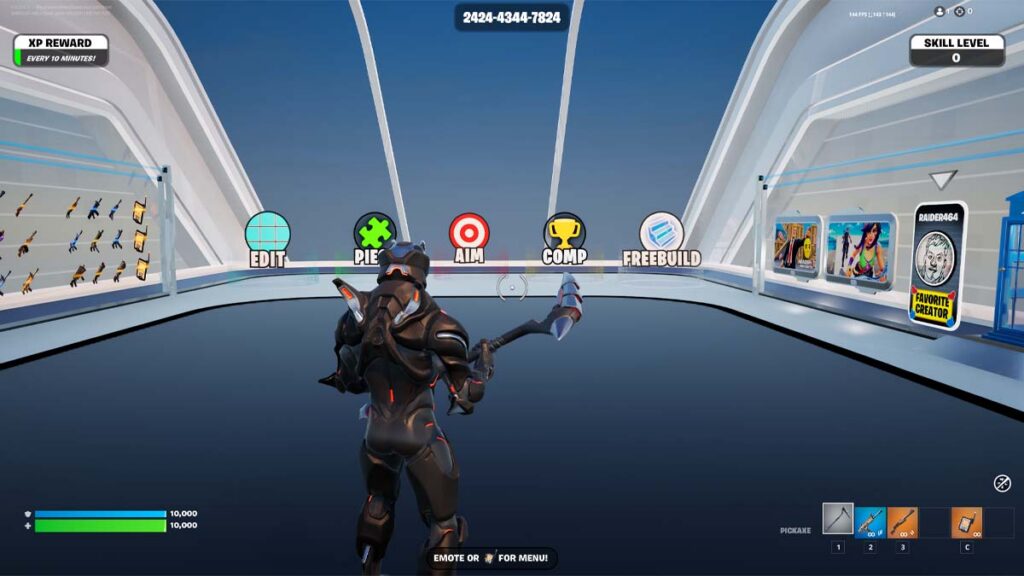
To load an island, scroll down to Discover, open Search, enter the code or the island’s name, and select it. Apart from the aim courses on Mechanics Training v5, these islands are built around building. The Zero Build practice islands we checked had only a handful of players, which is why the routine below uses Reload for Zero Build fights.
You can also improve by playing some of the best XP maps in Fortnite. While the main focus of these maps is leveling up, multiplayer ones can be used for practice.
How to get good at Fortnite with a daily practice routine
If you want to know how to get good at Fortnite fast, consistency beats length. The routine below takes 25 minutes, fits before your first match of the day, and trains the skills from this guide in the order they matter most for winning fights.
| Minutes | Block | Build version | Zero Build version | What to focus on |
|---|---|---|---|---|
| 0 to 5 | Crosshair warm-up | Aim course on Mechanics Training v5 | Same | Head-height placement and smooth tracking |
| 5 to 10 | Close-range timing | Shotgun and edit courses on Mechanics Training v5 | Shotgun and SMG drill on the same aim course | Fire only when you are on target |
| 10 to 15 | Defensive reflex | Wall, box, and reset in four directions in free build | Peek course on Mechanics Training v5 | Protect yourself before you return fire |
| 15 to 25 | Live fights | Pandvil Box Fights or 1v1 Build Fights | Reload or Blitz Royale with Zero Build on | Use the same habits under pressure |
| After the session | Review | One replay or one death | Same | Pick one habit to fix next time |
Keep one written goal for each session, such as “never peek the same angle twice” or “heal before looting.” Working on one habit at a time makes it much easier to tell whether it is actually changing your results, rather than guessing after a good or bad night.
Review your replays and track your progress
Replays show what you could not see in the moment, such as the enemy you missed or the angle that exposed you. Fortnite records them on PC, PlayStation, and Xbox, and you can switch recording on or off in the Replays section of the Game tab in Settings.
To watch a replay, follow these steps:
- Select Career from the Main Menu.
- Select Career on the left of the screen.
- Select Replays in the bottom right corner.
- Choose a match and select Play.
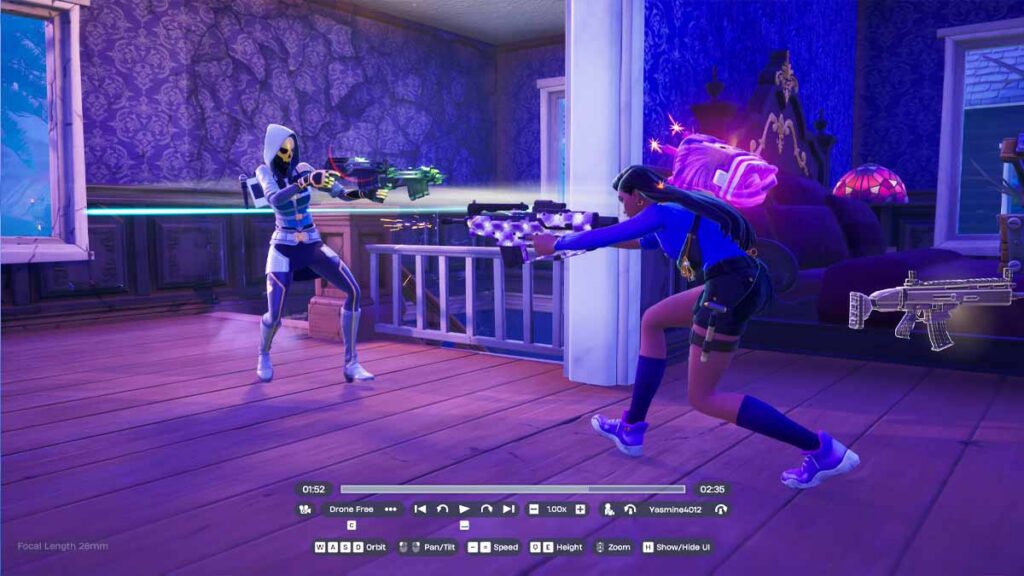
Replays only play in the Fortnite version they were recorded in, so rename any match you want to keep before the next update. PlayStation and Xbox hold up to 10 saved replays, while PC has no limit. Focus on the 30 seconds before each elimination rather than the final shot. Keep in mind that the replays will be incompatible once a new update comes out, so make sure to review them before that.
Ask the same questions every time. Did you have full shields? Was your weapon loaded? Did you have a way out? Was another team close? Write the answers down, and make the most common mistake next session’s goal. In Ranked, the progress percentage next to your rank gives you a steady measure against similar players.
Common mistakes that stop players from improving
Each habit below costs fights in both Build and Zero Build modes, and most of them are easy to spot once you start reviewing replays. The table lists why each one hurts and what to do instead.
| Mistake | Why it costs you | Fix |
|---|---|---|
| Re-peeking the same angle | Your opponent pre-aims where you last appeared | Peek from a new angle or wait before peeking again |
| Looting right after a fight | Nearby teams heard the shots and are already moving | Heal and reload behind cover first |
| Rotating late | Players inside the circle get free shots at you | Move early and travel along cover |
| Hot-dropping every match | Early eliminations end your practice before the endgame | Hot-drop in Reload, land somewhere quieter in Battle Royale |
| Changing sensitivity after every loss | Muscle memory never forms | Keep one setting for at least a week |
| Building without shooting | Endless walls burn materials and hand over the fight | Build to protect yourself, then edit and shoot |
| Copying a pro player’s settings | Their hardware, hands, and habits differ from yours | Use pro settings as a comparison, then test your own |
Once these habits hold up in unranked matches, Ranked is the clearest way to test them against similar players, and our guide to Fortnite ranks in order explains how placement and eliminations move your rank. Furthermore, improving your skills brings another major benefit, since you can compete to unlock free skins in Fortnite.
Frequently Asked Questions
Fix your crosshair placement, cross open ground only between pieces of cover, and take fights with full shields and a way out.
There is no fixed timeline, since progress depends on how often you practice. Habits such as crosshair placement and earlier rotations can change your results within a few sessions, while building and editing take longer.
Start with the Builder Pro layout if you play Build, set your dead zone as low as possible without drift, and turn on Tweak Zone for small aim corrections. Then train smooth tracking on an aim course.
Zero Build is easier to start, since you never need to learn building or editing. Positioning, cover, and aim decide every fight, and you cannot wall off a mistake, so winning in this mode is not always easy.
No sensitivity suits everyone. On PC, Epic suggests starting with a mouse X and Y sensitivity between 5% and 10%. Lower it if you overshoot moving targets, and increase it if you cannot turn quickly.
Keep your crosshair at head height where enemies will appear, take your first shotgun shot only when you are on target, and track moving targets in short bursts.
Mechanics Training v5 (2424-4344-7824) covers aim, edits, and piece control. For live practice, try 1v1 Build Fights (1832-0431-4852), Epic’s Arenas Boxfights (9046-0506-5429), and Desert Zone Wars (6013-7804-4824).
Turn on gyro aiming in the Touch and Motion settings if you like aiming by moving the controller, and keep it off if it feels unsteady.