
Marvel Rivals ranks run from Bronze to One Above All, covering nine tiers and 23 steps once you count every division. Bronze III is the lowest rank, while One Above All is reserved for the top 500 players on the leaderboard. However, the rules around those ranks have changed a lot over the past year.
Every rank from Bronze to Celestial has three divisions worth 100 points each, while Eternity and One Above All rank you by points alone. This guide explains how placement matches, rank points, bans and rewards work, and where most players sit in the current rank distribution. All details reflect the rules in Season 10.5.
All Marvel Rivals ranks in order
Here are all nine competitive ranks, from the lowest to the highest:
| Rank | Divisions | Description |
|---|---|---|
| Bronze | III, II, I | The lowest rank and the floor for placement matches |
| Silver | III, II, I | Players new to Competitive start placements from a Silver III estimate |
| Gold | III, II, I | Hero bans begin at Gold III, and finishing a half-season at Gold or higher earns the ranked costume |
| Platinum | III, II, I | Chrono Shield protection ends, and Nameplate Frame rewards begin |
| Diamond | III, II, I | Earns its own Nameplate Frame at the end of a season |
| Grandmaster | III, II, I | The first rank that earns a Crest of Honor |
| Celestial | III, II, I | Parties are limited to solo or duo queue |
| Eternity | None | A points-based rank above Celestial I |
| One Above All | None | Reserved for the top 500 players on the leaderboard |

To climb, you earn rank points by winning, and filling a division with 100 points moves you up to the next one. To put this into perspective, getting from Bronze III to Eternity means clearing 21 divisions, or 2,100 points of net progress. From Eternity onward, divisions disappear, and your point total decides whether you crack the top 500.
Celestial wasn’t part of the original ladder, as NetEase added it with Season 1 in January 2025. The new rank sits between Grandmaster and Eternity and added 300 points to the climb toward the top. It’s also where the ladder starts to thin out dramatically, as the rank distribution below shows.
How the Marvel Rivals ranked system works
How to unlock Competitive mode
Competitive mode unlocks once your account reaches Level 15, so a brand-new account needs some time in Quick Match first. NetEase raised the requirement from Level 10 with Season 2 in April 2025, which made it harder for fresh accounts to jump straight into ranked. Once you’re in, your first 10 Competitive matches of each full season are placement matches.
Placement matches
Placement matches arrived with Season 5 in November 2025, replacing the flat resets that knocked everyone down seven or nine divisions. During your 10 placements, the game shows a predicted rank and uses it for matchmaking. Each win or loss moves that estimate, but your actual rank only appears after the 10th match.
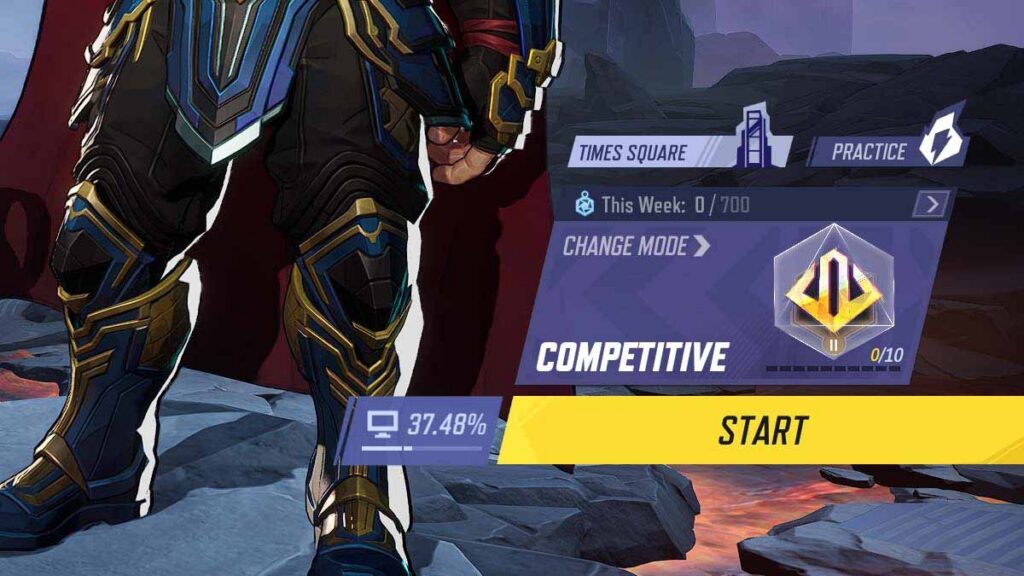
Your starting estimate depends on how you finished last season:
| Last season’s final rank | Starting placement estimate |
|---|---|
| Celestial II, Celestial I, Eternity or One Above All | Grandmaster II |
| Celestial III | Grandmaster III |
| Diamond I | Platinum I |
| Gold II | Silver II |
| Silver III or lower | Bronze III |
| New to Competitive (never played 10 ranked matches in a season) | Silver III |
In other words, returning players start three divisions below their final rank, with a ceiling of Grandmaster II and a floor of Bronze III. After all 10 matches, you can land up to one or two divisions above last season’s finish, but never higher than Celestial I.
Since Season 7, each placement also tracks your personal performance rather than just the result. This can shift your final rank by up to 100 points in either direction, or a full division.
While you’re in placements, you can only queue in parties of up to three players. On top of this, the gap between the highest and lowest member must be under three divisions, and matchmaking uses the highest-ranked player as its anchor. If you don’t finish all 10 matches, you won’t receive the season-end rewards, so it’s worth wrapping up your placements early.
How rank points work
Every division holds 100 rank points, and filling the bar promotes you to the next one. Losses take points away, and dropping below zero sends you back a division. There is no fixed amount per match, as both the result and your individual performance decide how many points you gain or lose.
NetEase rates your performance by comparing your key combat stats to the average for the same hero at your rank. If you swap heroes during a match, the rating is weighted by how long you played each one. According to NetEase’s matchmaking explainer from August 2025, performance also carries more weight in lower ranks, while the match result matters more near the top.

Eternity and One Above All work differently, as there are no divisions left to fill. Your points simply keep stacking, and the players with the 500 highest totals on the leaderboard hold One Above All. Considering that other players can push you out of that group, One Above All is more of a seat you defend than a rank you keep.
Chrono Shield and point compensation
Players in Gold and below get extra protection from Chrono Shields. Chrono Shield Tokens come from ranked matches, while Chrono Shield Cards come from events, and both can stop a defeat from costing you points. However, neither works from Platinum up, and neither can be bought, which keeps the feature from turning into pay-to-win.
Your points are also protected when a teammate leaves. If a teammate disconnects and stays out for more than 90 seconds, a loss earns you compensation points based on your rank. You get 12 points in Bronze to Gold, 8 in Platinum to Grandmaster and 4 from Celestial up, although a compensated loss still costs at least one point.
In addition to this, NetEase restores rank points lost to confirmed throwers. A trial that began in May 2026 also offers ranked compensation for losses against verified cheaters, although placement matches are excluded because they don’t award points. Both only apply once NetEase confirms the violation, so reporting throwers and cheaters actually matters.
Party size rules
Party rules get stricter as you climb ranks in Marvel Rivals. This means that, at some point, you may not be able to team up with your friends in the Competitive mode. Here are the rules:
| Ranks in the party | Allowed party sizes |
|---|---|
| Bronze to Grandmaster | Solo, duo, trio, four or six players |
| Celestial, Eternity or One Above All | Solo or duo only |
| Anyone still in placements | Up to three players, less than three divisions apart |
Five-player parties aren’t allowed at any rank, and the strictest rule in the party always applies. As a result, a single Celestial friend limits the whole group to a duo, so check everyone’s rank before you invite a full squad.
Hero bans
Hero bans start at Gold III, so Bronze and Silver matches skip the ban phase entirely. Season 10 turned bans into an alternating draft with a 1-2-2-1 order. Team A bans one hero, Team B bans two, Team A bans two more, and Team B finishes with one.
Each team votes on its bans, and a banned hero is unavailable to both sides for the whole match. Since duplicate bans are no longer possible, every match from Gold III up now loses six different heroes.
Back in Season 0, bans only started at Diamond, before NetEase lowered the threshold to Gold III with Season 2. Season 7 then raised the limit from two to three bans per team, which made a deep hero pool far more valuable.
Marvel Rivals rank reset and seasons
Marvel Rivals resets ranks at the start of every full season, and placement matches decide where you land. Mid-season updates, such as Season 10.5, keep your rank and points intact. Each season lasts about two months and is split into two halves, and each half has its own Gold reward.
For example, a player who finishes Season 10 at Diamond I will start Season 11 placements from a Platinum I estimate. A strong placement run can lift that player back to Diamond or even slightly higher, while a poor one can drop them further. The good news is that strong players no longer have to grind through several tiers of easy lobbies after every reset.
You can always check your highest rank by opening your Career page. If you select All Seasons, it will show the highest rank you’ve ever achieved while playing Marvel Rivals.
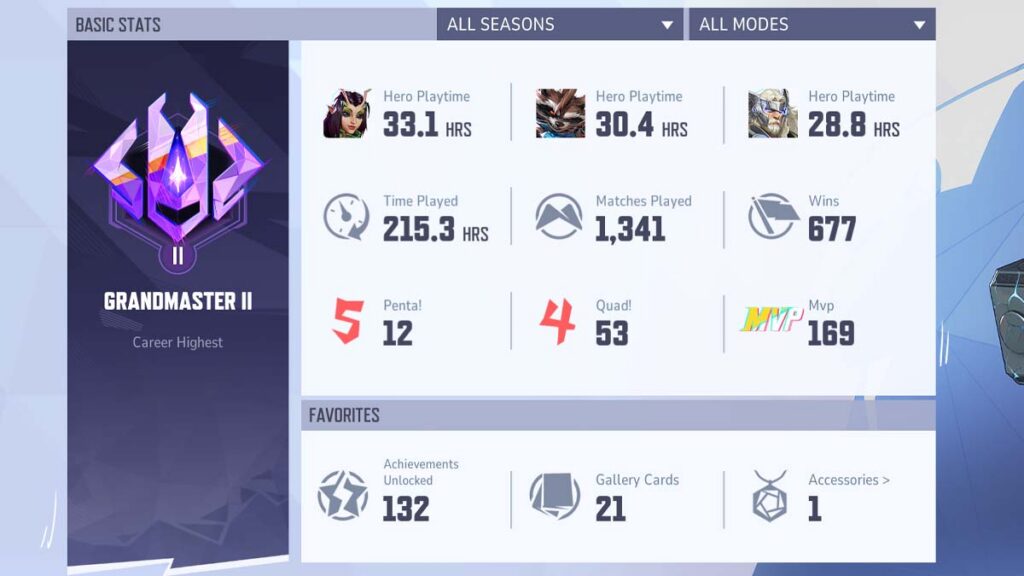
Current season: Season 10.5
Season 10.5 launched on October 9, 2026, and NetEase’s roadmap lists Season 11 for November 13, 2026. There is no rank reset in Season 10.5, so the next placement run arrives with Season 11.
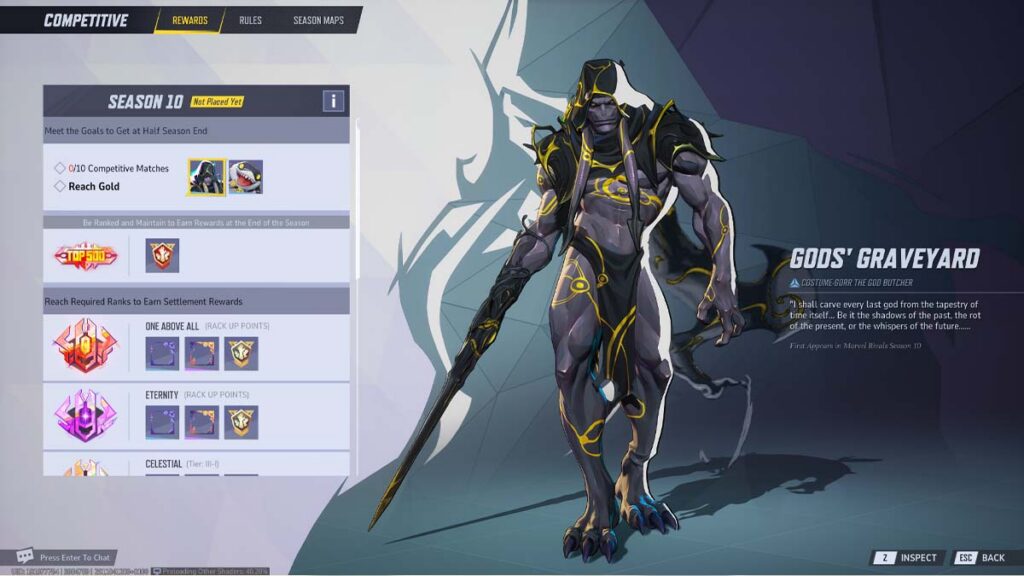
The half-season Gold reward is Jeff the Land Shark’s Razor-Tooth costume, after the first half paid out Gorr the God Butcher’s Gods’ Graveyard costume. Season 10’s Crests of Honor and Nameplate Frames will be based on your rank when Season 10.5 ends.
Marvel Rivals ranked rewards
Ranked rewards are split between half-season costumes and season-end cosmetics. Every half-season has its own Gold costume, while Crests of Honor and Nameplate Frames are handed out once per full season. Here is what each one requires:
| Reward | Requirement | When it’s awarded |
|---|---|---|
| Gold costume | Play 10 Competitive matches in that half and finish it at Gold III or higher | End of each half-season |
| Nameplate Frames | Complete placements and finish the season at Platinum III or higher (Diamond III or higher for the Diamond frame) | End of the full season |
| Crests of Honor | Complete placements and finish the season at Grandmaster III or higher, with separate crests for Celestial, Eternity and the Top 500 | End of the full season |
It’s important to note that rewards depend on where you finish, not on your highest rank of the season. If you reach Gold early and slip back to Silver before the half ends, you won’t get the costume. Before Season 5, reaching Gold once was enough, but that is no longer the case.
Marvel Rivals rank distribution
NetEase doesn’t publish official rank distribution data every season. Due to this, the most useful current numbers come from RivalsTracker, a third-party stats site. Its Season 10.5 dataset covered over half a million PC profiles as of November 2026, and console players aren’t included. Treat these figures as an estimate rather than a census of every ranked player.
| Rank | Share at this rank or higher |
|---|---|
| Bronze | 100% |
| Silver | 92.76% |
| Gold | 73.09% |
| Platinum | 55.98% |
| Diamond | 34.45% |
| Grandmaster | 15.13% |
| Celestial | 3.69% |
| Eternity | 0.36% |
| One Above All | 0.11% |
Platinum is the most common tier, but Silver III is the single busiest division. That spike most likely comes from the placement system, since players who are new to Competitive start from a Silver III estimate. The median tracked player sits in Platinum III, which makes Platinum the closest thing to an average rank right now.
Diamond III or higher puts you in the top 34% of tracked PC players, while Grandmaster III or higher means the top 15%. Celestial is far rarer at under 4%, and only 1,943 profiles in the dataset sit in Eternity or One Above All. Keep in mind that the distribution tends to shift upward as a season goes on, since placements start returning players three divisions below their previous finish.
What is a good rank in Marvel Rivals?
A good rank depends on your goals, but the data offers a useful benchmark. Gold isn’t impressive on its own, as 73% of tracked PC players are Gold III or higher, but it’s the rank that pays out every half-season costume. Platinum is roughly average, Diamond is clearly above average, and Grandmaster or higher puts you in the top 15% of tracked players.
How to rank up faster in Marvel Rivals
There is no shortcut to rank points, but a few habits make a real difference in Competitive. Here is what we recommend:
- Take placements seriously: Your personal performance in all 10 placements affects where you land, so play them in focused sessions on heroes you trust.
- Have two main heroes per role: With six bans per match from Gold III up, your main can disappear before the match even starts.
- Stick to a balanced lineup: A team of two Vanguards, two Duelists and two Strategists has long been the most reliable composition in ranked.
- Play the objective: The match result drives your rank points, so standing on the point or the payload beats chasing eliminations away from it.
- Never leave a match: Abandoning a game costs you points and triggers Competitive bans that grow from 15 minutes up to 20 hours for repeat offenses.
NetEase adjusts Competitive rules almost every season, so expect placements, bans and rewards to keep evolving. Before your next match, make sure to check out the best reticle and crosshair settings in Marvel Rivals, as these could make a big difference with your Competitive journey.
Frequently asked questions
One Above All is the highest rank in Marvel Rivals. It has no divisions and belongs to the top 500 players on the Competitive leaderboard.
No. PC players only face other PC players in Competitive, while PlayStation and Xbox players can be matched together.
Your Marvel Rivals rank and leaderboard position are tracked separately on PC, PlayStation and Xbox, even if you link your accounts with cross-progression.